
Kenya bus crash kills at least 24 on Nairobi-Mombasa Highway in 2026
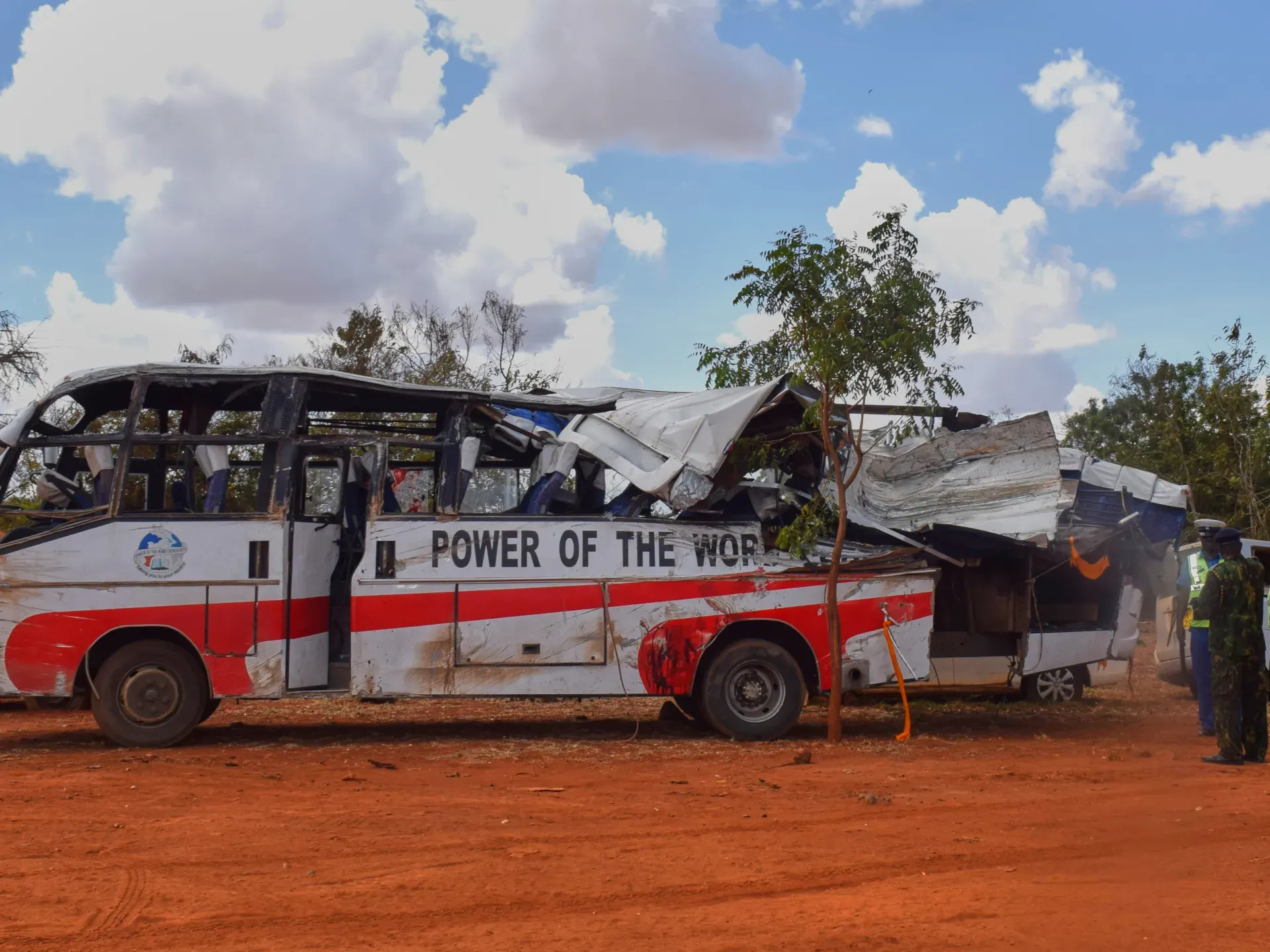
A fatal Kenya bus crash occurred on Sunday, October 25, 2026, resulting in at least 24 deaths and 24 injuries. The collision involved a church bus and a cement truck on the Nairobi-Mombasa Highway near the Kanga area in Makueni County. This tragedy follows a recent accident on the same route that claimed 17 lives in early October. In response, President William Ruto and Transport Minister Davis Chirchir have pledged a significant crackdown on road safety violations. This article examines the details of the accident, the suspected causes, and the government's proposed safety reforms.
October 27, 2026
6 min read
Source: ASHENVOW
What are the details of the fatal collision in Makueni County?
At least 24 people lost their lives during a collision between a passenger bus and a heavy goods vehicle on Sunday morning. The accident took place at approximately 7:45 am on the Nairobi-Mombasa Highway, specifically in the Kanga area near Mtito Andei. The bus was transporting members of the Power of the Word Church International, who were returning from a funeral service in western Kenya. According to hospital officials, an additional 24 individuals sustained injuries during the impact.
Survivors described a scene of chaos following the impact. Violet Mwandonyi, a survivor of the crash, informed the Associated Press that passengers were crying out for assistance from passing motorists. The emotional toll of the accident is compounded by the fact that many victims were mourners traveling together after a religious service. The circumstances surrounding the victims' final moments remain a central part of the ongoing investigation.
The victims and the context of the journey
The passengers on the bus were primarily members of the Power of the Word Church International, based in Mombasa. They had been traveling to western Kenya to attend the funeral of their pastor. One survivor noted that the group had stopped for breakfast shortly before the collision occurred, suggesting the accident happened during a period of active transit between the coastal region and the western part of the country.
What caused the accident on the Nairobi-Mombasa Highway?
Preliminary investigations suggest that dangerous overtaking maneuvers may have been the primary cause of the crash. Makueni County Commissioner Abdullahi Khalif stated to the Kenyan newspaper The Standard that the bus driver attempted to pass several other vehicles before colliding with an oncoming truck. The truck involved in the collision was transporting cement at the time of the incident.
The National Transport and Safety Authority (NTSA) has also identified reckless overtaking as a highly probable factor in the disaster. However, there are conflicting accounts from those present at the scene. While the commissioner points to the bus's attempt to overtake, another survivor reported that the cement truck struck the bus from behind. Authorities are working to reconcile these accounts through forensic evidence and witness testimony.
How frequent are fatal accidents on this specific stretch of road?
The Kanga area of the Nairobi-Mombasa Highway has been identified as a high-risk zone with a documented history of traffic fatalities. This specific accident is the second major tragedy on this route in less than a month. On October 3, 2026, a multi-vehicle crash near Salama killed 17 people, most of whom were Catholic pilgrims traveling to a prayer site.
In the October 3 incident, police reported that a truck driver had attempted to overtake another heavy vehicle before the collision occurred. The NTSA has previously flagged this section of the highway as an area prone to accidents, suggesting that structural issues or traffic patterns on this corridor contribute to the recurring danger for long-distance travelers.
What is the government's response to the rising death toll?
The Kenyan government has vowed to implement a rigorous crackdown on road safety to prevent further loss of life. President William Ruto expressed his condolences to the victims' families and issued an immediate order for the inspection of all vehicles utilized for public transport. This move aims to ensure that mechanical failures are not contributing to the increasing frequency of highway accidents.
Transport Minister Davis Chirchir has outlined a multi-faceted approach to improving road safety. The government's strategy includes:
- Increased enforcement against speeding and unsafe overtaking maneuvers.
- Infrastructure improvements to address dangerous sections of the national highway network.
- Enhanced training programs and more frequent inspections for commercial drivers.
- Strengthened oversight of both passenger buses and heavy goods vehicles.
Minister Chirchir emphasized that the administration cannot treat road safety as "business as usual," signaling a shift toward more aggressive regulatory enforcement and inter-agency cooperation between the police, local authorities, and lawmakers.
Enforcement and legislative cooperation
The proposed measures are intended to create a more comprehensive safety net. By working closely with law enforcement and local administrators, the Ministry of Transport aims to move beyond reactive measures and toward a proactive system of oversight. This includes tighter controls on how commercial transport companies manage their fleets and how drivers are vetted for long-distance operations.
What do the recent road fatality statistics reveal?
National transport data indicates a concerning trend in road-related deaths within Kenya. According to figures from the NTSA reported by Kenyan media, the country recorded 5,009 deaths in road crashes throughout 2025. The upward trend continues into the current year, with 2,150 deaths already recorded in the first half of 2026.
These figures highlight the scale of the crisis facing the Kenyan transport sector. The combination of high-speed highway travel, heavy commercial traffic, and the identified risks of overtaking maneuvers creates a volatile environment for commuters. The recent surge in high-casualty accidents has placed significant political pressure on the government to deliver tangible improvements in road infrastructure and driver accountability.
Frequently asked questions
How many people died in the October 25, 2026, bus crash?
At least 24 people died in the collision between a church bus and a cement truck. The accident took place in the Kanga area near Mtito Andei on the Nairobi-Mombasa Highway. An additional 24 people were reported to have sustained injuries during the incident.
What was the suspected cause of the accident?
The primary suspected cause is dangerous overtaking. Makueni County Commissioner Abdullahi Khalif indicated the bus driver tried to overtake multiple vehicles before hitting an oncoming truck. The NTSA also identified unsafe overtaking as a likely factor, though some survivors reported the truck hit the bus from behind.
Is this a recurring problem on the Nairobi-Mombasa Highway?
Yes, this stretch of road has a history of accidents. The NTSA has identified it as a dangerous area. Just three weeks prior, on October 3, 2026, a crash near Salama on the same highway killed 17 people, many of whom were pilgrims.
What actions is the Kenyan government taking?
President William Ruto has ordered inspections of public transport vehicles. Transport Minister Davis Chirchir announced a crackdown on speeding and unsafe overtaking, plans to improve dangerous road sections, and more rigorous training and checks for commercial drivers to improve overall road safety.
How many people died in road accidents in Kenya in 2025?
According to NTSA data reported by Kenyan media, 5,009 people died in road crashes in 2025. The mortality rate remains high in 2026, with 2,150 deaths recorded during the first half of the year alone.
Key takeaways
- A collision on the Nairobi-Mombasa Highway killed at least 24 people on October 25, 2026.
- The accident involved a Power of the Word Church International bus and a cement truck.
- Authorities suspect dangerous overtaking was the primary cause of the fatal collision.
- Kenya recorded 5,009 road deaths in 2025 and 2,150 in the first half of 2026.
- The government has pledged stricter enforcement and vehicle inspections to improve safety.
Conclusion
The fatal collision in Makueni County underscores a persistent and deadly challenge within Kenya's transport infrastructure. With 24 lives lost in a single incident on a highway already known for its high accident rate, the pressure on the government to move beyond rhetoric is immense. The proposed crackdown on speeding, overtaking, and vehicle maintenance represents a necessary shift toward accountability. However, the effectiveness of these measures will depend on consistent enforcement and the successful implementation of long-term road improvements to ensure the safety of the thousands of commuters who rely on these vital corridors daily.



