
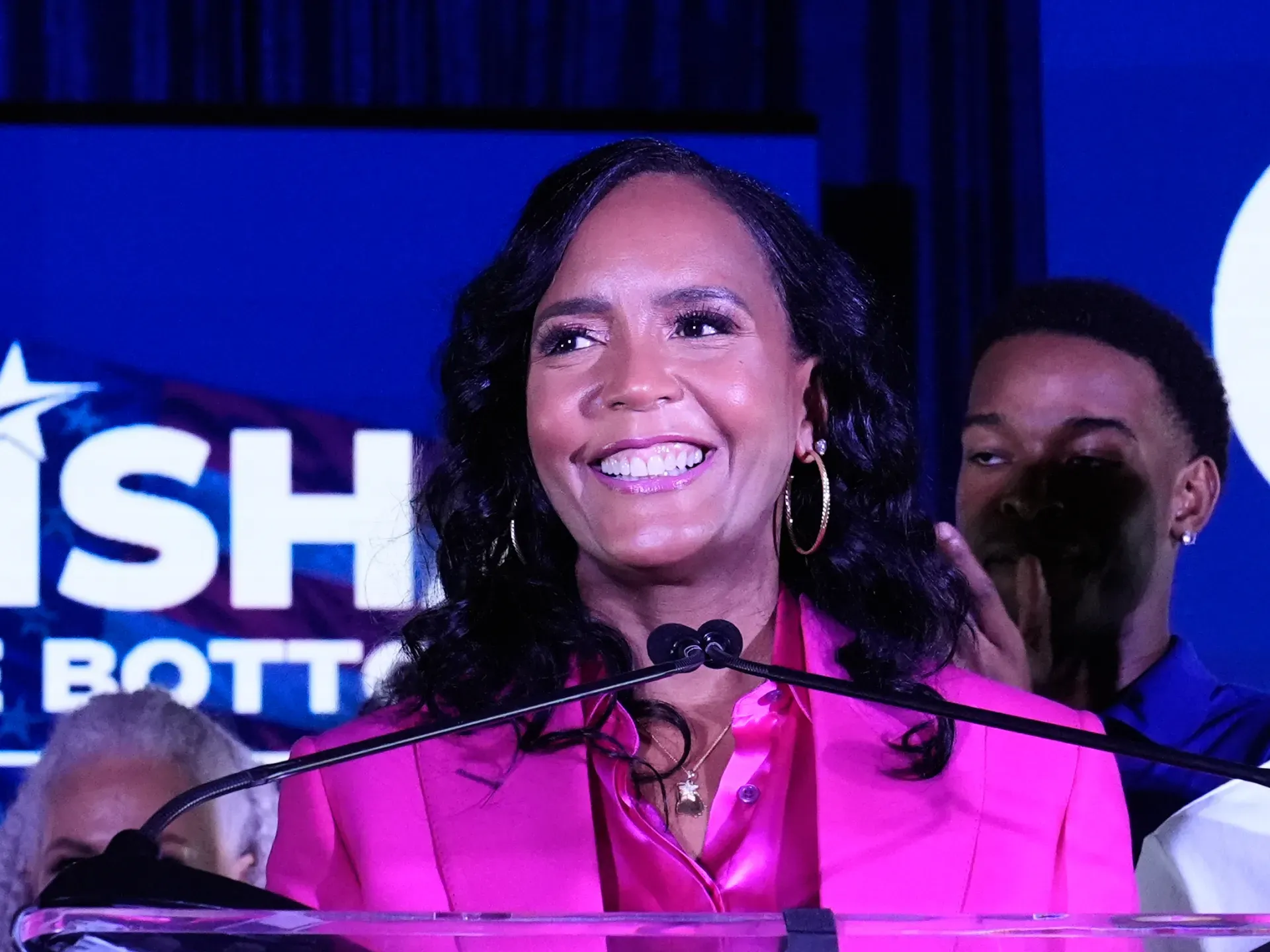
Keisha Lance Bottoms governor: A historic US victory
Keisha Lance Bottoms governor election results have rewritten American political history following the 2026 midterm cycle. By securing victory in Georgia, Bottoms becomes the first Black woman to be elected as a governor of any US state. This landmark achievement comes after a high-stakes battle against a well-funded Republican opponent. This analysis examines the electoral dynamics, the financial scale of the race, and the shifting political landscape in Georgia, providing a deep dive into how this historic win reshaped the nation's future.
November 8, 2026
4 min read
Source: ASHENVOW
A landmark victory in Georgia politics
Keisha Lance Bottoms has secured a place in the annals of American history by becoming the first Black woman elected to serve as a state governor. According to the Associated Press, the Democratic candidate emerged victorious in the Georgia gubernatorial race, overcoming a significant challenge from the Republican ticket. This win is particularly notable as it marks a major shift in the state's executive leadership following the tenure of the outgoing Republican governor, Brian Kemp.
The election was a focal point of the 2026 US midterm elections, drawing intense national scrutiny. Bottoms, who previously served as the mayor of Atlanta and acted as an adviser to former President Joe Biden, leveraged her experience in urban governance and national politics to build a winning coalition. Her victory represents a significant milestone for representation in US state governments, breaking a long-standing barrier for Black women in executive roles.
The financial battle: Bottoms vs. Rick Jackson
The race for the Georgia governorship was characterized by an extraordinary disparity in personal spending and campaign resources. Bottoms faced off against billionaire Republican Rick Jackson, who attempted to leverage his massive personal wealth to secure the office. According to the Associated Press, Jackson invested more than $200 million of his own fortune into his campaign in an effort to succeed Brian Kemp.
Despite the massive influx of Jackson's personal capital, the financial advantage did not translate into a victory at the polls. The campaign highlighted a growing trend in modern American politics where sheer spending power is increasingly countered by grassroots mobilization and targeted voter engagement. While Jackson sought to use his wealth to dominate the airwaves and influence the electorate, the Democratic strategy focused on mobilizing core constituencies that ultimately decided the outcome.
Voter mobilization and the role of the Black electorate
The decisive factor in the victory for Keisha Lance Bottoms was the robust turnout of Georgia's significant Black voting bloc. During the early voting period, members of this demographic turned out in large numbers, providing the necessary momentum for the Democratic campaign. This mobilization proved essential in overcoming the Republican efforts to sway undecided voters and suppress Democratic enthusiasm.
Throughout the campaign, the Republican side employed specific narratives to target Bottoms' previous record. Opponents attempted to frame her tenure as the mayor of Atlanta as a period of criminal decline for the state's largest metropolitan area. Bottoms addressed these tactics directly, stating to the Associated Press that it is a "longstanding playbook" to portray Atlanta in a negative light to influence state-wide perception. By leaning into her identity and her record in Atlanta, she successfully countered these characterizations.
The evolving Democratic landscape in Georgia
Bottoms' success is part of a broader, albeit inconsistent, trend for Democratic women in Georgia politics. This election marks the third consecutive time that the Democratic Party in Georgia has nominated a Black woman for the position of governor. While previous candidates like Stacey Abrams were unsuccessful in their bids against Brian Kemp in 2018 and 2022, the persistence of this political movement has eventually yielded a historic win.
The transition of power is set to occur in January, as Brian Kemp concludes his eight-year tenure due to state term limits. The shift from a long-standing Republican administration to a Democratic one under Bottoms signals a potential realignment in Georgia's political identity. As the state moves into this new era, the influence of urban centers and minority voting blocs is expected to remain a central pillar of the state's electoral mechanics.
Frequently Asked Questions
Who is the first Black woman elected governor in the US?
Keisha Lance Bottoms is the first Black woman to be elected as a governor of a US state. Her victory in the 2026 Georgia gubernatorial election marks a historic milestone for representation in American politics, following her successful campaign against Republican candidate Rick Jackson.
How much did Rick Jackson spend on his campaign?
Republican candidate Rick Jackson spent a massive amount of personal wealth during the election cycle. According to the Associated Press, the billionaire candidate contributed more than $200 million of his own fortune in an attempt to win the governorship and succeed the outgoing Republican governor.
What role did the Black electorate play in the election?
The Black voting bloc in Georgia played a crucial role in securing the win for Keisha Lance Bottoms. High turnout numbers among these voters, particularly during the early voting stages, provided the Democratic candidate with the necessary support to overcome her well-funded Republican opponent.
The future of Georgia leadership
The election of Keisha Lance Bottoms represents more than just a change in administration; it is a fundamental shift in the political landscape of Georgia. By overcoming a massive financial disadvantage and successfully navigating intense character attacks, Bottoms has proven the efficacy of targeted voter mobilization. As she prepares to take office following Brian Kemp's term expiration, her leadership will likely define the state's direction for years to come. The intersection of urban influence and minority voting power has clearly become the new cornerstone of Georgia's electoral reality.



