
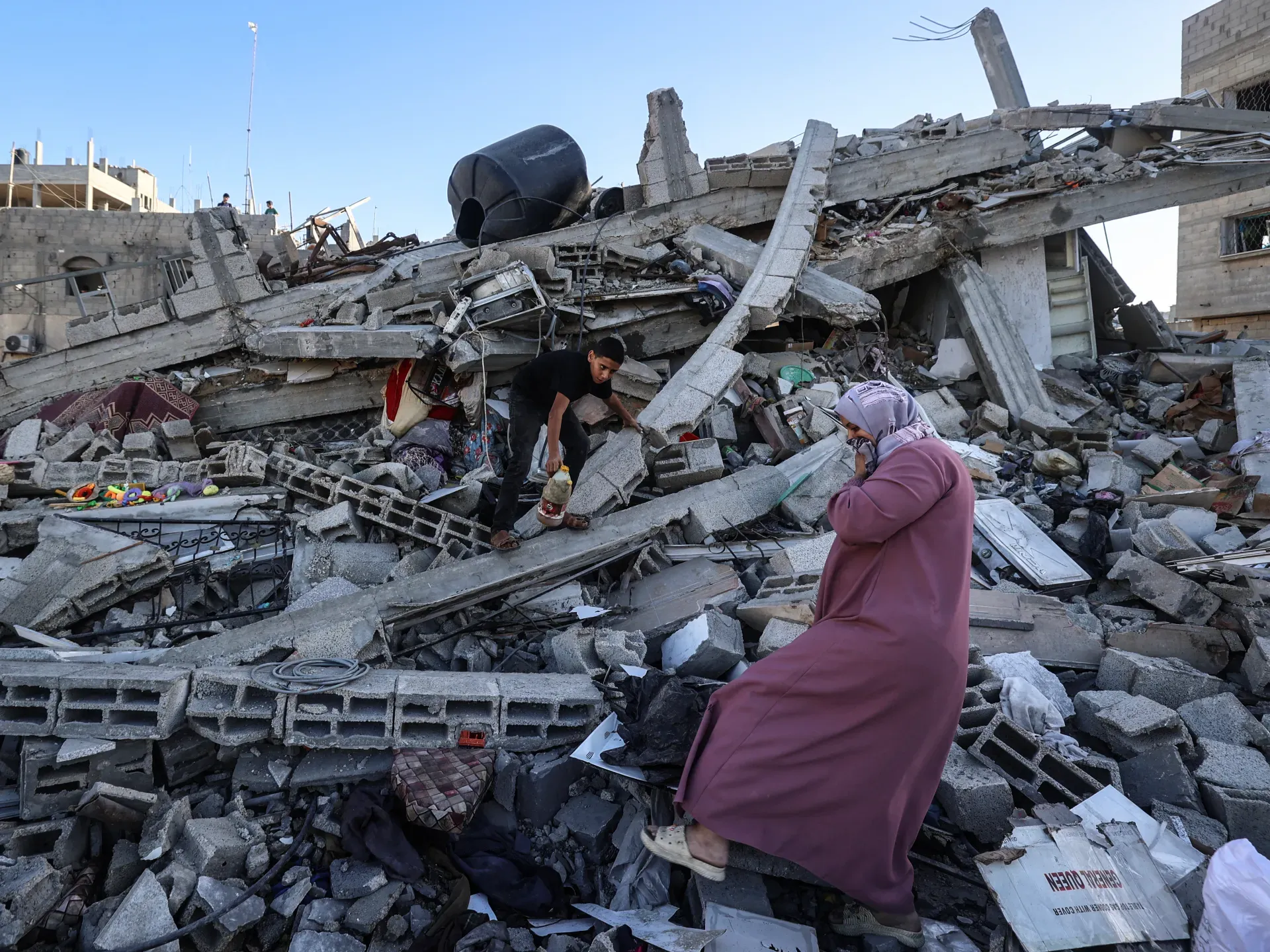
Israeli attacks in Gaza continue as death toll rises in October 2026
Israeli attacks in Gaza resulted in at least four Palestinian fatalities on Saturday, October 31, 2026, despite a nominal ceasefire that has lasted over a year. According to the Gaza Ministry of Health, at least 1,580 Palestinians have been killed since the ceasefire began in October 2025. The violence includes shelling in refugee camps and strikes on civilian vehicles. This report examines the recent casualties, the humanitarian warnings from the OHCHR, and the stalled peace negotiations under the current US administration.
November 8, 2026
5 min read
Source: ASHENVOW
What are the latest casualties reported in Gaza?
At least four Palestinians were killed during Israeli military operations on Saturday, October 31, 2026, according to reports from local medical facilities. The casualties stem from various incidents across the enclave, highlighting the continued volatility of the security situation despite the ongoing ceasefire framework.
The Nuseirat refugee camp was a primary site of recent activity, where shelling resulted in the death of Diaa Abu al-Rous, a Palestinian teacher, as confirmed by al-Awda Hospital. In the Tel al-Hawa neighbourhood, southwest of Gaza City, a man named Arafat al-Arair died from injuries sustained during an earlier Israeli strike on a vehicle, according to medical sources at al-Shifa Hospital.
Tragedy also struck a displaced persons camp in al-Mawasi, Khan Younis, where two girls died following a fire in their tent. While the Nasser Medical Complex confirmed the deaths, the cause of the fire remains undetermined. Over a 48-hour period, the Gaza Ministry of Health reported at least six deaths and 26 injuries, contributing to a significant cumulative toll.
Summary of recent fatalities
The recent wave of violence illustrates the diverse nature of the risks faced by Gazans, ranging from direct military shelling to secondary incidents like fires in overcrowded displacement camps. The deaths in Nuseirat and Tel al-Hawa represent direct combat-related casualties, while the deaths in al-Mawasi underscore the extreme vulnerability of the displaced population living in temporary shelters.
How has the death toll evolved since the 2025 ceasefire?
The Gaza Ministry of Health reports that at least 1,580 Palestinians have been killed since the October 2025 ceasefire came into effect. This figure represents the human cost of the intermittent violence that has characterized the period following the formal cessation of major hostilities.
In addition to the fatalities, the ministry has documented 5,711 injuries since the ceasefire began. The frequency of these incidents suggests that while large-scale warfare may be absent, targeted strikes and localized skirmishes remain a constant feature of life in the enclave. The statistical data provided by the ministry highlights a persistent pattern of civilian casualties that contradicts the intended stability of the ceasefire agreement.
What are the humanitarian concerns raised by the OHCHR?
The Office of the United Nations High Commissioner for Human Rights (OHCHR) has issued warnings regarding the potential for ethnic cleansing in Gaza. On Friday, the OHCHR stated that Israeli forces are continuing to displace Palestinian populations, raising significant international legal and humanitarian concerns.
According to the OHCHR, Palestinians are being forced into increasingly smaller areas of the territory. This compression of the population occurs within a landscape that has been decimated by three years of continuous Israeli siege. The UN body noted that the destruction of remaining civilian infrastructure by Israeli forces further exacerbates the humanitarian crisis, making the shrinking areas even less habitable for the displaced population.
The impact of territory control expansion
The humanitarian situation is compounded by strategic military objectives. Following an order from Prime Minister Benjamin Netanyahu in May, the Israeli military has been working to expand its control over Gaza's territory to reach a 70 percent threshold. This territorial expansion directly correlates with the increased displacement reported by the OHCHR, as military operations push residents out of zones designated for Israeli control.
Why are military operations continuing in Deir el-Balah?
Israeli military activity in Deir el-Balah is reportedly aimed at displacing residents from the city to facilitate territorial control. Reports from the ground suggest that the military is using tactical maneuvers to shift civilian populations away from specific urban sectors.
Tareq Abu Azzoum, reporting from Deir el-Balah for Al Jazeera, cited testimonies from residents who have fled the eastern part of the city. These witnesses claim that the Israeli military has adjusted its "yellow demarcation line" by opening fire on civilians to compel them to leave their homes. This method of displacement suggests a deliberate use of kinetic force to manage civilian movement and secure strategic areas within the city.
What is the status of the peace plan and reconstruction?
Negotiations aimed at establishing a permanent end to the conflict under United States President Donald Trump’s peace plan have reached a stalemate. The lack of progress in diplomatic talks has prevented the commencement of essential reconstruction efforts in Gaza.
The impasse is driven by fundamental disagreements between the primary combatants regarding the terms of the plan:
- Hamas Position: The group maintains that it will not agree to a full disarmament of its forces until Israel completes a total withdrawal from the Gaza Strip.
- Israeli Position: The Israeli government asserts that it will not withdraw from the territory until Hamas formally forfeits its weapons and ceases its military capabilities.
Because these two conditions are mutually exclusive, the implementation of the Trump peace plan remains blocked, leaving the enclave in a state of continued destruction and preventing the return of basic services and infrastructure to the civilian population.
Frequently asked questions
How many Palestinians have died since the October 2025 ceasefire?
According to the Gaza Ministry of Health, at least 1,580 Palestinians have been killed since the ceasefire was implemented in October 2025. This figure includes the most recent casualties reported in late October 2026, reflecting ongoing violence despite the nominal truce.
What is the OHCHR's position on the current situation in Gaza?
The OHCHR has warned that Israeli actions in Gaza are raising concerns of ethnic cleansing. The UN body noted that the continuous displacement of Palestinians into shrinking, decimated areas of the territory is a critical humanitarian and legal issue.
What is causing the deadlock in peace negotiations?
The peace talks, based on President Donald Trump's plan, are stalled due to conflicting demands. Hamas requires a full Israeli withdrawal before disarming, while Israel demands that Hamas disarm before any withdrawal takes place.
What happened in the al-Mawasi camp?
Two girls died in the al-Mawasi displacement camp in Khan Younis after their tent caught fire. While the Nasser Medical Complex confirmed the deaths, the specific cause of the fire in the camp has not yet been identified.
What is the Israeli military's territorial goal in Gaza?
Following an order issued by Prime Minister Benjamin Netanyahu in May, the Israeli military is working toward expanding its control over 70 percent of the Gaza Strip's territory.
Key takeaways
- At least 1,580 Palestinians have died since the October 2025 ceasefire began.
- The OHCHR warned that ongoing displacements raise concerns regarding ethnic cleansing.
- Peace negotiations under the Trump plan are currently stalled due to disarmament disputes.
- Israeli military operations aim to expand territorial control to 70 percent of Gaza.
Conclusion
The situation in Gaza remains characterized by a profound disconnect between the existence of a nominal ceasefire and the reality of ongoing military violence. With at least 1,580 deaths recorded since October 2025, the human cost continues to climb through shelling, vehicle strikes, and accidental tragedies in displacement camps. As the OHCHR warns of the dangers of ethnic cleansing and territorial compression, the political deadlock between Israel and Hamas prevents any meaningful reconstruction. Without a resolution to the fundamental disputes regarding disarmament and withdrawal, the humanitarian crisis in Gaza is expected to persist.



