
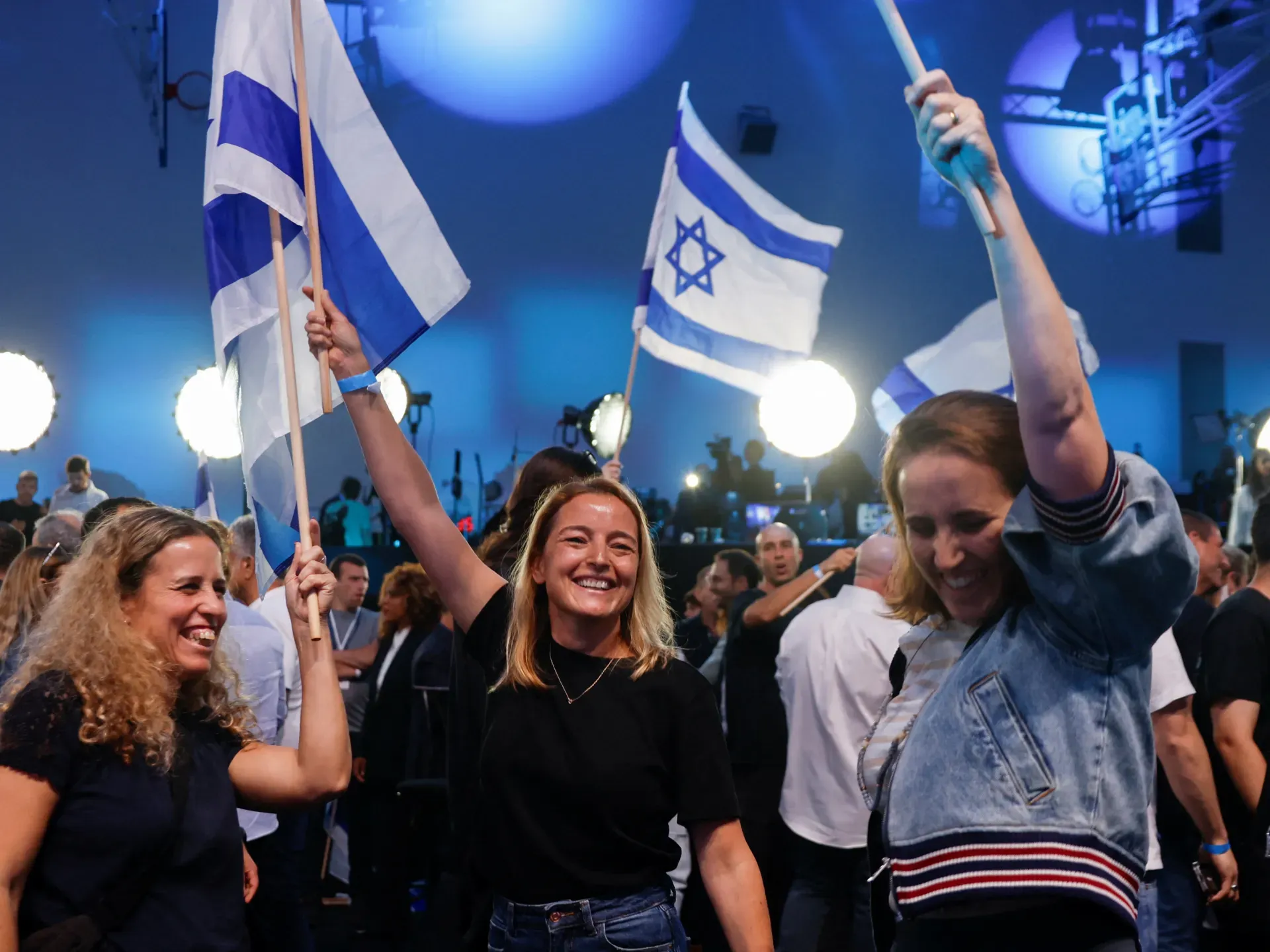
Israel election results 2026: No clear winner projected
Israel election results from the October 2026 legislative polls indicate a political stalemate with no single bloc securing a majority. According to The Times of Israel, exit polls with over 66 percent of ballots counted show Benjamin Netanyahu’s bloc at 56 seats and the opposition alliance at 48 seats. With 61 seats required for a majority in the 120-seat Knesset, the outcome suggests weeks of intense political negotiations. This article examines the seat distribution, the potential role of Arab-led parties, and the constitutional processes for forming a new government.
November 8, 2026
4 min read
Source: ASHENVOW
What are the projected seat counts for the Israeli parties?
The exit poll projections suggest a fragmented parliament where neither the ruling bloc nor the opposition has reached the 61-seat threshold required for a stable majority. According to The Times of Israel, based on more than 66 percent of the ballots, the distribution is split between three main groups.
Netanyahu's Ruling Bloc
The incumbent Prime Minister Benjamin Netanyahu's coalition is leading with 56 seats. The breakdown includes Likud with 28 seats, United Torah Judaism with 8, Shas with 7, Otzma Yehudit with 7, and Religious Zionism with 6. While Likud remains the largest single party, the bloc lacks the numbers to govern independently.
The Opposition Alliance
The opposition is projected to hold 48 seats. This grouping is led by Gadi Eisenkot's Yashar party, which holds 21 seats. Other contributors to this alliance include B’Yachad with 11 seats, Yisrael Beytenu with 8, and The Democrats with 8 seats.
Arab-led Parties
The Arab-led parties are on track to secure 16 seats, consisting of the Joint List with 12 seats and Ra’am with 4. While they are not part of either major coalition, their presence in the Knesset could prove decisive in future negotiations.
How will President Isaac Herzog determine the next Prime Minister?
President Isaac Herzog will be responsible for tasking a candidate with the mandate to form a government once the final vote tally is confirmed on November 4. The President's role involves consulting with various party leaders to identify which individual has the highest probability of assembling a coalition that can pass a confidence vote.
The nomination does not strictly follow the principle of the largest party. While Netanyahu and Eisenkot are the primary contenders due to their respective blocs' sizes, the President's decision is based on political viability. Once a candidate is designated, they are granted an initial period of 28 days to negotiate a coalition, which the President can extend by an additional 14 days.
What are the legal procedures if coalition negotiations fail?
If the first candidate appointed by the President fails to assemble a 61-seat majority within the allotted time, the constitutional process moves to alternative options. The President can then invite another Knesset member to attempt to form a government within a 28-day window.
Should a second attempt also fail, a majority of Knesset members can propose a third candidate, who would then have a final 14 days to build a coalition. If all these attempts result in failure, the Knesset must be dissolved. In such an event, new elections would need to be called within 90 days. During any period of political impasse, the current government remains in office in a caretaker capacity to ensure state continuity.
Historical Precedents of Political Gridlock
Israel has experienced similar periods of instability in the recent past. Between April 2019 and March 2020, the country underwent three successive rounds of elections due to an inability to form a stable government. This era eventually led to a power-sharing agreement between Benjamin Netanyahu and Benny Gantz, featuring a rotating prime ministership. However, that specific government collapsed after only one year when it failed to pass a national budget.
Will Arab-led parties act as kingmakers in the new government?
The 16 seats held by Arab-led parties could potentially bridge the gap for either the Netanyahu bloc or the opposition, but significant ideological barriers remain. Both Gadi Eisenkot and Benjamin Netanyahu have previously stated they would not enter into partnerships with these parties, citing fundamental differences in values.
Political analysts suggest that the mathematical reality may force a change in strategy. Mohamad Bazzi, director of the Hagop Kevorkian Center for Near Eastern Studies at New York University, noted that reaching the "magic number" of 61 seats will be extremely difficult without the support of the Arab bloc. He suggested a potential compromise where Arab parties might provide external support in the Knesset without holding ministerial positions or formal executive power.
However, other experts warn that the refusal to collaborate could lead to further deadlock. Asaf Ronel, an Israeli political analyst, observed that if leaders cannot overcome their stated refusal to work with Arab-led groups, the most probable outcome is a return to the polls for another election in the coming months.
How have political leaders reacted to the exit polls?
Reactions to the preliminary results have been sharply divided along partisan lines. Gadi Eisenkot, the leader of the Yashar party, interpreted the exit polls as a sign of public dissatisfaction with the current administration, stating they reflect a "lack of confidence" in Netanyahu. Similarly, opposition leader Yair Lapid described the results for the ruling bloc as a "crushing defeat" and a "total collapse."



