
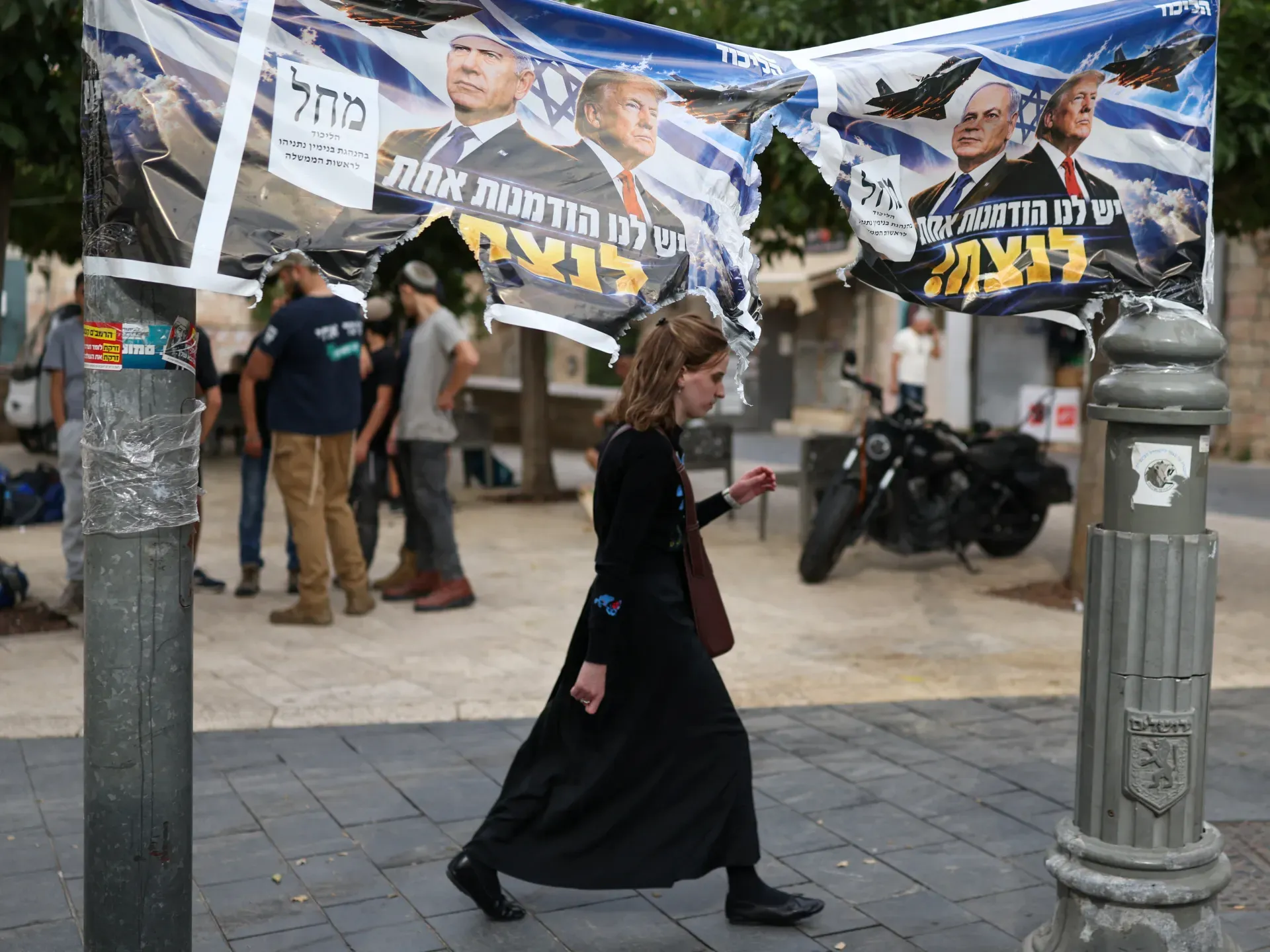
Israel election 2026: No clear winner as major blocs fall short
The Israel election 2026 has resulted in a political deadlock, with neither major political bloc securing the 61 seats required to form a government. As of late Wednesday, nearly 90 percent of the votes had been counted, showing Benjamin Netanyahu’s right-wing bloc on track for 53 seats, while Gadi Eisenkot’s opposition leads with an expected 48 seats. This vote, the first since the October 7, 2023, attacks, serves as a significant referendum on the current administration. This article examines the seat distribution, the role of Arab parties, and the potential for a unity government.
November 8, 2026
5 min read
Source: ASHENVOW
What are the current seat projections for the Knesset?
Neither the governing right-wing bloc nor the main opposition alliance has reached the 61-seat threshold necessary to establish a new administration. According to the Israeli Central Elections Committee, more than five million votes had been processed by 9:00 PM local time on Wednesday, October 29, 2026.
The preliminary distribution suggests a fragmented parliament where no single faction holds dominance. Benjamin Netanyahu’s bloc is currently projected to secure 53 seats in the 120-member Knesset. In contrast, the opposition bloc, led by Gadi Eisenkot, is expected to capture 48 seats. This gap leaves a significant number of seats to be contested by smaller parties and the remaining uncounted ballots.
The impact of special double-envelope ballots
The final tally remains uncertain because more than 500,000 special double-envelope ballots are still being processed. These specific votes are cast by individuals who are away from their registered polling stations, such as soldiers and diplomats. Because these ballots represent a substantial portion of the electorate, they possess the potential to shift the seat distribution between the two primary blocs, though analysts do not expect a clear winner to emerge regardless of the final count.
How will the political deadlock be resolved?
President Isaac Herzog will begin the formal process of consulting with party leaders next week to determine how a new government might be formed. Since no party in Israel's history has ever achieved an outright majority, the formation of a coalition is the standard procedure. Netanyahu is expected to remain in his role as caretaker prime minister until the constitutional process concludes.
The path to a majority is complicated by the refusal of key leaders to cooperate with certain factions. Gadi Eisenkot has explicitly ruled out the possibility of forming a minority government that relies on the support of Arab-led parties. Similarly, Benjamin Netanyahu has rejected the prospect of such an arrangement. This creates a narrow corridor for negotiations, as any successful coalition must find a way to bridge the gap between the 48 and 53 seat projections.
The possibility of a unity government
Given the lack of a clear mandate for either side, political analysts suggest that the most viable path forward may be a unity government. Such an arrangement could potentially include Eisenkot’s opposition bloc alongside elements of Netanyahu’s camp. However, the ideological divides between the two leaders remain deep, making a consensus-based administration far from certain. The President has urged all political actors to avoid further elections, which would only serve to stall the country's governance.
What role did Arab parties play in the 2026 results?
Arab political parties, specifically the Joint List and Ra’am, are projected to hold a record combined total of 19 seats in the upcoming Knesset. This high level of representation suggests that Arab voters played a decisive role in the election outcome, particularly in preventing the incumbent bloc from reaching a majority.
The Joint List has characterized its performance as a rejection of the current administration's policies. The alliance stated that voters used the ballot box to respond to what they described as incitement and intimidation. They positioned their support as a demand for political unity and a defense of Arab citizens' rights. While the Joint List expressed a willingness to cooperate with an alternative government to remove Netanyahu, leader Yousef Jabareen clarified that the alliance would not join such a government itself.
Allegations of election interference
The election has been marred by serious accusations from the Likud party regarding the conduct of Arab parties. Netanyahu’s Likud party accused Arab-led factions of "stealing" the election through criminal offenses, including bribery, threats, and the use of prohibited software to mobilize voters. The party stated it is transferring evidence of these alleged irregularities to the police, the Shin Bet, and the Central Elections Committee. These allegations add a layer of legal and social tension to an already volatile political environment.
Why was this election considered a referendum on Netanyahu?
The 2026 vote is widely viewed as a direct assessment of Benjamin Netanyahu’s leadership following the events of October 7, 2023, and the subsequent conflict in Gaza. For many voters, the election was a choice between the continuity of the current administration and a fundamental change in the country's direction.
Despite the lack of a clear majority, the 77-year-old Prime Minister does not appear to be facing an immediate political defeat. His bloc remains the largest single entity in the Knesset, which provides him with a baseline of leverage during coalition talks. Conversely, Gadi Eisenkot has framed the election results as a mandate for change, stating that the people expressed no confidence in the government's handling of recent crises. He described the current state of the incumbent bloc as being at its lowest point in two decades.
FAQ: Israel Election 2026
How many seats are needed to form a government in Israel?
To form a functional government in the 120-member Knesset, a coalition must secure at least 61 seats. Currently, neither the Netanyahu-led bloc nor the Eisenkot-led opposition has reached this threshold, leading to a period of political uncertainty and necessary negotiations.
What is the status of Benjamin Netanyahu following the vote?
Benjamin Netanyahu will continue to serve as the caretaker prime minister. He will remain in this position until President Isaac Herzog completes the consultation process with party leaders and a new administration is officially sworn into office.
Will Arab parties join a new coalition?
While Arab parties like the Joint List have indicated they might support an anti-Netanyahu government from the outside, they have stated they will not formally join such a coalition. Furthermore, major opposition leader Gadi Eisenkot has ruled out forming a minority government that depends on Arab party support.
What are the "double-envelope" ballots?
Double-envelope ballots are special votes cast by individuals who are not at their registered polling stations, such as diplomats and members of the military. With over 500,000 of these ballots still being counted, the final seat distribution in the Knesset could still shift.
Has there been any legal challenge to the election results?
Yes, the Likud party has alleged that Arab parties engaged in election theft through bribery and forgery. They have indicated that they are submitting evidence of these alleged criminal activities to the police and the Shin Bet for investigation.
Key takeaways
- Neither major political bloc reached the 61-seat requirement for a majority.
- Netanyahu's bloc is projected to win 53 seats, while Eisenkot's leads with 48.
- Arab parties are expected to hold a record 19 seats combined.
- Over 500,000 special ballots remain to be counted, potentially altering results.
Conclusion
The 2026 Israeli election has reinforced the country's tradition of coalition-based politics, yet it has also highlighted a profound national division. With no clear winner emerging from the initial count, the responsibility for stability shifts to President Isaac Herzog and the various party leaders. The potential for a unity government remains a central topic of discussion, though the conflicting stances of Netanyahu and Eisenkot regarding Arab party cooperation present significant hurdles. As the final votes are tallied, the political landscape remains defined by a struggle to find a parliamentary majority in a deeply polarized electorate.



