
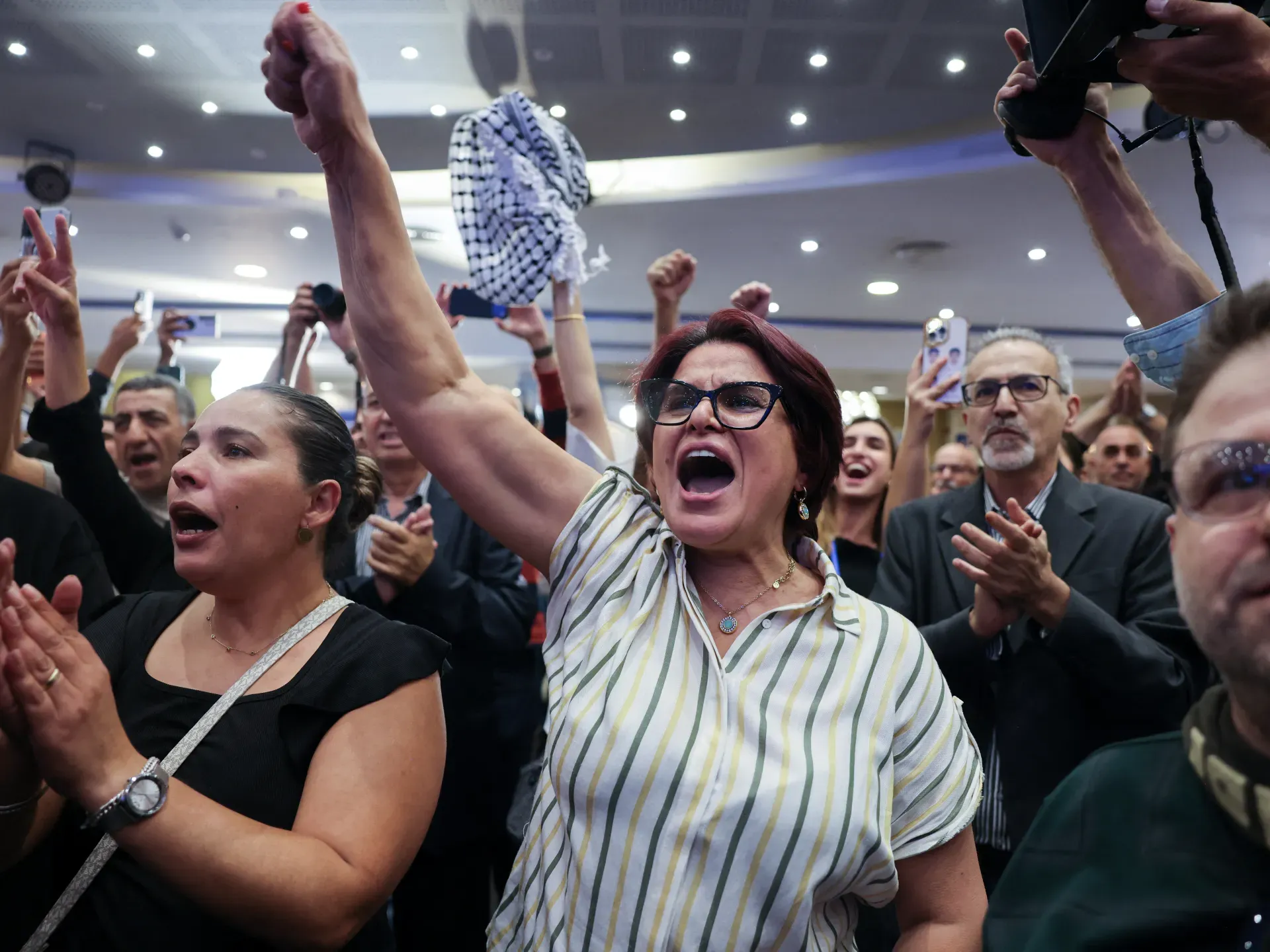
Israel election 2026: Palestinian turnout causes deadlock
The Israel election 2026 has resulted in a fragmented parliament where Palestinian citizens hold significant leverage. An estimated 80 percent of eligible Palestinian voters participated, granting the United Arab List and the Joint List a combined 19 seats in the 120-member Knesset. While these seats could theoretically allow an opposition coalition to surpass Benjamin Netanyahu's bloc, mainstream Jewish political leaders have largely rejected the legitimacy of this mandate or refused to form alliances with Arab parties. This article examines the surge in Palestinian voter participation, the refusal of the Jewish opposition to cooperate, and the resulting political impasse.
November 8, 2026
5 min read
Source: ASHENVOW
How did Palestinian voters influence the 2026 election results?
Palestinian citizens of Israel achieved a historic surge in political engagement, with an estimated 80 percent of eligible voters turning out for the Tuesday polls. This community represents approximately 21 percent of Israel's total population, making their collective action a decisive factor in the parliamentary makeup. The high turnout was largely driven by intense domestic and regional tensions, including anger over the ongoing war in Gaza and perceptions of systemic racism within the current governing coalition.
The concentrated voting power of this demographic has resulted in the United Arab List (Ra’am) and the Joint List securing a combined 19 seats in the 120-seat Knesset. In a parliament where the pro-Netanyahu bloc holds 53 seats and the anti-Netanyahu Jewish opposition holds 48, these 19 seats represent the mathematical difference between a majority and a minority. Consequently, the Palestinian bloc has emerged as a pivotal force that could determine the formation of the next government, provided any viable coalition is willing to negotiate with them.
Why are Jewish political blocs rejecting the Arab vote?
Leading political factions in Israel have responded to the Palestinian surge by questioning its legitimacy rather than acknowledging its democratic weight. Prime Minister Benjamin Netanyahu’s Likud party has characterized the high turnout as a potential threat of "Islamisation" and has called upon the Shin Bet, Israel's internal security service, to investigate possible foreign interference. By framing the surge as an externally engineered event, the ruling bloc effectively casts the Palestinian vote as an attempt to undermine the democratic process.
This strategy of delegitimization extends beyond the ruling Likud party to elements of the opposition. While the left-wing Democrats have shown more openness to cooperation, many other Jewish-led parties have remained hesitant to align with Palestinian-led lists. This reluctance is often framed through the lens of national security or the preservation of a specific Zionist identity, which many analysts argue views the Arab vote as a fundamental challenge to the state's core character.
The tension between Zionism and Palestinian civic rights
The political impasse is rooted in a deep-seated disagreement regarding the definition of Israeli citizenship. While Palestinian parties advocate for equal national and civic rights, much of the mainstream Israeli political landscape is built upon the premise of Jewish supremacy. This tension was codified in the 2018 Nation State Law, which grants the right of national self-determination exclusively to the Jewish people. As a result, many Jewish politicians view an alliance with Arab parties not merely as a political calculation, but as a compromise of the state's Zionist foundation.
Which opposition leaders have refused to form a coalition?
Several prominent figures within the anti-Netanyahu camp have explicitly ruled out any partnership with Palestinian political entities. Despite having utilized Arab support to help form a government during the 2021–22 period, former Prime Ministers Naftali Bennett and Yair Lapid have stated they will not sit in a coalition alongside Palestinian parties. This reversal highlights a growing trend of political isolationism within the Jewish opposition.
The hard-right leader of Yisrael Beytenu, Avigdor Lieberman, also joined this trend by declaring he would not form a coalition with either Netanyahu or Ahmad Tibi, the leader of the Ta’al party. Lieberman's refusal to engage with the wider Palestinian bloc underscores the difficulty of building a majority that transcends ethnic and religious lines. This refusal creates a paradox: while the mathematical majority in parliament lies with those who would oppose Netanyahu, the political reality makes forming such a government nearly impossible due to the refusal of Jewish leaders to recognize Arab mandates.
What are the implications of this political deadlock?
The current electoral outcome suggests a period of prolonged instability and a potential crisis for democratic norms in Israel. Orly Noy, representing the Balad party, has argued that the refusal of the opposition to form a majority with Arab parties is a sign of both deep-seated racism and a lack of democratic integrity. She noted that instead of forming a government that reflects the actual seat distribution, many opposition members are discussing a "National Unity" government that would essentially rejoin Netanyahu.
Political analyst Nimrod Flaschenberg suggests that the refusal to acknowledge the Arab vote is a symptom of a system that struggles to integrate non-Jewish voices into its governance model. If the primary political actors continue to view the Palestinian minority's democratic participation as a threat rather than a component of the electorate, the ability to form a stable, representative government will remain compromised. This deadlock leaves the country caught between a massive surge in minority civic engagement and a political class that remains unwilling to incorporate that engagement into the halls of power.
FAQ: Israel Election 2026
How many seats did Palestinian parties win?
The United Arab List (Ra’am) and the Joint List won a combined total of 19 seats in the 120-member Knesset. This makes them a significant bloc that holds the potential to decide which major camp forms the next government, despite being largely excluded from coalition talks.
What was the Palestinian voter turnout?
The turnout among eligible Palestinian citizens of Israel was approximately 80 percent. This significant surge in participation was driven by domestic concerns regarding the war in Gaza and the perceived erosion of rights for Palestinian citizens within the country.
Why is Netanyahu investigating the election results?
Prime Minister Netanyahu and the Likud party have called for investigations by the Shin Bet into potential foreign interference. They have suggested that the high Palestinian turnout might not be entirely organic, aiming to delegitimize the impact of the Arab vote on the election outcome.
Will the opposition form a government with Arab parties?
Most major Jewish-led opposition parties, including those led by Naftali Bennett and Yair Lapid, have ruled out forming a coalition with Palestinian parties. While the Democrats have been more open to cooperation, the prevailing political sentiment is to avoid alliances with the Palestinian-led blocs.
What is the current seat distribution in the Knesset?
The pro-Netanyahu bloc holds 53 seats, while the anti-Netanyahu Jewish opposition holds 48 seats. When the 19 seats held by Palestinian parties are included, the mathematical majority in parliament is technically against the current Prime Minister's camp.
Key takeaways
- Palestinian voter turnout reached a significant 80 percent during the 2026 elections.
- Arab parties secured 19 seats, potentially acting as a kingmaker in the Knesset.
- The pro-Netanyahu bloc holds 53 seats, failing to secure a direct majority.
- Mainstream Jewish opposition leaders have largely rejected forming coalitions with Palestinian parties.
Conclusion
The 2026 Israeli elections have highlighted a profound fracture in the nation's democratic fabric. While Palestinian citizens demonstrated unprecedented civic engagement through an 80 percent turnout, the political establishment has responded with skepticism and a refusal to integrate these voices into governance. The resulting deadlock—where a mathematical majority exists but a political one does not—reflects a fundamental conflict between the rising demand for equal civic rights and the traditional Zionist framework of the state. Until the political class reconciles these competing visions, Israel faces a period of continued instability and legislative paralysis.



