
Israel election 2026: Exit polls trigger Netanyahu-Eisenkot deadlock
The Israel election 2026 exit polls indicate a highly fragmented political landscape with no single bloc securing a governing majority. According to the Times of Israel, partial results from 55 percent of ballot boxes project 56 seats for Benjamin Netanyahu’s Likud-led coalition and 49 seats for the opposition bloc led by Gadi Eisenkot. Arab-led parties are currently projected to hold 15 seats in the 120-seat Knesset. This deadlock has ignited fierce debate between the governing camp and the opposition regarding the legitimacy of the mandate. This article examines the exit poll projections, the reactions from key political leaders, and the potential role of smaller parties in upcoming coalition negotiations.
November 8, 2026
6 min read
Source: ASHENVOW
What do the Israel election 2026 exit polls reveal?
Initial projections from the 2026 electoral process suggest a deeply divided electorate, leaving the future of the Knesset in a state of uncertainty. As of the latest data, with just over 55 percent of the ballot boxes counted, the political landscape is split between two primary competing interests. According to the Times of Israel, the Likud-led coalition, headed by Prime Minister Benjamin Netanyahu, is currently projected to secure 56 seats. In contrast, the opposition bloc, led by former military chief of staff Gadi Eisenkot, is projected to receive 49 seats.
The remaining seats in the 120-member Knesset are expected to be distributed among unaligned Arab-led parties, who are currently projected to hold 15 seats. This distribution means that neither the governing bloc nor the primary opposition can form a government independently. The high level of engagement in this election is reflected in the voter turnout, which reached 77.7 percent according to the Central Elections Committee.
The breakdown of projected Knesset seats
The projected seat distribution creates a mathematical challenge for any party attempting to form a stable government. With 120 total seats, a minimum of 61 is required for a majority. The current gap between the Likud-led coalition and the Eisenkot-led opposition is narrow, leaving the balance of power in the hands of smaller, unaligned factions.
| Political Bloc / Group | Projected Seats | Leadership |
|---|---|---|
| Likud-led Coalition | 56 | Benjamin Netanyahu |
| Opposition Bloc | 49 | Gadi Eisenkot |
| Arab-led Parties | 15 | Various |
How are the political leaders reacting to the projections?
Political leaders from both sides of the aisle have engaged in a heated rhetorical battle, interpreting the narrow margins through vastly different lenses. For the opposition, the inability of the Netanyahu government to secure a dominant majority is being framed as a definitive rejection of the current administration. Gadi Eisenkot, leader of the Yashar party, addressed his supporters following the close of polls, stating that the initial projections represent a "complete lack of confidence in Netanyahu and the October 7 government," according to the AFP news agency.
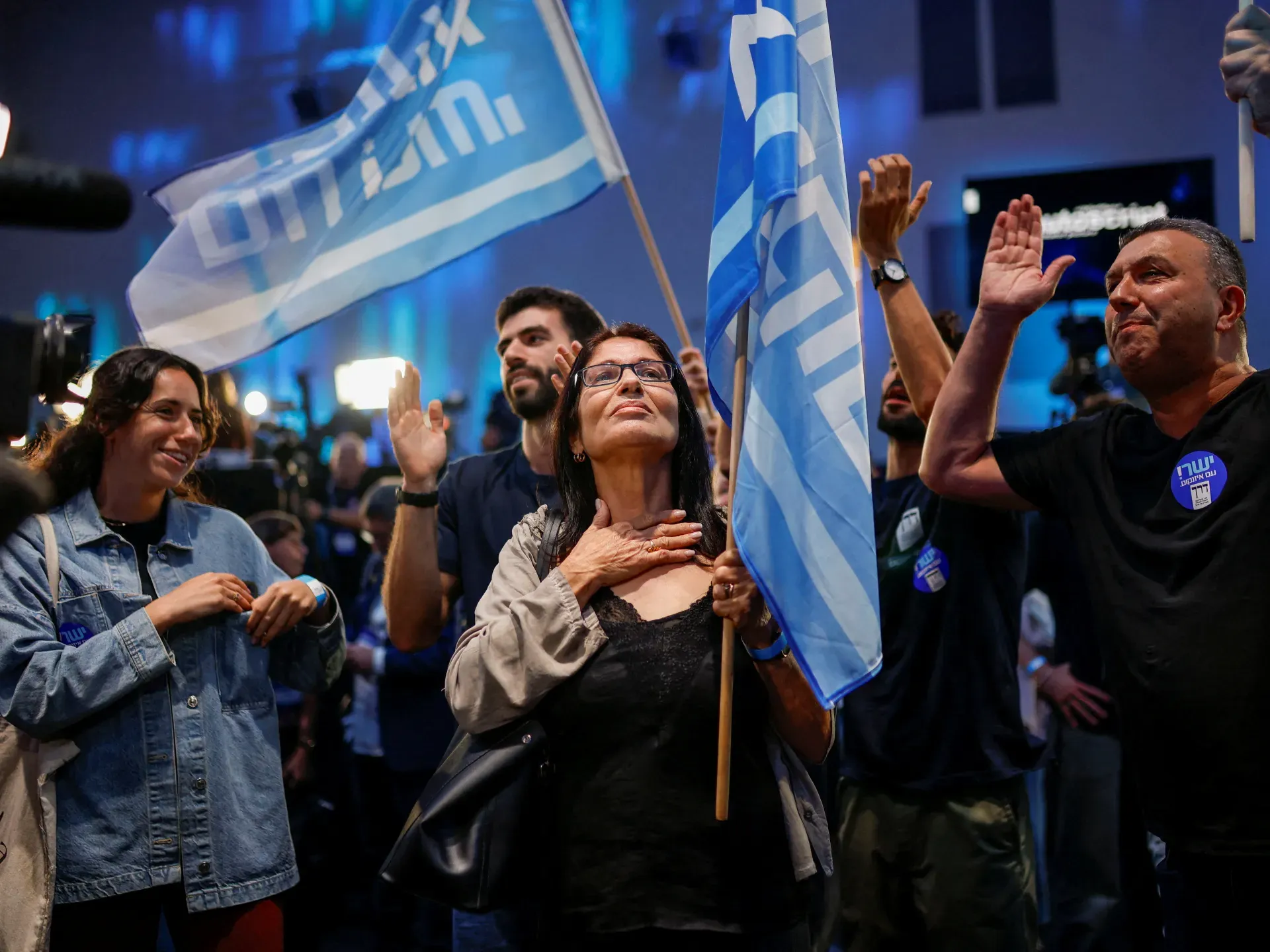
Yair Lapid, a prominent opposition leader, echoed these sentiments with even stronger language. In a formal statement, Lapid characterized the projected results as a "total collapse," asserting that the public had effectively told the current government to "go home." The atmosphere at the Yashar party headquarters in Tel Aviv was one of celebration among supporters, who viewed the projections as a significant setback for the incumbent Prime Minister.
Conversely, the Netanyahu camp has rejected these claims of defeat. Senior figures within the Likud-led coalition argue that the opposition's declarations are premature and ignore the fact that the final count is not yet complete. Gideon Saar, Israel’s foreign minister and a close ally of Netanyahu, used social media to dismiss the opposition's narrative. Saar emphasized that Likud remains the largest single party in the parliament, suggesting that the government's position remains fundamentally strong despite the narrow margins.
What role will Arab-led parties play in the new government?
The unaligned Arab-led parties are positioned as the potential kingmakers in the upcoming coalition negotiations. Because neither the Netanyahu-led bloc nor the Eisenkot-led opposition has reached the 61-seat threshold, the 15 seats projected for Arab factions could prove decisive in determining who forms the next government.
Mansour Abbas, the leader of the United Arab List (Ra’am), has already signaled his intention to leverage this position. Speaking to reporters, Abbas stated that his party intends to "transform the mandate we received into a new reality in the country." This suggests that the Arab-led parties will seek significant policy concessions or influence in exchange for their support in a coalition.
At the Joint List alliance headquarters in Nazareth, the sentiment among Palestinian citizens of Israel was focused on political resistance. Candidate Faten Gattas informed supporters that the high participation rates were a strategic move intended to block the return of a nationalist coalition led by Netanyahu. According to the Reuters news agency, Gattas stated that the community refuses "the occupation and racism" and intended to maintain their political presence through active voting.
What are the implications for future coalition negotiations?
The primary implication of the 2026 election results is a prolonged and complex period of political maneuvering. With no clear winner, the transition from election day to the formation of a government will likely be characterized by intense negotiations, shifting alliances, and political volatility.
Political analysts suggest that the focus will shift immediately to the smaller parties. These factions will hold immense leverage, as their support can tip the scales toward either the incumbent Netanyahu or the challenger Eisenkot. The negotiations are expected to begin in the coming days as formal talks are initiated to see if a stable majority can be constructed.
The outcome of these talks will depend on several factors:
- The ability of the Likud-led bloc to attract enough unaligned members to reach 61 seats.
- The willingness of the opposition to form a broad coalition that might include diverse interests.
- The specific policy demands of the Arab-led parties and their impact on the ideological makeup of a potential government.
Given the deep polarization seen in the exit polls, the formation of a stable and lasting government remains a significant challenge for the Israeli political system.
Frequently asked questions
Who is leading the main political blocs in the 2026 election?
The two primary blocs are led by Benjamin Netanyahu, who heads the Likud-led coalition, and Gadi Eisenkot, the former military chief of staff who leads the Yashar party. The election results show a narrow split between these two major political forces.
How many seats are needed to form a government in Israel?
To form a governing majority in the 120-seat Knesset, a coalition must secure at least 61 seats. Current projections show the Netanyahu bloc with 56 seats and the Eisenkot bloc with 49, meaning neither can rule without additional support.
What was the voter turnout for the 2026 election?
The voter turnout for the election was significantly high, reaching 77.7 percent according to the Central Elections Committee. This high level of participation reflects the intense political engagement and polarization within the Israeli electorate during this period.
How do Arab-led parties influence the outcome?
Arab-led parties are projected to hold 15 seats, making them essential for any group seeking a majority. Leaders like Mansour Abbas have indicated they will use their mandate to influence the political reality and negotiate for their interests during coalition talks.
What is the reaction from the Netanyahu camp?
Netanyahu's allies, including Foreign Minister Gideon Saar, have dismissed the opposition's claims of a "crushing defeat" as premature. They maintain that Likud remains the largest single party in the Knesset and that the final results could still favor the government.
Key takeaways
- Exit polls project a deadlock with 56 seats for Netanyahu and 49 for Eisenkot.
- Voter turnout reached 77.7 percent according to the Central Elections Committee.
- Arab-led parties hold 15 projected seats, acting as potential coalition kingmakers.
- Opposition leaders claim the results represent a total collapse of the current government.
Conclusion
The 2026 Israel election has resulted in a deeply fractured Knesset, where the narrow gap between the Netanyahu-led coalition and the Eisenkot-led opposition leaves the nation in a state of political suspense. With no clear mandate for either side, the upcoming weeks will be defined by high-stakes negotiations. The influence of unaligned Arab-led parties will be paramount, as their support is required to bridge the gap to a governing majority. As the country moves from exit polls to formal coalition talks, the ability of political leaders to find common ground will determine the stability of Israel's next government.



