
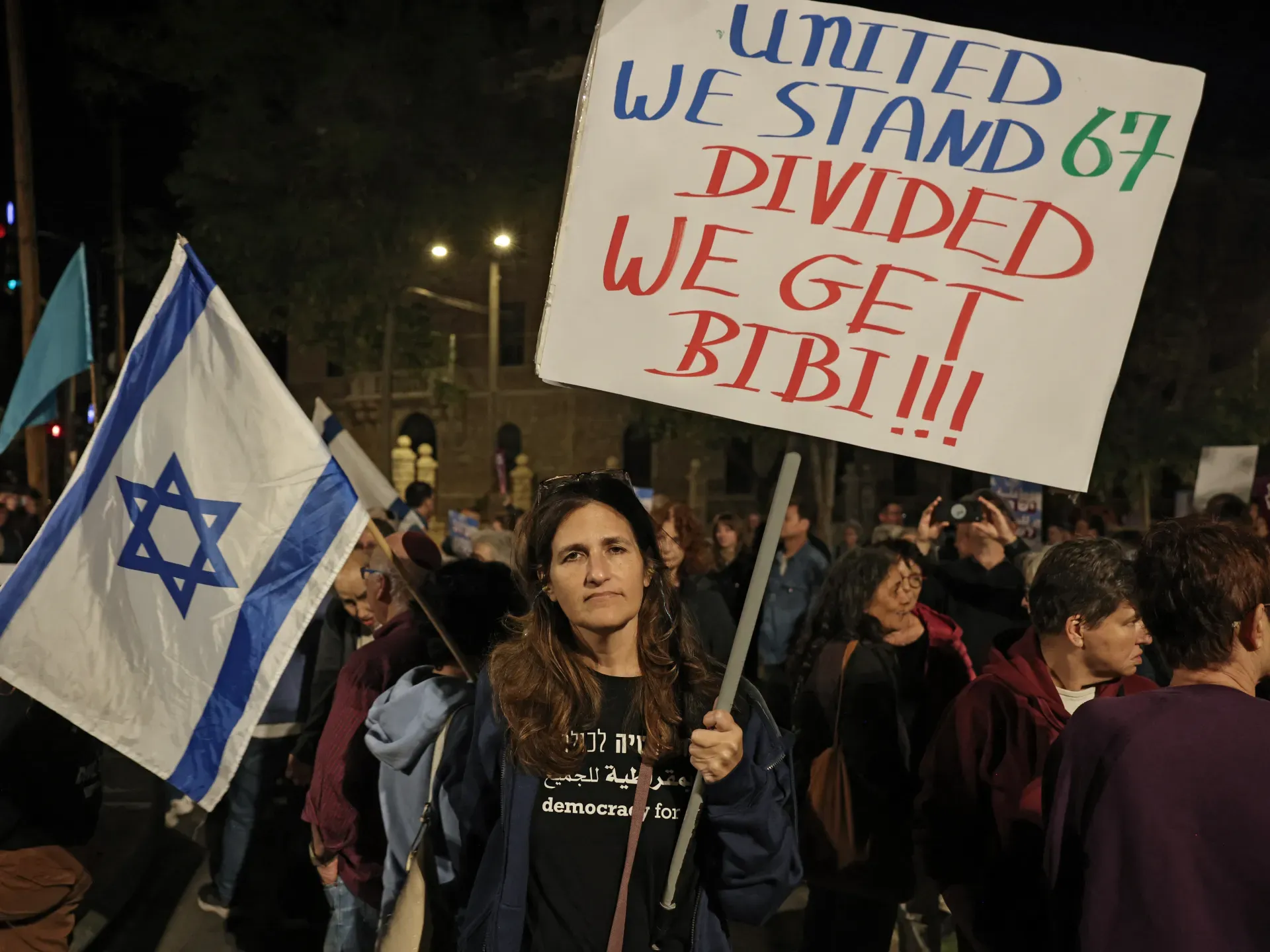
Israel election 2026 deadlock: Netanyahu claims 'stolen' vote
The Israel election 2026 deadlock has left the nation's political future uncertain following a split parliament. The election results show the Likud-led bloc secured 53 seats, while the opposition led by Gadi Eisenkot won 48, preventing either side from reaching the 61-seat majority required in the 120-seat Knesset. Prime Minister Benjamin Netanyahu has alleged the election was 'stolen' through foreign influence, specifically targeting Arab-led parties. However, the Central Elections Committee maintains that the results remain valid regardless of these claims. This article examines the allegations of interference, the arrest of political activists, and the potential paths toward forming a government.
November 8, 2026
5 min read
Source: ASHENVOW
What is the current status of the Israel election 2026 deadlock?
The Israeli parliament is currently in a state of political paralysis following the general elections held on Tuesday. With the 120-seat Knesset divided between two major blocs that cannot command a majority, the country faces a period of intense coalition negotiations or the possibility of further electoral instability.
According to the latest figures from the election, Prime Minister Benjamin Netanyahu’s Likud-led bloc secured 53 seats. In contrast, the main opposition bloc, headed by Gadi Eisenkot, obtained 48 seats. This mathematical reality means that neither the incumbent nor the primary opposition can form a government independently. The remaining seats are held by various smaller parties, most notably a group of Arab-led parties that achieved a record-breaking performance.
The deadlock is further complicated by the significant influence of Arab-led parties, which collectively won 19 seats. This outcome has fundamentally altered the arithmetic of the Knesset, making these parties the potential kingmakers in any attempt to reach the 61-seat threshold required for a stable governing coalition.
Why is Benjamin Netanyahu claiming the election was 'stolen'?
Prime Minister Benjamin Netanyahu has publicly alleged that the election results were compromised, though he has not provided formal evidence to support these assertions. His claims focus on the unexpected success of Arab-led parties, which saw significant gains during the Tuesday polls.
Netanyahu has specifically accused these parties of accepting funding from Qatar to influence the electoral outcome. In response to these allegations, the government of Qatar has issued a rejection, characterizing the Prime Minister's statements as a disinformation campaign. This tension adds a layer of international diplomatic friction to an already volatile domestic political situation.
The response from the Central Elections Committee
Despite the gravity of the Prime Minister's accusations, the official electoral authorities have remained steadfast in their defense of the process. Noam Sohlberg, the head of the Central Elections Committee, addressed the concerns in a video statement released on Sunday.
Sohlberg appeared alongside the head of the Shin Bet, Israel’s internal security agency, and the attorney general to present a unified front. He stated that even if suspicions regarding foreign interference were to be substantiated, such findings would not undermine the overall integrity of the electoral process or the validity of the results. The committee's position is that the democratic mechanism remains intact regardless of external attempts to influence voter sentiment.
How have allegations of voter bribery affected the political landscape?
The legitimacy of the election has been further challenged by police investigations into potential voter bribery involving political activists. These incidents occurred just as the polls were opening, adding to the atmosphere of mistrust surrounding the democratic exercise.
Israeli police reported the arrest of three political activists prior to the election. Two of these individuals were released on Sunday, while one was placed under house arrest. According to police reports, the suspects were found in possession of envelopes containing cash, which were allegedly intended for the purpose of bribing voters.
The arrests have sparked significant political backlash. The suspects were reportedly connected to the Ra’am party, an Arab-led group that successfully won eight seats in the election. Mansour Abbas, the leader of the Ra’am party, has strongly condemned the police actions. He described the arrests as undemocratic and characterized them as a deliberate attempt to manipulate the election results and sway the public perception of his party's legitimacy.
What are the potential paths to forming a new government?
The path toward a new government in Israel remains blocked by deep ideological divisions, particularly regarding the role of Arab-led parties in a governing coalition.
The primary mathematical solution to the deadlock involves a coalition between Gadi Eisenkot’s opposition bloc and the Arab-led parties. If Eisenkot were to secure the support of these parties, he would command a comfortable majority of 67 seats in the 120-seat parliament. This would effectively oust Netanyahu and install a new leadership.
However, this path is fraught with political difficulty. While Eisenkot has previously stated that he would not form a coalition with Arab parties, the current deadlock may force a pragmatic shift in his strategy. For a large segment of the Israeli electorate, the prospect of an opposition leader relying on Arab political support to hold power is considered politically unpalatable, creating a significant barrier to stability.
The role of the President in the formation process
The formal process of government formation is now moving toward the institutional phase. Once the election results are officially certified later this week, the responsibility shifts to the presidency.
President Isaac Herzog is tasked with the constitutional duty of nominating a candidate to attempt to form a new government. The President's decision will be based on which political figure appears most capable of assembling a working majority in the Knesset. This period will likely be defined by intense lobbying, shifting alliances, and continued political friction between the Likud bloc and the opposition.
Frequently asked questions
What was the seat distribution in the 2026 Israeli election?
The 120-seat Knesset is currently deadlocked. Netanyahu's Likud-led bloc won 53 seats, while Gadi Eisenkot's opposition bloc won 48 seats. Arab-led parties secured a record 19 seats, meaning no single bloc has the 61 seats necessary to govern alone.
Did the Central Elections Committee validate the election results?
Yes, the Central Elections Committee has affirmed the results. Committee head Noam Sohlberg stated that even if claims of foreign interference were proven true, the integrity of the overall electoral process and the results themselves would remain standing and valid.
What are the allegations regarding Qatari funding?
Prime Minister Netanyahu has alleged that Arab-led parties received funding from Qatar to influence the election. Qatar has officially denied these claims, labeling them as part of a disinformation campaign intended to undermine the democratic process.
Who is Mansour Abbas and why is he involved in the controversy?
Mansour Abbas is the leader of the Ra’am party, which won eight seats. He became a central figure in the controversy after police arrested activists allegedly linked to his party for attempted voter bribery, an act Abbas called an undemocratic attempt to influence the vote.
Can Gadi Eisenkot form a government with Arab parties?
Mathematically, yes. A coalition between Eisenkot's 48 seats and the 19 seats held by Arab-led parties would create a 67-seat majority. However, Eisenkot has previously ruled this out, and such a move remains politically controversial within Israel.
Key takeaways
- The 2026 election resulted in a deadlock with 53 seats for Likud and 48 for the opposition.
- Arab-led parties achieved a record 19 seats, becoming essential for any majority.
- Netanyahu has alleged foreign interference and Qatari funding without providing evidence.
- The Central Elections Committee maintains the results are valid regardless of interference claims.
- Police arrested activists allegedly attempting to bribe voters with envelopes of cash.
Conclusion
The 2026 Israeli election has plunged the country into a profound political crisis. The mathematical deadlock between the Likud and opposition blocs, combined with the unprecedented influence of Arab-led parties, has created a complex legislative environment. While Prime Minister Netanyahu continues to challenge the legitimacy of the results through allegations of foreign interference, the official electoral bodies have upheld the integrity of the vote. The coming days will be critical as President Isaac Herzog begins the formal process of seeking a candidate who can navigate these deep ideological divides to form a stable government.



