
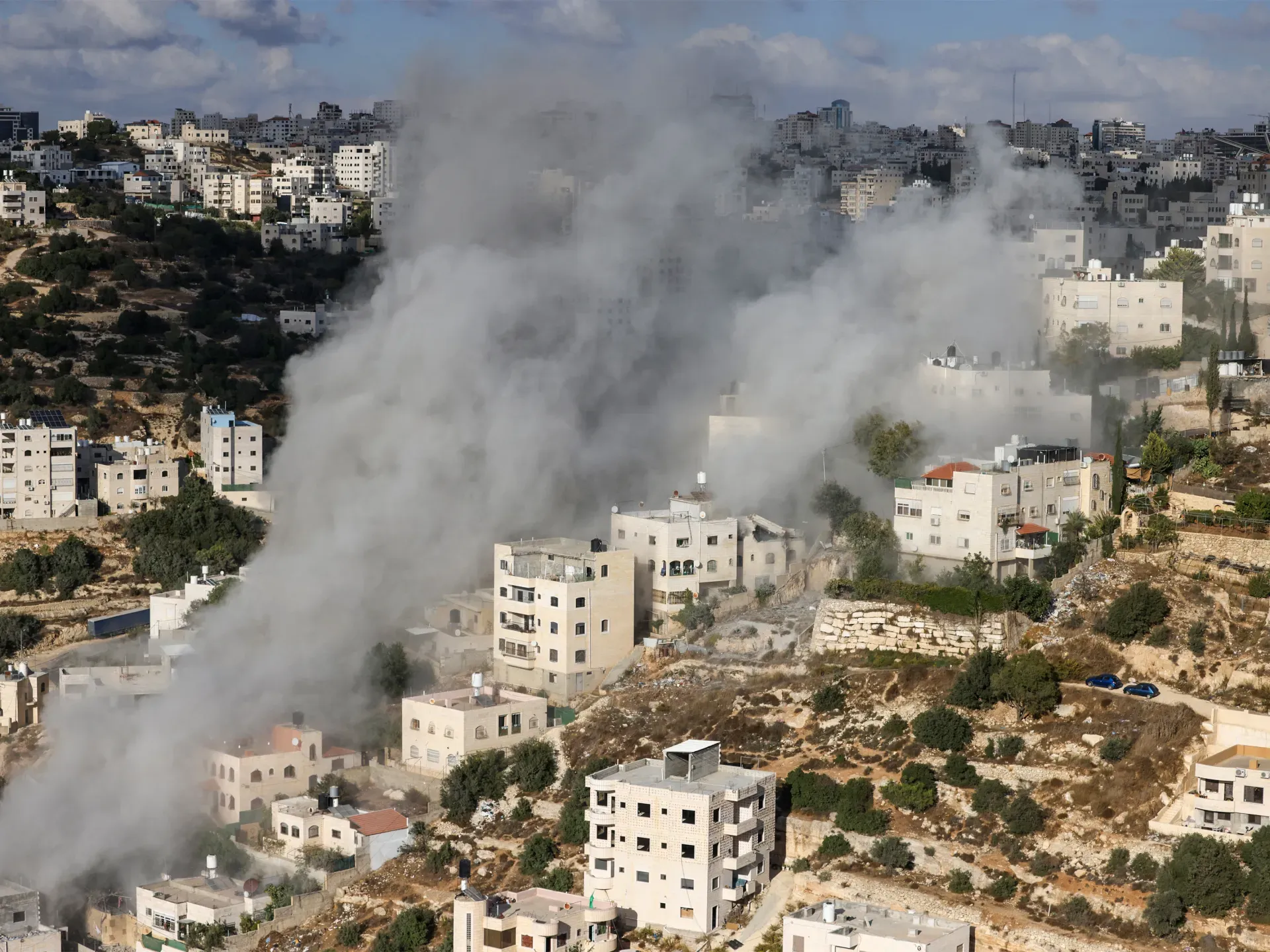
Israel demolishes homes in Hebron following soldier attack
Israel demolishes homes in Hebron belonging to two Palestinians accused of killing Israeli soldiers. On October 30, 2026, Israeli forces detonated explosives to destroy the residences of brothers Ahmad and Hammouda al-Jaabeh. This action occurs during an eight-day military siege in the occupied West Bank city that has displaced 4,969 Palestinians from 780 families according to the Hebron municipality. The offensive follows an October 23 attack near the Farsh al-Hawa checkpoint. This article examines the scale of the displacement, the military operations in the Ein Deir Bahha neighbourhood, and the legal and political implications of these demolitions.
November 8, 2026
5 min read
Source: ASHENVOW
Why did the Israeli military demolish these specific homes?
The demolition of the homes belonging to Ahmad and Hammouda al-Jaabeh was a direct response to an attack on October 23 near the Farsh al-Hawa checkpoint. During that incident, the two brothers killed two Israeli soldiers and wounded three others at the western entrance to Hebron. Following the attack, the Israeli military initiated an intensive offensive in the city that has now entered its eighth day.
On the Friday of the demolitions, army engineers reportedly spent at least nine hours inside the buildings, rigging them with explosives before the final detonation. The military operation in this sector has been characterized by high levels of surveillance and control, with drones providing support to troops on the ground during the demolition process and subsequent detentions.
The scale of the military response
The response to the October 23 attack has extended beyond the immediate targets. In addition to the residential demolitions, at least 13 businesses located near the checkpoint have been destroyed. This indicates a broad-reaching military effort to reshape the security landscape around the Farsh al-Hawa checkpoint and the western approaches to the city.
How has the Hebron offensive impacted local residents?
The military siege has caused massive displacement, with the Hebron municipality reporting that 4,969 Palestinians from 780 families have been forced to flee their homes. The impact is most severe in the Ein Deir Bahha neighbourhood, which Israeli forces have completely emptied of its residents. In some instances, former residential structures have been repurposed into military command centres and barracks.
While some areas have been cleared, other populations remain in a state of precariousness. In the neighbouring al-Jalda area, hundreds of families are currently trapped in their homes due to the ongoing military presence. The siege has also involved significant detention activity; Israeli forces have arrested at least 120 Palestinians since the operation began, with hundreds more undergoing interrogation.
Protests and civilian distress
The humanitarian situation has triggered localized demonstrations. Displaced residents, including vulnerable groups such as women, children, and the elderly, have staged protests near the closed al-Jalda roundabout. These individuals have expressed demands for the end of the military siege and the restoration of their right to return to their properties.
What are the political implications of these demolitions?
Analysts suggest that the operation serves political objectives that may extend beyond immediate security requirements. Raed Nairat, an academic and expert on Israeli affairs, stated that the operation's message was clear from its inception. He characterized the actions as a form of collective punishment intended to break Palestinian will by imposing a high cost for the actions of individuals.
Nairat further argued that the offensive appears driven by political motives, noting that the operation effectively turns the West Bank into a military zone. He suggested that such measures contribute to the fragmentation of Palestinian society, potentially reversing decades of social development. These sentiments are echoed by Hamas, which described the forced displacements and demolitions as a systematic campaign to undermine the Palestinian presence in the region.
Policy shifts in Area C
The demolitions in Hebron are occurring against a backdrop of shifting policy in the West Bank. Israeli officials have reportedly threatened to accelerate similar demolition activities in Area C, the territory under full Israeli administrative and security control. These potential escalations align with measures previously approved by Finance Minister Bezalel Smotrich following the recent attack on soldiers.
How does this fit into the broader West Bank security context?
The violence in Hebron is part of a wider pattern of intensified military and settler activity across the occupied West Bank. Since the beginning of the conflict in Gaza in October 2023, there has been a documented increase in raids, detentions, and settler-led confrontations. This includes incidents in Tulkarem, Bethlehem, and Nablus.
In recent raids, Israeli forces detained several Palestinians south of Tulkarem. Simultaneously, in the areas surrounding Bethlehem and Nablus, both soldiers and settlers have been reported attacking or driving off olive harvesters. This suggests that the localized siege in Hebron is reflective of a broader regional trend of heightened tension and military presence throughout the West Bank and occupied East Jerusalem.
Frequently asked questions
Who were the individuals whose homes were demolished?
The homes belonged to two brothers, Ahmad and Hammouda al-Jaabeh. They were identified by Israeli forces as the gunmen responsible for an attack on October 23 near the Farsh al-Hawa checkpoint, which resulted in the deaths of two Israeli soldiers and injuries to three others.
How many people have been displaced by the Hebron siege?
According to the Hebron municipality, the military offensive has displaced 4,969 Palestinians. This number represents approximately 780 families who have been forced to leave their homes due to the ongoing military operations and the siege of the city.
What is the current status of the Ein Deir Bahha neighbourhood?
The Ein Deir Bahha neighbourhood has been fully emptied of its civilian residents by Israeli forces. Reports indicate that some of the residential buildings in this area have been converted into military barracks and command centres for the occupying forces.
Has there been a response from Palestinian political groups?
Hamas has officially responded to the events in Hebron, labeling the demolitions and forced displacements as part of a systematic campaign against the Palestinian presence. The group has called for urgent international intervention to address the situation in the West Bank.
Are these demolitions part of a wider policy?
Yes, Israeli officials have indicated that demolitions may be accelerated in Area C. These potential actions follow measures approved by Finance Minister Bezalel Smotrich, suggesting that the actions in Hebron may be linked to broader administrative and political policies in the West Bank.
Key takeaways
- Israeli forces demolished the homes of two brothers in Hebron following an October 23 attack.
- Nearly 5,000 Palestinians from 780 families have been displaced by the Hebron military offensive.
- The Ein Deir Bahha neighbourhood has been cleared and partially converted into military facilities.
- At least 120 Palestinians have been arrested since the start of the current military operation.
Conclusion
The demolition of homes in Hebron marks a significant escalation in the military operations within the West Bank. While the Israeli military frames these actions as a necessary response to the killing of two soldiers, the resulting displacement of nearly 5,000 civilians and the destruction of local businesses highlight the profound humanitarian impact. As the siege continues, the transition of residential areas into military zones and the potential for expanded demolitions in Area C suggest a long-term shift in the regional security and political landscape, further complicating the stability of the occupied territories.



