
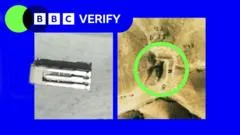
Iran missile base construction: Satellite imagery shows activity
Iran missile base construction and repairs are accelerating near several key military sites, according to recent satellite imagery analysis. Evidence from November shows significant digging and new building activity at the Garmdareh base in Karaj and the Shahroud base in the north. These developments follow months of US and Israeli air strikes that targeted Iranian military infrastructure. Analysts suggest Tehran is prioritizing the relocation of missile production and storage into underground facilities to protect them from further aerial bombardment, specifically targeting hardened sites to mitigate damage from precision-guided munitions.
November 11, 2026
4 min read
Source: ASHENVOW
Satellite imagery identifies new construction and repair sites
Analysis of satellite imagery from November reveals that Iran is undertaking significant construction near at least two major missile sites while simultaneously repairing bases damaged by recent US and Israeli air strikes. According to analysts at the British intelligence company MAIAR, who reviewed the photos for BBC Verify, evidence of new buildings and extensive digging is visible at the Garmdareh military base in Karaj, located near Tehran, and the Shahroud base in northern Iran.
Beyond these primary sites, at least 12 other military locations, including various air bases and missile complexes, show signs of ongoing repair efforts. The scale of the activity suggests a coordinated effort to restore operational capacity across the country's military network.
Observed repairs at specific military complexes
The imagery highlights several specific locations where damage from previous strikes is being addressed:
- Kermanshah missile base: Located in western Iran near the Iraqi border, this site shows new roofs being constructed on buildings that were previously destroyed.
- Parchin military complex: Situated east of Tehran, this complex has undergone repeated repairs. Satellite images show that debris has been cleared and damaged buildings have been addressed.
- Taleghan 2 facility: Part of the Parchin complex, this facility has seen significant construction completion. Analysts noted that damaged buildings were levelled and an underground bunker, previously hit by attacks, has been repaired and reinforced with concrete.
The strategic shift toward underground infrastructure
The excavations observed at several sites indicate a strategic move by the Islamic Revolutionary Guards Corps (IRGC) to move critical assets underground. At the Shahroud base, the nature of the digging suggests a focus on protecting production capabilities. Jim Lamson, a former CIA analyst specializing in Iran, noted that because the Shahroud air base has been a frequent target in recent years, the IRGC is likely attempting to relocate its missile production facilities to subterranean locations.
This pattern of behavior is consistent with previous Iranian military doctrine. A MAIAR analyst stated that Iran maintains a consistent pattern of moving infrastructure underground to shield it from aerial strikes. This tactic serves two primary purposes: physical protection and intelligence denial.
The benefits of subterranean facilities
According to Mark Mellett, a defence analyst and former head of the Irish military, the construction of underground facilities provides a tactical advantage beyond mere physical shielding. He stated that these structures make it "harder for outside observers to assess the extent and operational status" of the military assets housed within them. By moving production and storage into tunnels and reinforced bunkers, Iran aims to complicate the targeting process for US and Israeli forces.
Detailed analysis of Karaj and Qom developments
The Karaj region and the area near Qom are showing intense activity that suggests expansion or reinforcement of existing capabilities. At the Garmdareh base in Karaj, satellite images reveal multiple vehicles and improvements to the adjacent airbase. Sam Lair, a research analyst at the Foreign Policy Research Institute (FPRI), identified what appears to be a "new portal for an underground facility" at the Karaj site.
Further technical analysis from Janes supports these findings. Janes reports that a new facility appears to be under construction at Karaj, featuring tunnel entrances and structures that could indicate an expansion of damaged missile bases or the creation of new storage areas. While some might view such large-scale projects as attempts to deceive intelligence agencies, a Janes analyst, Sean O'Connor, argued that such a project would be too costly and would likely achieve little in terms of actual deception.
| Location | Observed Activity | Potential Function |
|---|---|---|
| Karaj (Garmdareh) | New portals, tunnel entrances, vehicle activity | Expansion of missile bases or storage |
| Shahroud | Significant excavation | Missile production relocation |
| Qom (near Fordo) | New construction and excavations near tunnels | Protection of uranium enrichment/military assets |
| Parchin (Taleghan 2) | Concrete reinforcement, building leveling | Repair of underground bunker |
Contradictory assessments of Iranian military capacity
The ongoing construction efforts highlight a significant discrepancy between US intelligence assessments and Iranian claims regarding the state of Iran's military capabilities. The Pentagon has previously asserted that US-Israeli operations have "significantly degraded" Iran's ability to launch attacks, with a spokesperson stating that up to 90% of Iran's drone, ballistic missile, and naval industrial base has been destroyed.
However, Iranian state media has provided footage intended to counter these claims. This week, state television broadcast images of dozens of missiles positioned at the entrance of an underground facility in southern Iran. Similar footage from August showed Khordad surface-to-air missiles emerging from a tunnel near the city of Bandar Abbas. These visual claims suggest that despite the intensity of the air strikes, Iran maintains significant stockpiles of weaponry.
Political and economic implications of the buildup
The military activity is occurring against a backdrop of shifting political dynamics in the United States. While there has been speculation regarding a resumption of US attacks following the recent midterm elections, US political leaders have expressed caution. Vice-President JD Vance suggested that the unpopularity of the conflict may have impacted Republican performance in recent polls, potentially affecting control of the Senate.
Military analysts view the construction as a sign of long-term strategic intent. Mark Cancian, a military analyst with the International Security Program at the Center for Strategic and International Studies (CSIS), stated that the activity indicates Tehran is bracing for further strikes. According to Cancian, the focus on rebuilding military infrastructure over rehabilitating the national economy demonstrates a clear priority on defense and the restoration of military capability.



