
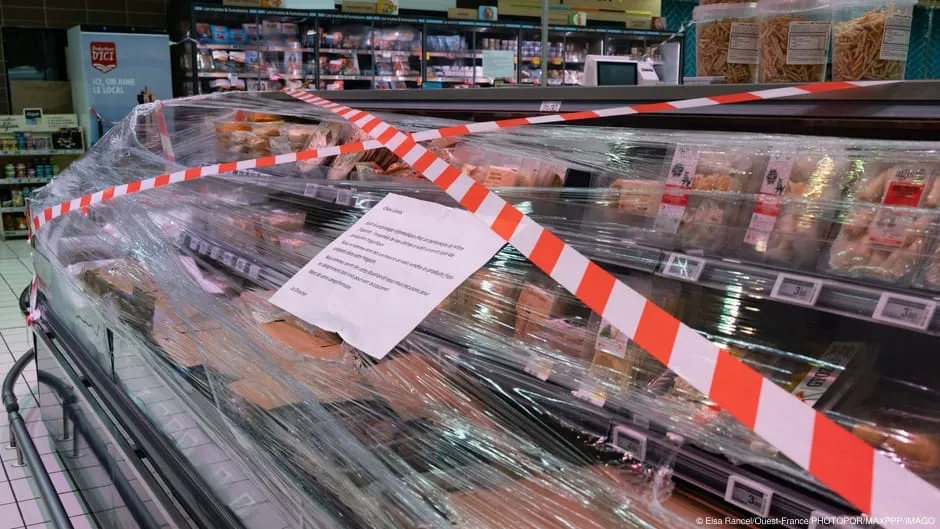
Iran fridge cyberattack: France investigates IRGC involvement
The Iran fridge cyberattack, which targeted approximately 700 supermarkets in France, has triggered a diplomatic crisis between Paris and Tehran. French authorities suspect the Islamic Revolutionary Guard Corps (IRGC) orchestrated the hack to manipulate refrigeration temperatures, causing widespread food spoilage. While Iran categorically rejects these "baseless and one-sided accusations," the French government has summoned the Iranian ambassador and is pursuing European-level sanctions. This incident follows a pattern of industrial sabotage attempts across Europe, raising concerns regarding the stability of critical infrastructure.
November 20, 2026
4 min read
Source: ASHENVOW
The Iran fridge cyberattack, which targeted approximately 700 supermarkets in France, has triggered a diplomatic crisis between Paris and Tehran. French authorities suspect the Islamic Revolutionary Guard Corps (IRGC) orchestrated the hack to manipulate refrigeration temperatures, causing widespread food spoilage. While Iran categorically rejects these "baseless and one-sided accusations," the French government has summoned the Iranian ambassador and is pursuing European-level sanctions. This incident follows a pattern of industrial sabotage attempts across Europe, raising concerns regarding the stability of critical infrastructure.
The mechanics of the supermarket refrigeration hack
The cyberattack, which commenced overnight between October 11 and 12, specifically targeted the industrial control systems of supermarket cooling units. By accessing web interfaces, the attackers were able to initiate abnormal and indefinite defrost cycles within the refrigeration and freezer units. This manipulation caused temperatures to rise significantly, leading to the spoilage of large quantities of produce.
Beyond the immediate loss of inventory, the technical nature of the breach included the disabling of automated sensor alerts. These sensors are designed to trigger warnings when temperatures exceed safe thresholds; by neutralizing these alerts, the attackers ensured the temperature spikes would go unnoticed by staff until significant damage had occurred. In isolated instances, the thermal fluctuations even resulted in fires.
Scope of the impact in France
The scale of the disruption was substantial relative to the national retail landscape. According to investigators, the attack affected roughly 700 supermarkets out of the approximately 10,000 operating across France. The following table summarizes the reported impact and technical details of the incident:
| Metric/Feature | Details | ||
|---|---|---|---|
| Supermarkets Affected | Approximately 700 | Total French Supermarkets | ~10,000 |
| Primary Method | Web interface manipulation | Defrost cycle triggering | |
| Secondary Impact | Disabled automated sensor alerts | Reported fires in isolated cases | |
| Primary Consequence | Mass spoilage of produce | Financial and logistical loss |
Investigation into the Shahid Kaveh cyber unit
Paris prosecutor Laure Beccuau has opened a formal investigation into the suspected involvement of the Shahid Kaveh cyber unit. This entity is identified as an offensive cyber unit affiliated with the Electronic and Cyber Center of the Islamic Revolutionary Guard Corps (IRGC), a specialist military branch that reports directly to Iran's religious leadership. The investigation is specifically focused on the roles played by leading members of this unit in the sabotage of French industrial equipment.
French cyber intelligence agencies have characterized the Shahid Kaveh unit as being capable of conducting large-scale campaigns designed to target industrial equipment for sabotage. While their historical focus has primarily been on targets in the United States and Israel, intelligence reports indicate that France and other European nations have also become targets of these operations. As part of the legal proceedings, the prosecutor's office has requested arrest warrants for two specific officials within the Shahid Kaveh unit and is currently investigating additional personnel.
Diplomatic fallout and the response from Tehran
Tehran has responded to the allegations by dismissing them as an attempt to deflect from internal governance issues. The Iranian Foreign Ministry issued a statement categorically rejecting the French government's accusations, describing them as "baseless and one-sided." The ministry further criticized the French government for what it termed a "hackneyed policy" of blaming the Islamic Republic for various issues.
In a pointed critique of the French administration, Tehran suggested that the allegations were a form of projection. "A government that cannot even manage the temperature of its own refrigerators now seeks to shift the blame onto foreign actors through these preposterous accusations," the ministry stated. Furthermore, Iran has signaled that it may take retaliatory action if formal sanctions are implemented, asserting that it will take necessary measures to safeguard its national security against what it views as unlawful foreign activities.
European sanctions and the EU cyber diplomacy toolbox
France is currently seeking to coordinate a response at the European Union level to address the suspected state-sponsored sabotage. French Foreign Minister Jean-Noel Barrot stated that the government would "rule nothing out" regarding its response and intends to take all necessary and proportionate measures to deter future attacks. This includes the potential use of measures that are not disclosed to the public.
The European Union has indicated its intention to provide a "swift and united response" following discussions with its member states. The EU's approach is expected to utilize the "EU cyber diplomacy toolbox," which provides a framework for addressing malicious cyber behavior through various mechanisms, most notably sanctions. Anouar El Anouni, an EU spokesman, emphasized that the Union consistently calls for states to refrain from malicious cyber activities and will use all available tools to address such behavior.
G7 discussions on Iranian escalation risks
The diplomatic tension occurred alongside a G7 foreign ministers' meeting in Paris, where high-level discussions were held regarding the conflict with Iran. During these sessions, French Foreign Minister Barrot met with US Secretary of State Marco Rubio to address the evolving security landscape. Barrot noted that despite shifts in the tone of the US administration following the midterm election defeat, the risk of renewed escalation with Iran remains a significant concern for international security officials.
Rising threats and the role of AI in cyber sabotage
The supermarket hack is not an isolated event, as similar incidents have been reported across Europe and beyond. This month, a failed attempt was made on the cooling units of French blood banks, though investigators have not yet confirmed if this was linked to the October supermarket attacks. The pattern of targeting critical temperature-sensitive infrastructure suggests a growing trend of industrial sabotage.
Sweden's Civil Defense Minister, Carl-Oskar Bohlin, has warned that the frequency of such attacks may increase in the coming months. He highlighted the role of artificial intelligence in lowering the barrier to entry for sophisticated cyberattacks. According to Bohlin, AI tools make it significantly easier for actors to detect and exploit vulnerabilities in industrial systems. He also noted that once a specific method of sabotage is identified, such as the defrost cycle manipulation used in France, it becomes easy for other actors to copy the technique, leading to a proliferation of similar attacks across different regions.



