
Indonesia presidential wiretapping scandal: What is known in 2026
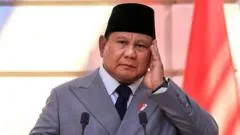
The Indonesia presidential wiretapping scandal has triggered a major treason investigation following the arrest of the president's chief of staff. Authorities suspect that Listyo Sigit Prabowo and two senior police officers used official electronic surveillance systems to intercept communications, including those of President Prabowo Subianto, without legal warrants. The investigation suggests the unauthorized monitoring may have begun as early as 2025. This development highlights a deepening political divide between President Prabowo and his predecessor, Joko Widodo, whose allies are implicated in the probe.
November 8, 2026
4 min read
Source: ASHENVOW
The arrest of Listyo Sigit Prabowo and the scope of the surveillance
Listyo Sigit Prabowo, the recently appointed chief of staff to President Prabowo Subianto, was arrested on Tuesday alongside two senior police officers for their alleged involvement in illegal wiretapping. The suspects are accused of entering phone numbers—including the president's—into the police's official electronic surveillance system without following mandatory legal procedures. Specifically, authorities state that the suspects failed to obtain required investigation warrants or formal case reports before initiating the interceptions.
The operation was uncovered last week following a tip-off from a police officer. However, investigators believe the unauthorized surveillance activities may have been active since 2025, a period during which Listyo Sigit Prabowo was serving as the national police chief. This timeline suggests a long-term exploitation of state security tools for private or unauthorized monitoring.
Targets of the alleged wiretapping
While President Prabowo Subianto was a primary target, the surveillance operation appears to have been much broader in scope. According to authorities, the intercepted communications included not only the president but also a variety of high-profile figures across different sectors of Indonesian society. The list of targets includes:
- Politicians
- Journalists
- Representatives from Non-Governmental Organizations (NGOs)
- Businesspeople
A fourth suspect, Slamet Uliandi from the national police criminal investigation unit, was named by police on Thursday evening. However, he has not been detained due to ill health following a stroke.
Legal implications and potential treason charges
The Indonesian government is treating the unauthorized interception of presidential communications as a potential act of treason. A spokesperson for the president informed reporters on Wednesday that the operation involved "sensitive information" that possessed the capacity to "endanger the interests and sovereignty of the nation." Under Indonesian law, treason is a severe offense that carries penalties ranging from life imprisonment to the death penalty, although the country has not carried out an execution in a decade.
Despite the gravity of the charges, the specific motives driving the illegal surveillance remain unclear to investigators. While the police chief, Suyudi Ario Seto, stated on Thursday that the probe is "purely law enforcement and has nothing to do with rivalries or anything else," the political context suggests otherwise to many observers. The investigation is being conducted amidst a period of significant national instability, including economic uncertainty and environmental crises.
The fracturing alliance between Prabowo and Jokowi
The scandal is widely interpreted as a manifestation of the disintegrating relationship between President Prabowo Subianto and former president Joko Widodo (Jokowi). Although Jokowi provided critical support during Prabowo's 2024 presidential campaign, the two leaders appear to be moving in different directions. This rift is evidenced by both political shifts and the specific individuals caught in the current investigation.
Made Supriatma, a visiting fellow at Singapore's ISEAS-Yusof Ishak Institute, told BBC Indonesian that Listyo Sigit Prabowo's position was historically very close to Jokowi. The arrest of such a key figure is seen as a sign that the two political camps are "going their separate ways." This tension is further reflected in the following policy and personnel shifts:
The vice presidency, held by Gibran Rakabuming Raka—Jokowi's eldest son—is also facing scrutiny. Gibran is currently involved in a controversy regarding the validity of his high school credentials, leading to calls for his disqualification from office.
Political reactions to the scandal
The response from the former president has been measured. When questioned about the wiretapping incident following a court session on Thursday, Jokowi told reporters that "we should all respect the ongoing legal process." This cautious stance comes as the administration deals with several concurrent crises that may be exacerbated by political instability.
Historical context of surveillance in Indonesia
The current scandal is not an isolated incident in Indonesian political history, as several high-profile leaders have faced similar allegations of being targeted by surveillance. These historical precedents provide context for the current public and political anxiety regarding the security of communications among the country's elite.
- 2014: Wiretapping devices were discovered at the official residence of Joko Widodo during his tenure as the governor of Jakarta.
- 2024: Former president Megawati Soekarnoputri claimed she had intentionally avoided using her personal mobile phone due to being a target of wiretapping.
The recurrence of such incidents suggests a persistent vulnerability in the privacy and security of Indonesia's political leadership. As the current investigation proceeds, the focus remains on whether the misuse of police surveillance tools is a systemic issue or an isolated criminal act by specific officers.
Broader national challenges and public sentiment
The wiretapping scandal has emerged during a period of intense domestic pressure on the Prabowo administration. While the political elite focus on legal proceedings and internal rivalries, many Indonesians are facing immediate socio-economic and environmental hardships. This has led to criticism that the government is prioritizing political maneuvering over the needs of the citizenry.
Recent challenges facing the nation include:
- Environmental Crises: Parts of Indonesia have recently experienced the country's worst wildfires in a decade, leading to toxic wildfire haze.
- Economic Instability: The national stock market is facing a crisis amid allegations of widespread market manipulation, alongside general cost-of-living concerns.
- Social Unrest: Protesters have taken to the streets to demand action on corruption and environmental pollution.
Nicky Fahrizal, a researcher at the Centre for Strategic and International Studies in Indonesia, expressed concerns about the government's direction in an interview with BBC Indonesian. He suggested that the current mode of governance indicates that the interests of individual groups are being pursued rather than the interests of the people, describing the sensation as living in a country "on autopilot."
| Area of Divergence | Jokowi Era / Alignment | Prabowo Era / Current Status |
|---|---|---|
| Flagship Projects | Construction of Nusantara (new capital) | Limited interest; focus on free school meals |
| Personnel | Allies in key administration roles | Reshuffled allies, including Sri Mulyani Indrawati |
| Political Support | Supported Prabowo's 2024 campaign | Increasingly independent policy direction |



