
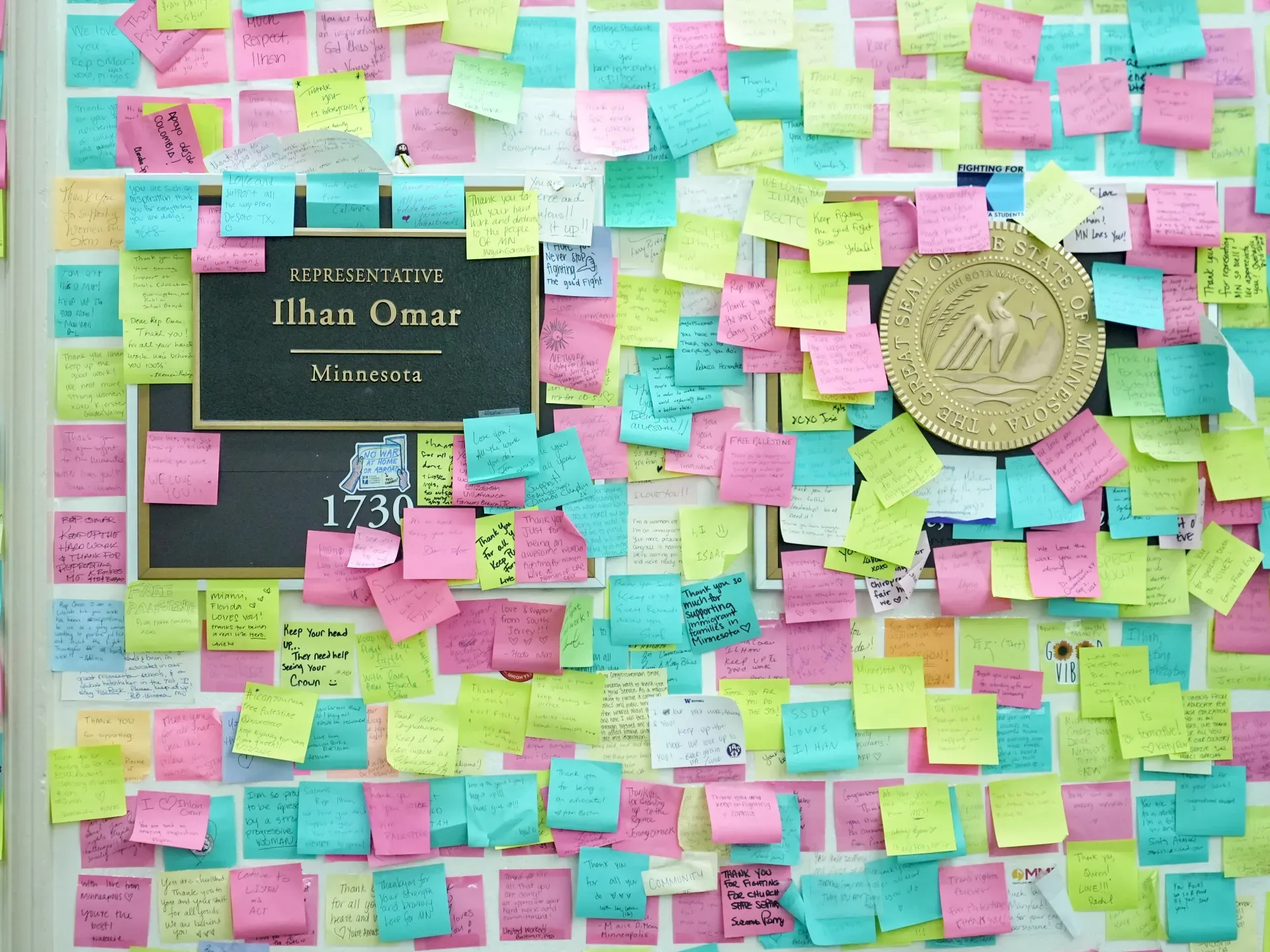
Ilhan Omar name controversy: Why Trump is calling for her resignation
The Ilhan Omar name controversy has intensified following a Justice Department filing that listed an alternative identity for the Minnesota Representative. President Donald Trump has utilized this development to demand Omar's resignation from Congress, alleging identity fraud. The DOJ document refers to the lawmaker as “Ilhan Nur Said Elmi, a/k/a Ilhan Abdullahi Omar,” though it makes no formal finding of criminal wrongdoing. This situation follows a federal search of Omar's residence in October 2026 and ongoing investigations into her family's immigration history. This article examines the legal filings, the political reaction, and the broader impact on Muslim American politicians.
October 27, 2026
6 min read
Source: ASHENVOW
What triggered the Ilhan Omar name controversy?
The current political crisis was ignited by a Justice Department (DOJ) court filing on October 21, 2026, which identified Representative Ilhan Omar using an alternative name. The motion, submitted while the administration sought more time to respond to transparency requests, referred to her as “Ilhan Nur Said Elmi, a/k/a Ilhan Abdullahi Omar.” The use of "a/k/a," meaning "also known as," provided the basis for renewed scrutiny regarding her legal identity.
While the filing itself did not establish that any fraud had occurred, the inclusion of the additional name provided political ammunition for critics. The document did not offer an explanation for the relationship between the different names listed. Instead, the DOJ requested a delay in responding to media requests for records until the execution of a previously authorized search warrant was complete. The government has committed to providing a status report within 30 days of finishing that search.
The timeline of the legal escalation
The controversy is not an isolated event but the culmination of several weeks of legal tension. On October 12, federal agents conducted a search of Omar's Washington, D.C., residence using a judicially authorized warrant. This search is reportedly linked to a criminal investigation into whether Omar or her late father provided inaccurate information on immigration documents when the family arrived in the United States from Somalia in 1995.
Following the raid, a group of 16 press organizations, including The New York Times and Judicial Watch, applied to the US District Court for the District of Columbia to unseal the relevant records. These groups are seeking access to the search warrant, the supporting affidavits, and an inventory of all materials seized by federal agents during the October 12 operation.
How has Donald Trump responded to the DOJ filing?
President Donald Trump has escalated the situation by publicly calling for Ilhan Omar to resign from the US Congress. Using the DOJ's mention of an alternative name as evidence, Trump has framed the issue as a matter of identity fraud. His rhetoric has intensified the scrutiny surrounding the congresswoman, despite the fact that she has not been charged with any criminal offenses related to her name or immigration status.
Trump's attacks have moved beyond the legal technicalities of the filing to broader criticisms of Omar's background. He has previously made disparaging remarks regarding Somalia and has suggested that Omar could face deportation. By linking the DOJ's administrative naming convention to allegations of intentional deception, the President has turned a procedural court filing into a central campaign and political issue during the 2026 midterm cycle.
What is Ilhan Omar's defense against these allegations?
Representative Ilhan Omar has categorically denied all allegations of identity fraud, maintaining that her name has always been Ilhan Omar. In a direct response on the social media platform X, she stated, “So let’s make it crystal clear. My name has always been Ilhan Omar.” Her office has further clarified that any suggestion of a different legal identity is "flat out false."
Omar has characterized the federal investigation and the subsequent political attacks as a form of political intimidation. She argues that the focus on her name is a calculated attempt to undermine her position in Congress. In an interview with MS NOW’s Chris Hayes, Omar contended that her critics are motivated by the belief that individuals of her faith and background should not hold influential positions in the United States government.
Safety concerns and personal impact
The legal and political pressure has had tangible consequences for the lawmaker's personal life. Following the federal raid on her home, Omar announced her intention to move out of her Washington, D.C., residence, citing significant concerns for her safety. This decision highlights the intense atmosphere surrounding the investigation and the high-profile nature of the political attacks directed at her.
Is this part of a wider trend against Muslim American politicians?
The scrutiny directed at Ilhan Omar appears to be part of a broader pattern of targeting Muslim American political figures. During the 2026 midterm elections, several candidates of Arab or Muslim heritage have faced similar challenges regarding their names, heritage, and religious affiliations. This trend suggests that identity has become a primary battleground in contemporary US political discourse.
A notable example is Abdulrahman Mohamed El-Sayed, a Democratic candidate for the US Senate in Michigan. El-Sayed has faced intense criticism from opponents and some voters regarding his full name and his heritage. During his campaign, Donald Trump has mocked El-Sayed, even referring to him using derogatory terms and suggesting he could be called "whatever the hell I want." This atmosphere of scrutiny extends to the way voters perceive the "authenticity" of candidates with non-Western names.
| Politician | Context of Scrutiny | Nature of Allegations/Attacks |
|---|---|---|
| Ilhan Omar | US Representative (MN) | Identity fraud allegations and immigration history scrutiny. |
| Abdulrahman El-Sayed | US Senate Candidate (MI) | Attacks on Arab heritage, Muslim faith, and use of full name. |
FAQ: Ilhan Omar name controversy
Why is the DOJ using an alternative name for Ilhan Omar?
The Justice Department used an "also known as" (a/k/a) designation in a recent court filing to refer to the congresswoman. This was part of a motion to delay responding to transparency requests, but the filing did not explain why the alternative name was included or if it implies wrongdoing.
Has Ilhan Omar been charged with any crimes?
No, Ilhan Omar has not been charged with any criminal offenses. While federal agents searched her home as part of an ongoing investigation into her family's 1995 immigration paperwork, the DOJ filing itself does not establish that she committed fraud or any other illegal act.
What was the purpose of the federal raid on Omar's home?
The search of Omar's Washington, D.C., residence on October 12 was conducted under a judicially authorized warrant. It is reportedly part of a criminal investigation into whether her family provided false information during their immigration process from Somalia to the United States in 1995.
How has Ilhan Omar responded to Trump's calls for resignation?
Omar has rejected the calls for resignation and accused President Trump of promoting conspiracy theories. She maintains that her name has always been Ilhan Omar and argues that the attacks are a political attempt to drive her out of Congress based on her faith and background.
Are other Muslim American politicians facing similar attacks?
Yes, other candidates like Abdulrahman Mohamed El-Sayed in Michigan have faced scrutiny over their names and heritage. Critics and political opponents have questioned their use of full names and have targeted their Muslim faith and Arab backgrounds during election campaigns.
Key takeaways
- A DOJ filing listed Ilhan Omar as "a/k/a Ilhan Nur Said Elmi," prompting identity fraud allegations.
- President Trump has demanded Omar's resignation, citing the DOJ filing as evidence of deception.
- The controversy follows a federal search of Omar's home regarding 1995 immigration records.
- Omar denies all fraud allegations, calling the scrutiny a political attempt to remove her.
- The attacks reflect a broader trend of targeting Muslim American politicians' identities.
Conclusion
The controversy surrounding Ilhan Omar's name has transformed a procedural legal filing into a significant political flashpoint. While the Justice Department has not officially alleged fraud, the inclusion of an alternative name in court documents has provided the basis for intense criticism from President Trump and other political opponents. As the investigation into Omar's immigration history continues, the situation highlights a growing trend of identity-based scrutiny directed at Muslim American officials. The outcome of the ongoing federal investigation and the response of the electorate during the 2026 midterms will likely determine the long-term impact of these allegations on Omar's political career.



