
ICE personnel data leak: DHS attempts to remove leaked info
The ICE personnel data leak involving tens of thousands of Department of Homeland Security (DHS) employees has triggered a high-stakes legal and digital standoff. The DHS, via cybersecurity firm ZeroFox, requested the removal of a database containing information on over 40,000 identifiable individuals to prevent stalking and physical harm. While the Icelandic hosting provider FlokiNET refused to comply, citing public interest, the domain was eventually suspended by its registrar. This article examines the origins of the leak, the role of groups like DDoSecrets, and the broader debate regarding agent transparency versus personal safety.
November 8, 2026
5 min read
Source: ASHENVOW
How did the ICE personnel data leak occur?
The leak originated from a database first published on Wednesday by Distributed Denial of Secrets (DDoSecrets), a prominent group known for releasing leaked government datasets. According to the report, a hacker collective identifying as the "Department of Peace" has claimed responsibility for the breach and subsequent distribution of the DHS information.
The leaked dataset is extensive, reportedly covering employees from various agencies within the Department of Homeland Security, most notably Immigration and Customs Enforcement (ICE) and Customs and Border Protection (CBP). Because the data has been rapidly disseminated across multiple platforms, including the domain icepi.cx, experts suggest it is highly unlikely that the information can be entirely erased from the internet.
The role of DDoSecrets and hacker groups
DDoSecrets has a history of handling high-profile leaks, including the emails of Jeffrey Epstein and data from the Israeli Ministry of Justice. In this instance, the group acted as a conduit for information obtained by the "Department of Peace," a group that claims to be acting in the interest of transparency. The speed at which the data moved from a single source to various mirrors highlights the difficulty federal agencies face when attempting to contain large-scale digital breaches.
Why did the DHS attempt to take down the data?
The Department of Homeland Security (DHS) argues that the publication of this data poses a direct threat to the lives and safety of federal officers. In a formal letter sent to the Icelandic web hosting company FlokiNET, the DHS—represented by the cybersecurity firm ZeroFox—accused the host of violating terms of service by publishing "stolen" information.
The central argument from the government is one of individual protection. The DHS stated that the content is currently live and places more than 40,000 identifiable individuals at risk of harassment, stalking, and physical harm. This concern is not merely theoretical; the administration has consistently argued that identifying agents involved in specific operations creates unacceptable safety risks for those officers and their families.
What was the response from FlokiNET?
FlokiNET, the Icelandic company hosting the site, refused the DHS request to remove the information, asserting that the publication serves a legitimate public interest. The company’s stance is that federal officers engaged in enforcement programs do not lose their status as public figures while performing those duties.
In an online statement, FlokiNET argued that the public has a right to know which individuals are carrying out enforcement actions, under whose authority they are acting, and which specific offices are responsible. Although FlokiNET stood its ground, the domain icepi.cx was ultimately suspended by its registrar, forcing the information to migrate to alternative domains.
What is the impact of the Trump administration's enforcement tactics?
The leak occurs against a backdrop of intense scrutiny regarding the mass deportation campaign initiated by President Donald Trump in 2025. Since the start of this administration's second term, there has been a documented increase in violent encounters involving immigration agents. According to recent reports, at least 25 people have faced gunfire from immigration agents, with six of those incidents resulting in fatalities.
Beyond physical violence, the administration's tactics have drawn criticism for potential civil liberties violations. These include allegations of racial profiling, unlawful arrests, and the use of aggressive methods such as car ramming and tackling. The lack of transparency regarding agent identities has become a central point of contention between the government and human rights advocates.
The debate over agent anonymity
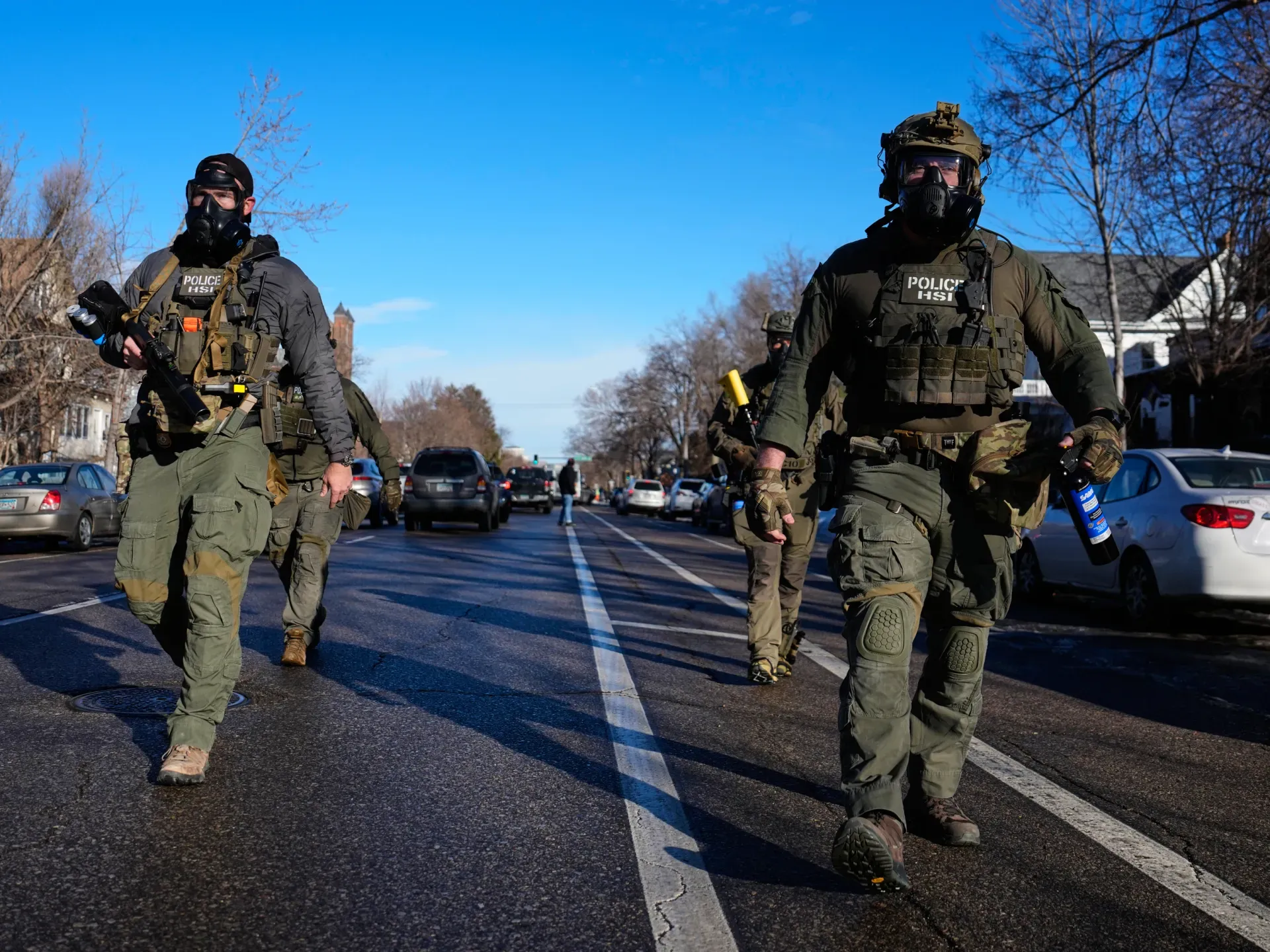
To protect their identities, many immigration agents have adopted methods to remain anonymous during operations, such as wearing street clothes or face masks. While the government views this as a necessary safety measure, human rights groups argue that this anonymity prevents accountability. Advocates suggest that when agents are unidentifiable, it becomes significantly harder for victims to pursue legal recourse for allegations of excessive force or procedural impropriety during raids.
How has the government handled digital transparency in the past?
The current attempt to suppress the ICE personnel data is part of a broader pattern of the Trump administration seeking to control digital information related to immigration enforcement. Last year, the US Department of Justice pressured technology companies, including Apple, to remove applications designed to track the movements of ICE agents, such as the "ICEBlock" app.
These actions have sparked significant pushback from legal experts and political figures. Democratic Representative Jamie Raskin expressed concerns that government pressure on tech giants could lead to violations of First Amendment rights. Specifically, Raskin argued that blocking access to such apps might prevent citizens from exercising their right to record and report on the activities of the government, a cornerstone of democratic oversight.
FAQ: ICE personnel data leak
What is contained in the leaked DHS database?
The database contains identifiable information regarding more than 40,000 employees from various Department of Homeland Security agencies. This includes personnel from Immigration and Customs Enforcement (ICE) and Customs and Border Protection (CBP), potentially exposing their identities to the public.
Who is responsible for the data leak?
A hacker group calling itself the "Department of Peace" has claimed responsibility for obtaining and sharing the DHS data. The information was initially disseminated online by the group Distributed Denial of Secrets (DDoSecrets), which specializes in showcasing leaked government information.
Why did FlokiNET refuse to remove the website?
FlokiNET refused the removal request because it believes the publication satisfies a legitimate public interest. The company stated that federal officers performing enforcement duties are not private individuals and that the public deserves to know who is conducting such work and under what authority.
What are the risks identified by the DHS?
The DHS, via ZeroFox, stated that the live content puts over 40,000 individuals at risk. The primary concerns cited are that the exposure of identifiable data could lead to harassment, stalking, and physical harm against the federal employees involved.
Has the leaked information been removed from the internet?
No, the information has not been entirely removed. Although the registrar suspended the specific domain icepi.cx, the data has already moved to different domains and been spread by various other groups, making a total scrubbing of the data unlikely.
Key takeaways
- A leaked database contains information on over 40,000 DHS, ICE, and CBP employees.
- The "Department of Peace" hacker group has claimed responsibility for the data breach.
- FlokiNET refused to delete the data, citing the public's right to know.
- Since the current administration began, at least 25 people have faced gunfire from agents.
- The DHS is using cybersecurity firms to pressure hosts to remove the stolen data.
The tension between security and accountability
The struggle over the ICE personnel data leak highlights a fundamental tension in modern governance: the balance between protecting state actors and maintaining public accountability. For the Trump administration, the priority is the physical safety of agents operating in high-tension environments. However, for civil rights advocates and transparency groups, the anonymity of enforcement officers creates a vacuum where misconduct can occur without consequence. As the leaked data continues to circulate across decentralized networks, the government's ability to control the narrative and protect its personnel faces an unprecedented digital challenge.



