
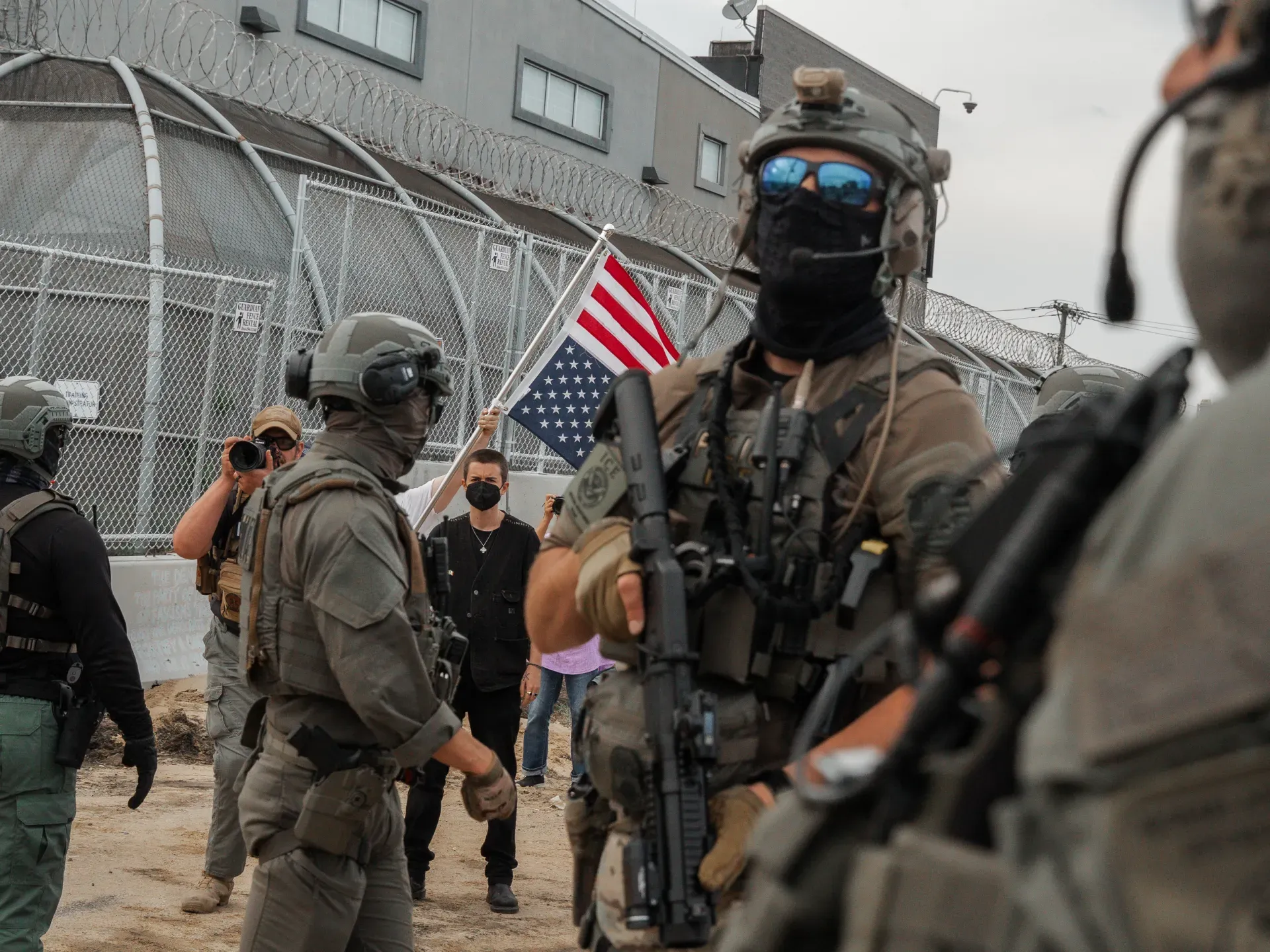
ICE agents in 2026 US midterm elections: Voter concerns
ICE agents in 2026 US midterm elections are a major flashpoint as civil rights groups warn of voter intimidation. Under President Trump's second term, ICE staffing has surged by 120 percent to 22,000 officers. With at least 60 deaths reported in ICE custody since January 2025, advocacy groups fear the agency's presence could suppress turnout. This article examines the legal framework governing federal agents at polls, the administration's investigations into voter eligibility, and the specific concerns raised by human rights organizations.
October 27, 2026
5 min read
Source: ASHENVOW
What are the legal restrictions on ICE agents at polling stations?
Federal law prohibits the deployment of armed federal agents at polling locations to prevent interference with the democratic process. This prohibition is rooted in a statute dating back to 1865, which forbids those in United States civil, military, or naval service from bringing armed men to election sites. While several states have implemented their own similar protections, the federal mandate serves as the primary barrier against military-style presence at the ballot box.
However, the law contains specific exceptions that allow for the presence of armed personnel under certain conditions. These loopholes include:
- Maintaining peace at the polling station if disturbances occur.
- Repelling armed enemies of the United States.
Beyond the 1865 statute, additional federal laws prohibit military interference in elections and strictly forbid any actions intended to intimidate voters. Despite these protections, the boundaries have been tested during the current election cycle. During the midterm primary elections, ICE agents were reportedly involved in operations near polling stations in San Antonio, Texas, and Ventura County, California. In both instances, local law enforcement intervened, and the agents departed the areas upon request.
How is the Trump administration using ICE for election-related investigations?
The Trump administration has utilized Homeland Security Investigations (HSI), a division under ICE, to conduct investigations into the legality of non-citizen voting. While only U.S. citizens are permitted to vote in federal elections, the administration has prioritized field investigations to probe voter eligibility. Since August, DHS has deployed HSI agents across at least nine states to conduct these inquiries.
These investigations have involved agents conducting door-to-door visits, questioning residents regarding their citizenship status and their intentions to vote. This tactic has faced significant legal pushback. A federal judge recently ordered the Department of Homeland Security to halt these specific investigations, citing a "high likelihood of error" in how agents identify alleged non-citizens. The court expressed concern that such methods could result in U.S. citizens being wrongly targeted and subjected to intimidation.
The debate over non-citizen voting and voter fraud
The administration's focus on these investigations is driven by President Trump's assertions regarding pervasive voter fraud involving non-citizens. While the President has used these claims to justify increased enforcement, election experts argue that the actual instances of non-citizens participating in elections are extremely rare. The tension remains between the administration's drive for "election security" and the judicial concern over the collateral damage caused by aggressive eligibility probes.
What is the administration's official stance on ICE deployment?
President Trump and his cabinet members have avoided giving definitive answers regarding whether ICE agents will be present at voting locations on election day. When asked in May if the National Guard or ICE would be sent to polling sites, the President stated he would do "anything necessary" to ensure honest elections, without explicitly ruling out the use of law enforcement.
Key administration officials have offered varying interpretations of the agency's role:
| Official | Position/Statement |
|---|---|
| Markwayne Mullin (Homeland Security Secretary) | Stated ICE would not "patrol" polling stations but could be present to serve warrants or address specific threats. |
| Todd Blanche (Attorney General) | Questioned the opposition to ICE at polling stations, arguing that because illegals cannot vote, there is no reason for objection. |
This ambiguity has contributed to the uncertainty surrounding the November 3 midterm elections, as officials suggest that while general patrolling may not occur, the agency remains available for active enforcement actions that could overlap with polling activities.
Why are human rights groups concerned about the impact on voters?
Human rights organizations argue that the mere presence of ICE agents near polling sites creates a climate of fear that can suppress voter turnout. Groups such as Human Rights Watch and the American Civil Liberties Union (ACLU) contend that the threat of encountering federal agents may discourage eligible voters from participating in the democratic process.
The concern is underscored by the agency's recent track record. Since the start of the current presidential term, immigration agents have been involved in at least 25 shootings, six of which resulted in fatalities. Additionally, the death toll of individuals in ICE custody has reached at least 60 since January 2025. Advocacy groups argue these statistics make the prospect of an ICE presence near elections particularly alarming.
The call for non-deployment orders
In response to these risks, organizations like Amnesty International and Human Rights Watch have issued formal appeals. Human Rights Watch Executive Director Philippe Bolopion emphasized that voters should not have to risk being caught in an "ICE dragnet" while attempting to exercise their rights. Amnesty International echoed this, stating that eligible voters must be able to participate without the threat of discriminatory barriers or intimidation by armed forces.
FAQ: ICE and the 2026 Midterm Elections
Can ICE agents legally be at a polling place?
Under federal law established in 1865, armed federal agents are prohibited from being brought to election sites. However, exceptions exist if the presence is required to maintain peace at the polls or to repel armed threats to the United States. Local police have successfully asked agents to leave sites in previous incidents.
What is the risk of voter intimidation?
Voter intimidation occurs when actions or the presence of authority figures discourage citizens from voting. Rights groups argue that ICE's aggressive enforcement history and door-to-door eligibility probes could lead to legitimate voters staying home due to fear of being wrongly detained or questioned by federal agents.
Has the DHS investigated non-citizen voting?
Yes, Homeland Security Investigations (HSI) has been deployed in at least nine states to conduct field investigations into voter eligibility. These investigations include door-to-door questioning. However, a federal judge recently ordered a pause on these activities due to the high risk of errors and potential intimidation.
How many ICE agents are currently active?
As of January 2026, the agency has grown to approximately 22,000 officers and agents. This represents a 120 percent increase in staffing under the current administration, making it one of the most heavily funded federal law enforcement agencies in the country.
What is the administration's justification for ICE involvement?
The administration justifies its focus on immigration enforcement during elections as a means to ensure "honest elections." Officials like Attorney General Todd Blanche argue that because non-citizens are legally barred from voting, the presence of ICE is a logical tool to prevent illegal voting.
Key takeaways
- ICE staffing has increased by 120 percent, reaching 22,000 agents as of January 2026.
- Federal law from 1865 generally prohibits armed federal agents at polling stations.
- A federal judge paused DHS investigations into voter eligibility due to intimidation risks.
- At least 60 people have died in ICE custody since January 2025.
- A September poll found 40 percent of respondents expect ICE near polls on election day.
The intersection of enforcement and democracy
The 2026 midterm elections are taking place against a backdrop of heightened immigration enforcement and significant legal debate. While the Trump administration frames its use of ICE as a necessary measure for election integrity, civil rights advocates view it as a potential mechanism for voter suppression. The tension between the administration's mandate to enforce immigration law and the constitutional protections afforded to voters remains unresolved. As the November 3 election approaches, the presence of federal agents at or near polling locations will likely serve as a critical test of both legal boundaries and democratic accessibility.



