
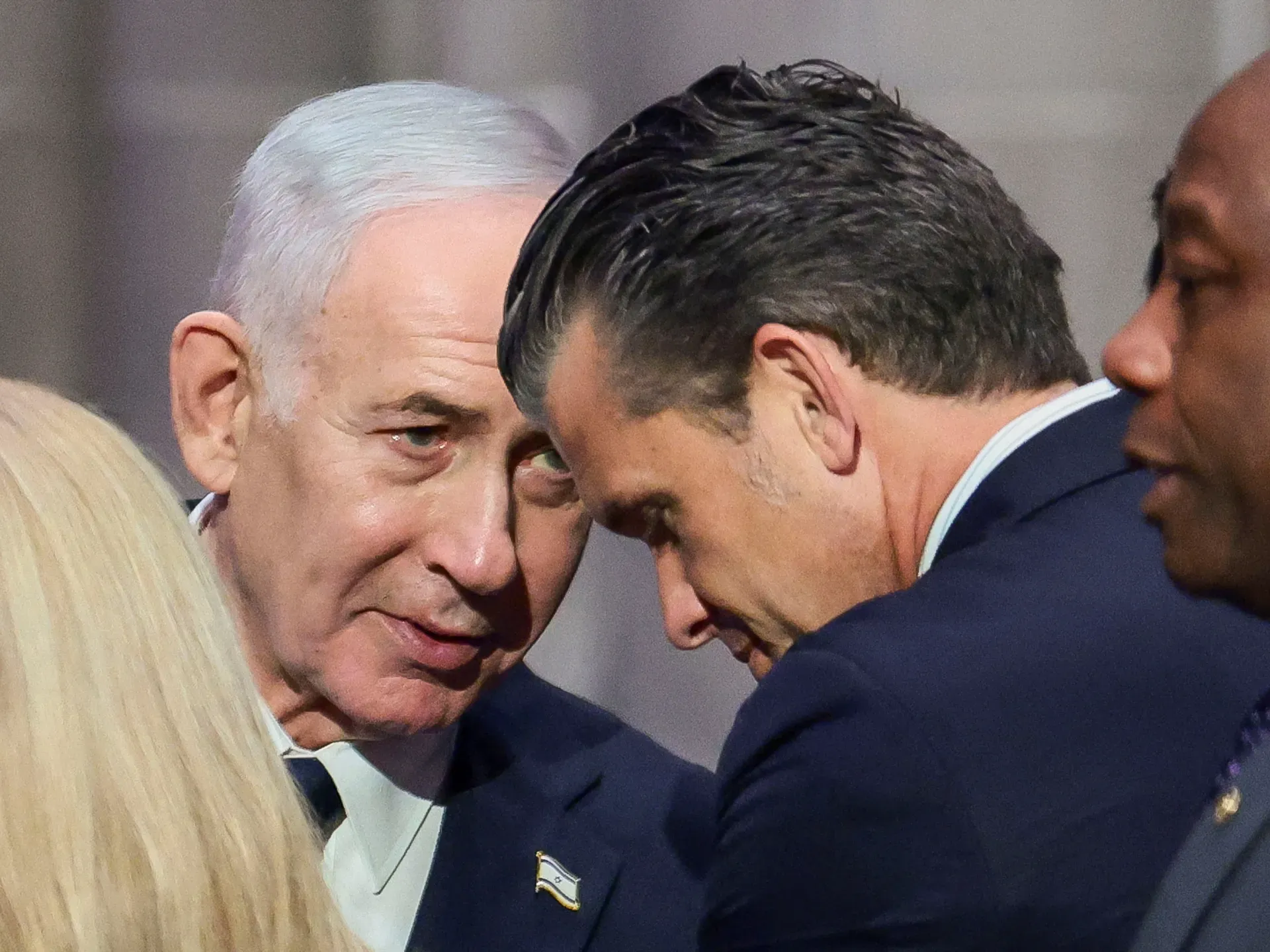
Hegseth meets Netanyahu in unannounced Israel visit 2026
US Defense Secretary Pete Hegseth meets Netanyahu during an undisclosed visit to Israel, according to reports from Axios. This high-level meeting occurs as Israeli Prime Minister Benjamin Netanyahu prepares for a critical parliamentary election. The visit follows a public endorsement of Netanyahu by US President Donald Trump on Truth Social. This development comes amid significant regional tension and domestic political uncertainty in Israel. This article examines the implications of Hegseth's visit, the impact of Trump's endorsement, and the divergent stances within the US administration regarding the upcoming Israeli vote.
October 27, 2026
5 min read
Source: ASHENVOW
Why did Pete Hegseth travel to Israel unannounced?
US Defense Secretary Pete Hegseth traveled to Israel for an undisclosed meeting with Prime Minister Benjamin Netanyahu on Monday, according to reports from Axios citing two sources with knowledge of the matter. The visit was not officially pre-announced, a move that highlights the sensitive timing of the encounter.
The meeting takes place against a backdrop of intense political pressure in Israel. Netanyahu is currently facing a "knife-edge" election that will determine the country's leadership and strategic direction. Hegseth, identified as a hawkish ally of President Donald Trump, represents a key figure in the US defense establishment during a period of heightened regional instability.
While Axios reported the meeting, the Reuters news agency was unable to immediately confirm the visit. Furthermore, both the Pentagon and the Israeli embassy in Washington have not yet provided official comments regarding the purpose or the specific contents of the discussions held between the Defense Secretary and the Prime Minister.
How does Donald Trump's endorsement affect the Israeli election?
President Donald Trump has officially endorsed Benjamin Netanyahu for the upcoming parliamentary election through his Truth Social platform. This endorsement comes just days before the vote, which is the first Israeli election held since the Hamas-led attacks of October 7, 2023, and the subsequent military campaign in Gaza.
Trump's support is explicitly linked to regional security concerns, specifically regarding Iran. In his social media post on Sunday, Trump praised Netanyahu as a vital ally of the United States in the ongoing struggle against Iranian influence. The President's message was emphatic, stating that Netanyahu has his "Complete and Total Endorsement" and claiming that "BIBI NETANYAHU WILL NEVER LET YOU DOWN!"
The political weight of the Trump endorsement
The endorsement from a US President carries significant weight in international diplomacy and domestic Israeli politics. For Netanyahu, receiving the backing of the Trump administration can serve as a signal of continued US military and political support, which is crucial for his coalition's stability. However, the timing of this endorsement, occurring right before a contested vote, adds a layer of complexity to the US-Israel relationship, as it suggests a direct involvement of US political figures in the electoral processes of a key ally.
What is the current political landscape in Israel?
The upcoming parliamentary election is characterized by extreme uncertainty, with opinion polls suggesting a difficult path for all major political factions. Netanyahu’s religious-nationalist coalition is currently projected to lose its governing majority, creating a potential vacuum in Israeli leadership.
The political volatility extends to the opposition as well. While the current government faces a decline in support, polls indicate that the opposition may also struggle to assemble a stable enough coalition to form a new government. This deadlock suggests that regardless of the election outcome, Israel may face a period of continued political fragmentation.
The election is particularly significant as it follows a period of intense conflict and social upheaval. The voters are tasked with deciding on a leadership that can navigate the security challenges posed by regional actors while managing the internal pressures of a nation recovering from recent large-scale military engagements.
How has the US administration responded to the election?
The US response to the Israeli election has been notably divided between the President and the Vice President. While President Trump has taken a proactive stance in endorsing Netanyahu, Vice President JD Vance has maintained a stance of neutrality regarding the Israeli electoral process.
In an interview with the digital media outlet 2WAY on Monday, Vance declined to offer an endorsement, stating his focus remains on American domestic politics. He clarified his position by saying, "I endorse American candidates, and that’s where I’m focused on is the midterms." He further specified that while he is not actively opposing Netanyahu, he is also not providing a formal endorsement, noting, "I’m not getting involved in Israeli elections."
This divergence in messaging—between the President's enthusiastic support and the Vice President's refusal to intervene—highlights a potential nuance in how the US administration communicates its interests to international allies. It reflects a distinction between the political persona of the President and the official, non-interventionist stance of the Vice Presidency regarding foreign elections.
Frequently asked questions
Why was Pete Hegseth's visit to Israel unannounced?
The visit was unannounced to maintain the confidentiality of the discussions between US Defense Secretary Pete Hegseth and Prime Minister Benjamin Netanyahu. According to Axios, the meeting was undisclosed, likely due to the sensitive political timing of the upcoming Israeli elections and the need to manage diplomatic optics.
What did Donald Trump say about Benjamin Netanyahu?
Donald Trump endorsed Benjamin Netanyahu on Truth Social, calling him a vital US ally in the war on Iran. Trump provided his "Complete and Total Endorsement," asserting that Netanyahu would not let the United States down, specifically during the upcoming parliamentary elections in Israel.
What is JD Vance's position on the Israeli election?
JD Vance has declined to endorse any candidate in the Israeli election. In an interview with 2WAY, he stated that his focus is on endorsing American candidates and the US midterms, explicitly saying he is not getting involved in the Israeli electoral process.
What do polls say about the Israeli election results?
Current opinion polls suggest a highly contested outcome where no single group has a clear path to dominance. Netanyahu's religious-nationalist coalition is projected to lose its majority, while the opposition is also expected to face significant challenges in forming a stable government.
How does this visit impact US-Israel relations?
The visit by a high-ranking US official like Pete Hegseth reinforces the security ties between the two nations. However, the unannounced nature of the trip and the accompanying political endorsements from the Trump administration add a layer of political complexity to the bilateral relationship.
Key takeaways
- Defense Secretary Pete Hegseth met Benjamin Netanyahu in an undisclosed visit to Israel.
- President Trump has given Netanyahu his "Complete and Total Endorsement" on Truth Social.
- The meeting occurs just before a highly contested Israeli parliamentary election.
- Vice President JD Vance refused to endorse any candidate in the Israeli elections.
- Netanyahu's coalition is currently projected to lose its governing majority according to polls.
The geopolitical implications of US-Israel political involvement
The intersection of US domestic politics and Israeli electoral cycles creates a complex diplomatic environment. When US leaders like Donald Trump engage directly in the electoral discourse of an ally, it can influence voter perceptions and shift the traditional boundaries of diplomatic neutrality. The unannounced visit by Pete Hegseth suggests that security discussions remain a priority, even as the political landscape becomes increasingly intertwined with US partisan endorsements. As Israel moves toward a vote that could redefine its leadership, the world will be watching to see if this US involvement stabilizes the relationship or complicates the path to a new Israeli government.



