
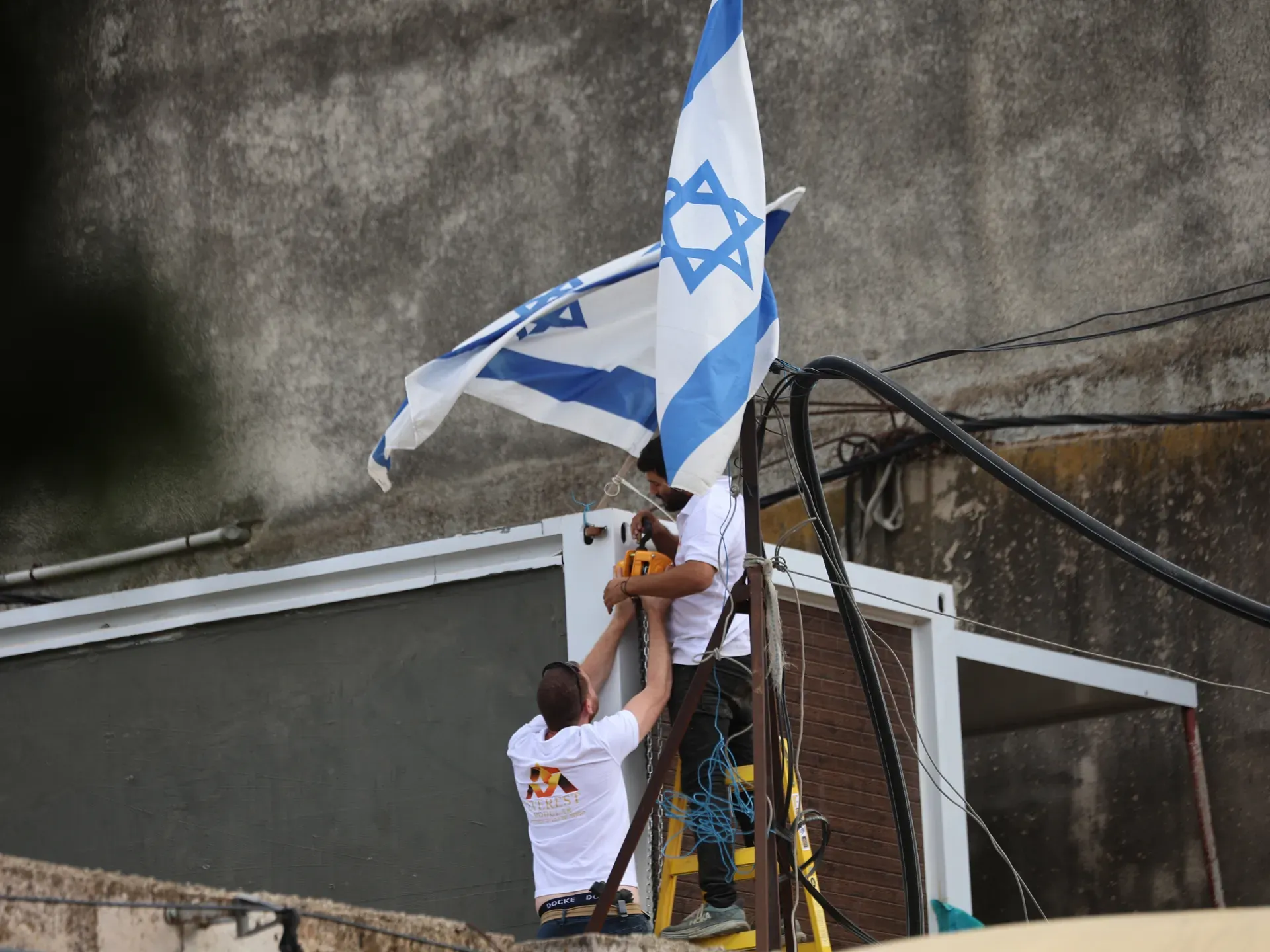
Hebron Israeli rooftop settlers: Impact on Palestinian identity
Hebron Israeli rooftop settlers are expanding their presence through the installation of mobile units atop Palestinian commercial properties in the Old City. This expansion, involving approximately 20 new settler units as of late October 2026, threatens the economic viability and cultural heritage of the Palestinian community. While roughly 500 settlers currently reside in the Old City, activists warn that these outposts aim to systematically displace local residents. This article examines the expansion of rooftop settlements, the historical context of the Hebron Protocol, and the struggle of local business owners to maintain their ancestral livelihoods.
November 8, 2026
6 min read
Source: ASHENVOW
How are Hebron Israeli rooftop settlers expanding their presence?
The expansion of Israeli settlements in Hebron's Old City has entered a new phase characterized by the use of prefabricated mobile structures placed directly on top of Palestinian-owned buildings. On October 29, 2026, these units were installed on the rooftops of commercial properties, a move intended to accommodate approximately 20 new settler units. This tactic allows for the expansion of the settlement footprint without necessarily requiring the immediate seizure of ground-level real estate, though it places immense pressure on the occupants below.
Activists observe that this method of expansion is designed to alter the demographic and cultural character of the area. By occupying the vertical space above Palestinian shops, settlers create a constant state of surveillance and physical presence that complicates daily life for residents. This trend represents a shift from confined settlement zones toward more pervasive control over the urban landscape of the Old City.
The impact of rooftop outposts on urban density
The introduction of these mobile units changes the architectural and social density of Hebron. Instead of traditional street-level expansion, the settlement is moving upward, effectively sandwiching Palestinian businesses between Israeli-controlled rooftops and restricted street access. This creates a unique and highly pressurized urban environment where the distinction between residential and commercial zones becomes blurred by military and settler presence.
What is the impact of settlement expansion on Palestinian businesses?
Local business owners in Hebron face extreme economic uncertainty due to the proximity of settlers and the constant threat of displacement. For many, these shops are not merely commercial entities but multi-generational legacies that provide the primary source of income for their families. The presence of settlers on rooftops creates a psychological and physical barrier to conducting normal trade.
Bader al-Daour al-Tamimi, a shop owner with four children in university, reports that the takeover of the rooftop above his business has turned it into a new outpost. He notes that shop owners have grown accustomed to the possibility that they may be unable to open their doors on any given day because of the continuous threats issued by both settlers and soldiers. This volatility makes long-term economic planning nearly impossible for the local community.
Similarly, Yusuf al-Khatib, a tailor who has worked in his family shop for nearly 60 years, describes the rooftop structures as a source of constant fear. While he views maintaining the shop as a duty to his father's inheritance, the presence of settlers directly above his sewing machine serves as a persistent reminder of the instability facing his livelihood. For these residents, staying open is an act of resistance against the economic strangulation of the Old City.
How does the Hebron Protocol define the current division?
The unique administrative structure of Hebron is a result of the 1997 Hebron Protocol, which divided the city into two distinct zones: H1 and H2. This division remains the foundational framework for the current tensions and restrictions experienced by the population. Under this agreement, the city is split as follows:
- H1 Area: Comprising approximately 80 percent of the city, this zone is under the civil and security control of the Palestinian Authority.
- H2 Area: Comprising the remaining 20 percent, including the Old City, this area remains under Israeli security control.
Because the Old City falls within the H2 zone, Palestinian residents live under much tighter restrictions on movement and access compared to those in H1. This arrangement allows Israeli settlers to live in close proximity to Palestinian neighborhoods while maintaining a high level of military oversight. This structure has facilitated the growth of settlements within the heart of Palestinian urban life, a situation that distinguishes Hebron from other West Bank cities.
What historical events shaped the current restrictions in Hebron?
The current state of the Old City is deeply linked to the aftermath of the 1994 Ibrahimi Mosque massacre, an event that triggered a permanent shift in how the area is managed. Following the killing of 29 Palestinians by an Israeli settler during prayer, significant restrictions were imposed on the Palestinian population. One of the most lasting consequences was the closure of Shuhada Street to Palestinian pedestrians and vehicles.
Issa Amro, founder of the Youth Against Settlements group, explains that before these restrictions, the Old City was a vibrant commercial hub. The markets were once filled with poultry, vegetables, camels, and carpentry workshops. The subsequent implementation of military gates and checkpoints has systematically dismantled this economic ecosystem. Amro notes that the current expansion, which now reaches the Old Municipality building, is a continuation of this process, aiming to empty the area of its Palestinian inhabitants.
The symbolic loss of Palestinian sovereignty
Beyond the physical restrictions, the erosion of Palestinian identity is visible through the changing symbols of the city. The takeover of the Old Municipality building—a key symbol of Palestinian local governance—and the installation of military positions on its roof mark a significant loss of local authority. This is compounded by the replacement of Arabic street names with Hebrew ones and the widespread display of Israeli flags above settler-occupied buildings, which residents view as a direct assault on the city's cultural heritage.
Frequently asked questions
How many settlers live in Hebron's Old City?
According to local reports and activists, approximately 500 settlers currently reside within the Old City area. This presence is maintained through various outposts and residential units, many of which are located in areas that are considered illegal under international law.
What is the difference between the H1 and H2 zones?
The H1 zone covers about 80 percent of Hebron and is managed by the Palestinian Authority. The H2 zone covers 20 percent, including the Old City, and remains under Israeli security control, resulting in much stricter movement restrictions for Palestinians living there.
Why was Shuhada Street closed to Palestinians?
Shuhada Street was closed to Palestinian access following the 1994 massacre at the Ibrahimi Mosque, where an Israeli settler killed 29 worshippers. The closure remains a central feature of the security and movement restrictions in the Old City.
What are the new mobile settler units?
The new units are prefabricated structures placed on the rooftops of Palestinian commercial buildings. These mobile outposts allow settlers to expand their presence into the Old City by occupying the vertical space above existing Palestinian businesses.
How do shop owners resist the settlement expansion?
Shop owners resist by refusing to abandon their properties despite economic pressure and physical threats. For many, keeping their businesses open is viewed as a vital way to preserve the Palestinian identity and history of Hebron's Old City.
Key takeaways
- Israeli settlers are using mobile rooftop units to expand their presence in Hebron's Old City.
- The 1997 Hebron Protocol divides the city into H1 (Palestinian control) and H2 (Israeli control).
- Settlement expansion in the H2 zone threatens the livelihoods of multi-generational Palestinian businesses.
- The 1994 Ibrahimi Mosque massacre led to permanent closures of major streets like Shuhada Street.
Conclusion
The expansion of Israeli rooftop settlements in Hebron represents more than just a territorial dispute; it is a fundamental challenge to the demographic and cultural continuity of the city. By occupying the vertical space above Palestinian commerce and implementing strict movement controls under the H2 designation, the settlement project seeks to reshape the Old City's identity. For the residents, maintaining their shops and homes is a struggle to preserve a history that dates back generations. As new outposts continue to emerge, the tension between urban expansion and the preservation of Palestinian heritage remains a defining feature of the Hebron landscape.



