
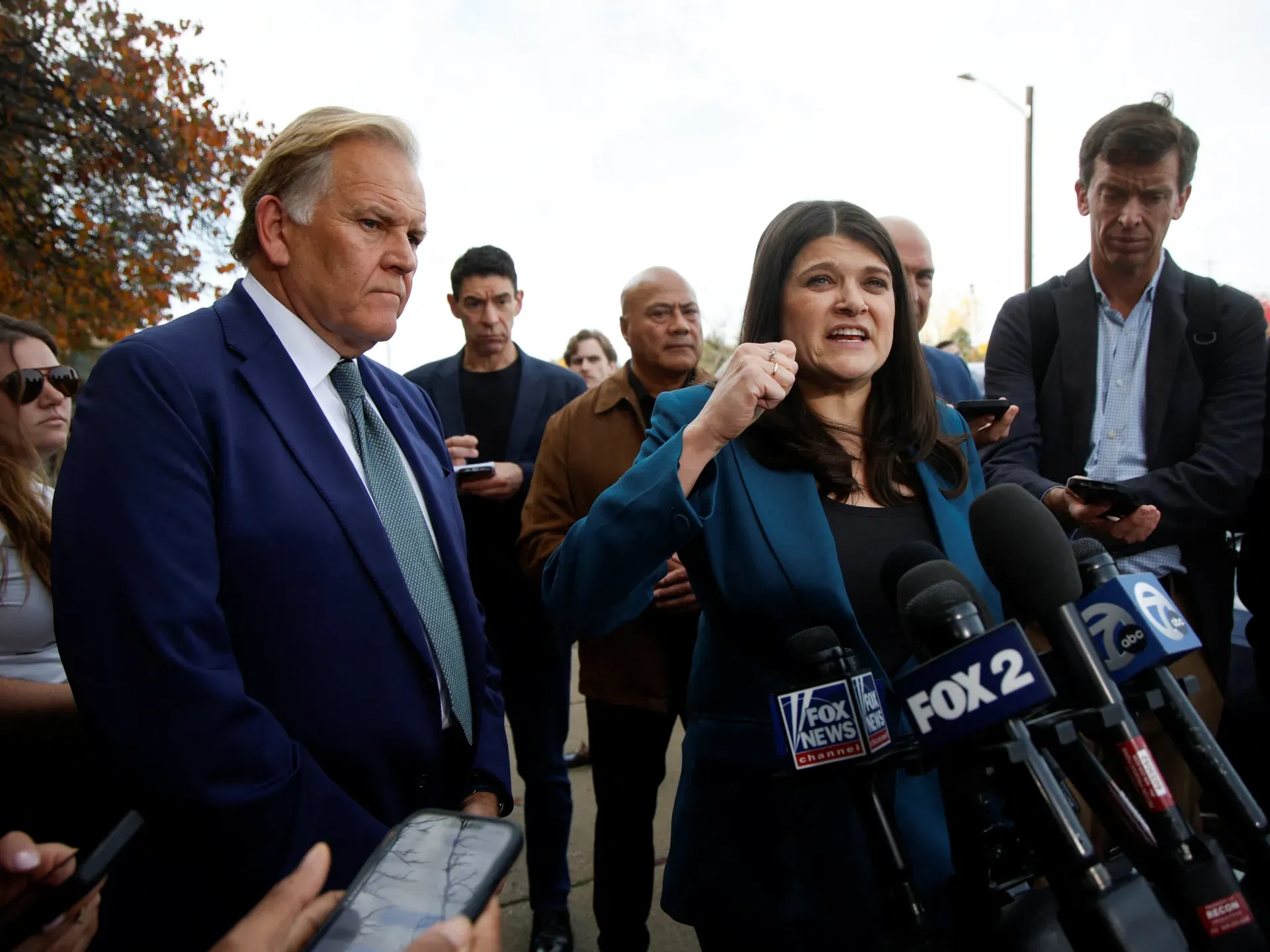
Haley Stevens endorsement: Why the Democrat switched sides
The Haley Stevens endorsement of Republican Mike Rogers for the US Senate has sent shockwaves through the Democratic Party just two days before the 2026 midterm elections. Stevens, a Democratic congresswoman who lost the Michigan Senate primary in August, broke party lines to support Rogers over the Democratic nominee, Abdul El-Sayed. This decision follows intense internal conflict regarding Israel and US military aid to Gaza. The move has triggered widespread condemnation from party leadership and led to staff resignations. This article explores the roots of the dispute, the role of Israel-Gaza rhetoric, and the subsequent political fallout.
November 8, 2026
6 min read
Source: ASHENVOW
Why did Haley Stevens endorse Republican Mike Rogers?
The Haley Stevens endorsement of Republican Mike Rogers was driven by a profound ideological fracture within the Democratic Party regarding the conflict in Gaza. Stevens, a staunch supporter of Israel, publicly broke with the Democratic nominee, Abdul El-Sayed, following a series of controversies involving political advertisements and rhetoric. While Stevens previously pledged to support El-Sayed after their August primary battle, the escalating tension over US military aid and the characterization of the war in Gaza made her position untenable.
The immediate catalyst for the shift was an advertisement released by Rebellion PAC, an independent group supporting El-Sayed. The ad controversially linked US military aid to Israel with the domestic cost-of-living crisis, depicting citizens choosing between groceries and funding the war in Gaza. Stevens condemned the advertisement as anti-Semitic and accused El-Sayed of echoing its sentiment by suggesting that funds allocated to Israel could be redirected toward domestic priorities such as healthcare, schools, and childcare.
The role of political PACs and rhetoric
The tension between Stevens and El-Sayed is not a new development but rather the culmination of a long-standing divide. During the Democratic primary, a super PAC linked to the American Israel Public Affairs Committee (AIPAC) spent tens of millions of dollars to support Stevens. This established a clear ideological boundary between her camp and the more progressive, pro-Palestinian stance adopted by El-Sayed.
Stevens further criticized El-Sayed's associations, specifically mentioning his connection to political streamer Hasan Piker. She argued that the Democratic nominee’s platform had become increasingly radicalized, stating, "We can’t stand with hate. We can’t stand with Hasan Piker." This rhetoric highlights the deepening chasm between traditional pro-Israel Democrats and the rising progressive wing of the party.
How did the dispute between Stevens and El-Sayed escalate?
The escalation reached a breaking point on the Sunday preceding the election when a planned show of Democratic unity failed. Stevens and El-Sayed were scheduled to attend a church service in Detroit together to present a united front; however, Stevens was uninvited from the event. While Stevens claimed El-Sayed told her she was no longer welcome in his campaign, Michigan Democrat Debbie Dingell suggested the exclusion was an attempt to prevent the internal friction from becoming too distracting for voters.
Following her uninvitation, Stevens used social media to announce her endorsement of Rogers. In a video posted to X, she stated that the Democratic nominee was correct in telling her to stay away, using that as the justification for her switch. This public rupture was compounded by personal tensions, including the fact that Stevens' fiancé, Jason Turkish—a Jewish Democrat and civil rights lawyer—had already announced his intention to vote for Rogers, citing concerns over El-Sayed's rhetoric.
What is the reaction from Democratic leadership?
Democratic leaders have responded to the Haley Stevens endorsement with intense criticism, labeling the move a betrayal of the party's collective goals. Senate Democratic Leader Chuck Schumer, who had previously recruited Stevens for the Senate race, described the endorsement as a "despicable betrayal." Despite the personal nature of the slight, Schumer attempted to pivot the conversation toward policy, stating he was more focused on the issues facing Michigan voters than the internal politics of the endorsement.
The institutional response from the Democratic National Committee (DNC) and the Michigan Democratic Party (MDP) was even more severe. DNC Chair Ken Martin characterized the endorsement as a "last-minute political stunt" and a betrayal of the values required to fight against the Trump agenda. Similarly, MDP Chair Curtis Hertel accused Stevens of abandoning her principles and attempting to undermine the party's momentum during a critical election cycle.
Impact on party unity and congressional control
The endorsement comes at a high-stakes moment for the Democratic Party, which is fighting to maintain or regain control of Congress. By breaking ranks in a closely watched Michigan race, Stevens has introduced a significant distraction that party strategists fear could influence undecided voters. The primary objective for the DNC remains the limitation of President Donald Trump’s influence, a goal that Stevens' move appears to complicate by sowing internal division.
What are the consequences for Stevens' political career?
The immediate consequences for Haley Stevens have been both professional and personal, marked by a significant loss of support within her own organization. Following her endorsement of Rogers, several members of her staff resigned in protest. Most notably, her chief of staff of eight years, Justin German, announced his departure along with several other staff members, citing shock and heartbreak over her decision.
Despite the backlash, Stevens has attempted to frame her decision as an act of party preservation rather than a defection. She clarified during a CNN appearance that she remains a Democrat and intends to vote for Democratic candidates in approximately 90 percent of the races on her ballot. However, her decision to cast her Senate vote for a Republican represents a rare and highly visible instance of a sitting Democratic congresswoman actively working against her party's nominee in a major federal election.
Frequently asked questions
Who is Mike Rogers?
Mike Rogers is the Republican candidate for the US Senate in Michigan. He is a prominent figure in the 2026 midterm elections and is backed by Donald Trump. His candidacy is central to the Republican effort to gain control of the Senate.
Why did Jason Turkish vote for a Republican?
Jason Turkish, the fiancé of Haley Stevens, is a Jewish Democrat and civil rights lawyer. According to FEC reports, he has donated to both parties, but he chose to vote for Mike Rogers because he felt El-Sayed's rhetoric regarding Israel made Jewish voters feel unsafe.
Was the Rebellion PAC ad produced by El-Sayed?
No, Abdul El-Sayed stated that the advertisement was not produced by his campaign. He expressed disagreement with the ad's message, which linked military aid to Israel to the American cost-of-living crisis, and accused Stevens of using the ad to re-litigate their primary.
How did Chuck Schumer react to the endorsement?
Senate Democratic Leader Chuck Schumer called the endorsement a "despicable betrayal." While he expressed frustration with the move, he emphasized that the party remains united behind El-Sayed and urged voters to focus on policy issues like healthcare and civil rights.
What happened to Haley Stevens' staff?
Several members of Stevens' staff resigned following her endorsement of Mike Rogers. Her chief of staff, Justin German, who had served her for eight years, led the resignations, stating that the team was "shocked and heartbroken" by her decision.
Key takeaways
- Haley Stevens endorsed Republican Mike Rogers for US Senate, breaking from Democratic nominee Abdul El-Sayed.
- The rift was fueled by disagreements over US military aid to Israel and the conflict in Gaza.
- The Democratic National Committee and Michigan Democratic Party condemned the move as a betrayal.
- Stevens' chief of staff and several other staff members resigned in protest of the endorsement.
Conclusion
The endorsement of Mike Rogers by Haley Stevens represents a significant moment of intra-party conflict within the Democratic Party. Triggered by deep-seated divisions over Middle East policy and the boundaries of acceptable political rhetoric, the move has caused immediate damage to party cohesion in Michigan. While Stevens maintains her identity as a Democrat, the mass resignations of her staff and the condemnation from national leadership underscore the severity of the fracture. As voters head to the polls, this dispute remains a central, albeit divisive, element of the 2026 midterm landscape.



