
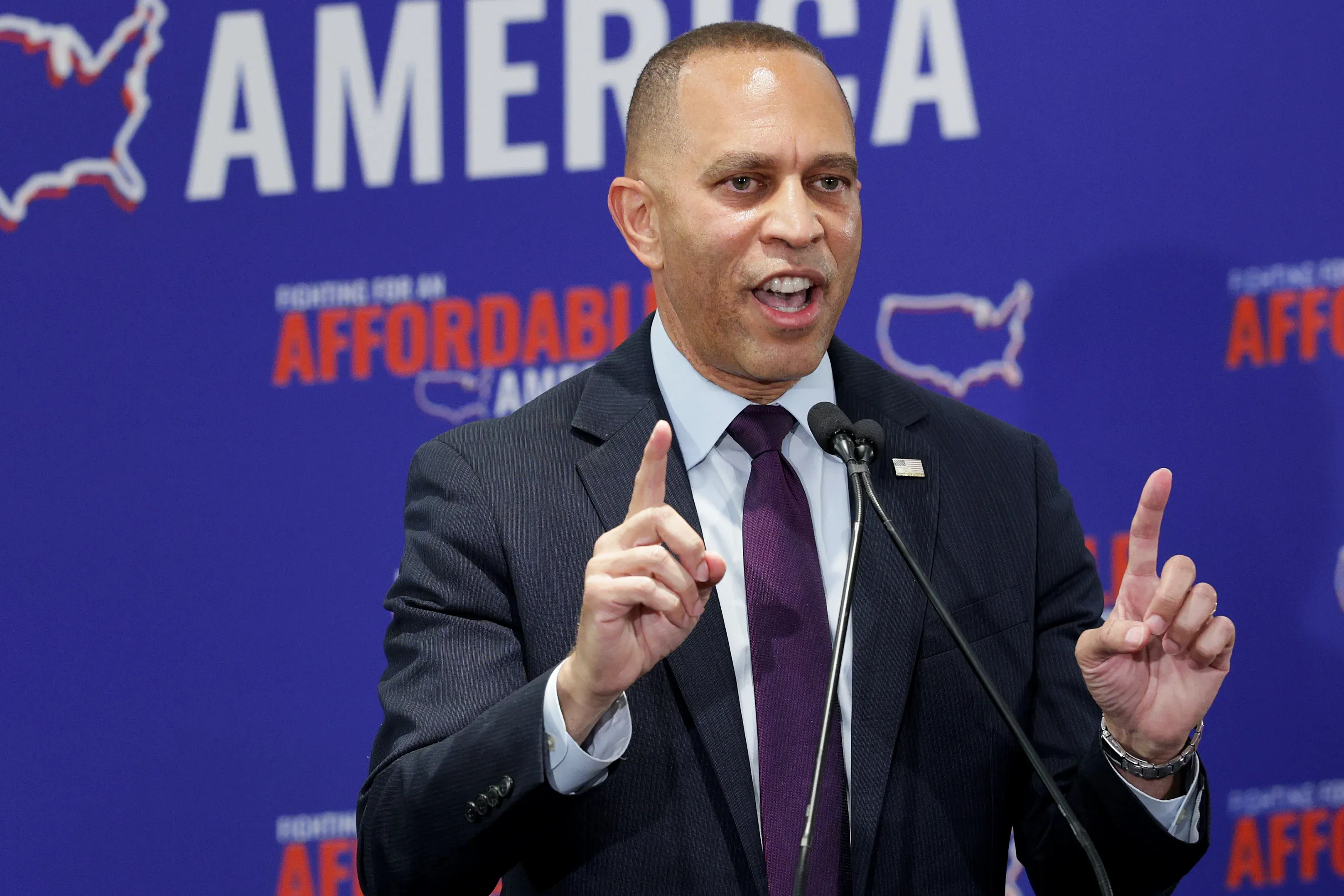
Hakeem Jeffries speaker: First Black House Speaker poised
Hakeem Jeffries is poised to become the first Black speaker of the House following a decisive victory for House Democrats in the 2026 midterm elections. Following his election as House minority leader in 2022, Jeffries, D-N.Y., is now set to ascend to the speakership, a role that places him second in the presidential line of succession. This historic elevation marks a significant milestone in American legislative history. This article examines his political trajectory, his legislative record on criminal justice, and the internal party dynamics he must navigate in the upcoming term.
November 8, 2026
5 min read
Source: ASHENVOW
How did Hakeem Jeffries rise to the speakership?
Hakeem Jeffries is set to become the first Black lawmaker elected as Speaker of the House following the Democratic Party's success in the November 2026 midterm elections. His ascent represents the culmination of a nearly 14-year career in the House of Representatives, during which he transitioned from a rank-and-file member to a primary leader within the Democratic Party.
Jeffries, who has represented parts of Brooklyn, New York, since 2013, first broke barriers in 2022 when he was elected House minority leader. This made him the first Black politician to lead either major party in either the House or the Senate. His path to the speakership involved serving as a key lieutenant under former Speaker Nancy Pelosi, D-Calif., and building influence within the Congressional Black Caucus and the broader House Democratic caucus.
The upcoming floor vote for the speakership is scheduled for January 3, when the new Congress convenes. If confirmed, Jeffries will occupy the second position in the presidential line of succession, immediately following the Vice President of the United States.
A tenure defined by legislative climbing
Jeffries' rise is characterized by his ability to navigate a diverse and often divided Democratic caucus. Moving from a focus on specific policy areas to managing the entire party's legislative agenda required securing widespread buy-in from various factions. As he prepares to take the gavel, his primary challenge will be translating midterm electoral success into tangible legislative results for a Democratic Party that has promised dramatic change to its voters.
What is the impact of his criminal justice reform background?
Jeffries’ legislative identity is deeply rooted in his history of advocating for criminal justice reform. Before entering the political arena, he practiced law, an experience he credits with shaping his perspective on the American legal system. His early work in the New York State Assembly focused on regulating the NYPD's warrantless stop-and-frisk searches, a theme that continued into his federal service.
One of his most significant legislative achievements was leading the effort to pass the bipartisan First Step Act. This legislation, which aimed to reduce sentences for certain drug-related crimes, required Jeffries to build unconventional coalitions. To achieve this, he worked closely with Jared Kushner, the son-in-law of former President Donald Trump.
According to Jeffries, working with "unusual suspects" is often a necessity for legislative progress in Washington. While his private meetings with Kushner drew criticism from some members of his own party, Jeffries defended the engagement, stating the discussions were focused on issues of affordability and that Democrats remain committed to holding the administration accountable.
How will he manage the Democratic Party's internal factions?
Jeffries faces the complex task of balancing the interests of a wide-ranging Democratic caucus, which includes both centrist members and a growing progressive wing. While he was once a member of the Congressional Progressive Caucus and a sponsor of Medicare for All proposals, he has maintained a distinct political identity that occasionally clashes with the party's far-left elements.
The tension between Jeffries and the more radical elements of the party, such as those aligned with the Democratic Socialists of America, has been a recurring theme in his leadership. He has been vocal about his refusal to follow a strictly socialist agenda, noting that his perspective as a Black man informs his view of systemic inequities differently than those who prioritize class-based analysis alone.
Navigating the progressive flank
As Speaker, Jeffries will need to decide how to integrate or sideline the more ideological members of his caucus. He has previously stated that while Black progressives address systemic racism as a foundational issue, he does not intend to "bend the knee" to hard-left democratic socialism. This positioning will be critical as the House attempts to pass major legislation during a term where the Democratic Party must satisfy both its moderate base and its progressive activists.
What are his primary legislative priorities for the new term?
The primary focus for Jeffries and the incoming House Democratic majority is addressing the cost of living for American citizens. Following the midterm elections, Jeffries emphasized that the House must deliver "dramatic change" to address what he describes as a broken system that fails to put the American people first.
While various issues are on the table, Jeffries has been cautious about several high-profile political confrontations. For instance, despite his role as an impeachment manager during the Senate trial regarding President Trump's pressure campaign on Ukraine, he has not committed to pursuing further impeachment proceedings during the current administration's term. He has characterized the issue as not being a top priority for his party at this time.
Instead, the legislative agenda is expected to center on economic stability and affordability. This shift in focus reflects a strategic move to address the immediate concerns of the electorate that drove the Democratic victory in the midterms.
Frequently asked questions
Who is Hakeem Jeffries?
Hakeem Jeffries is a Democratic Representative from Brooklyn, New York, who has served in the House since 2013. He was elected House minority leader in 2022 and is poised to become the first Black Speaker of the House following the 2026 midterm elections.
When will the Speaker of the House be elected?
The official floor vote to elect the Speaker of the House is scheduled to take place on January 3. This vote will occur when the new Congress officially convenes to begin its legislative term following the midterm election cycle.
What is the First Step Act?
The First Step Act is a bipartisan piece of legislation that Jeffries helped lead in Washington. The law focuses on criminal justice reform, specifically by reducing sentences for certain drug crimes and addressing systemic issues within the federal prison system.
What position does the Speaker hold in the line of succession?
The Speaker of the House holds the second position in the presidential line of succession. This means that if the President and the Vice President are both unable to serve, the Speaker would assume the presidency.
How does Jeffries view systemic racism compared to progressives?
Jeffries views systemic racism as a foundational element of American society, shaped by centuries of history. He distinguishes his view from hard-left progressives by arguing that while they focus heavily on class, his perspective is driven by the lived experience of racial inequity.
Key takeaways
- Hakeem Jeffries is poised to become the first Black Speaker of the House.
- The formal vote for the speakership is set for January 3.
- Jeffries previously led the bipartisan effort to pass the First Step Act.
- His legislative focus is expected to prioritize lowering costs for Americans.
Conclusion
The potential elevation of Hakeem Jeffries to the speakership marks a transformative moment for the House of Representatives and the Democratic Party. Having risen from a focus on criminal justice reform to the pinnacle of party leadership, Jeffries brings a unique blend of legislative pragmatism and identity-driven policy focus. His ability to maintain a cohesive caucus while managing the demands of both progressives and moderates will be the ultimate test of his leadership. As the new Congress approaches, the focus shifts from electoral victory to the difficult work of implementing the dramatic changes promised to the American electorate.



