
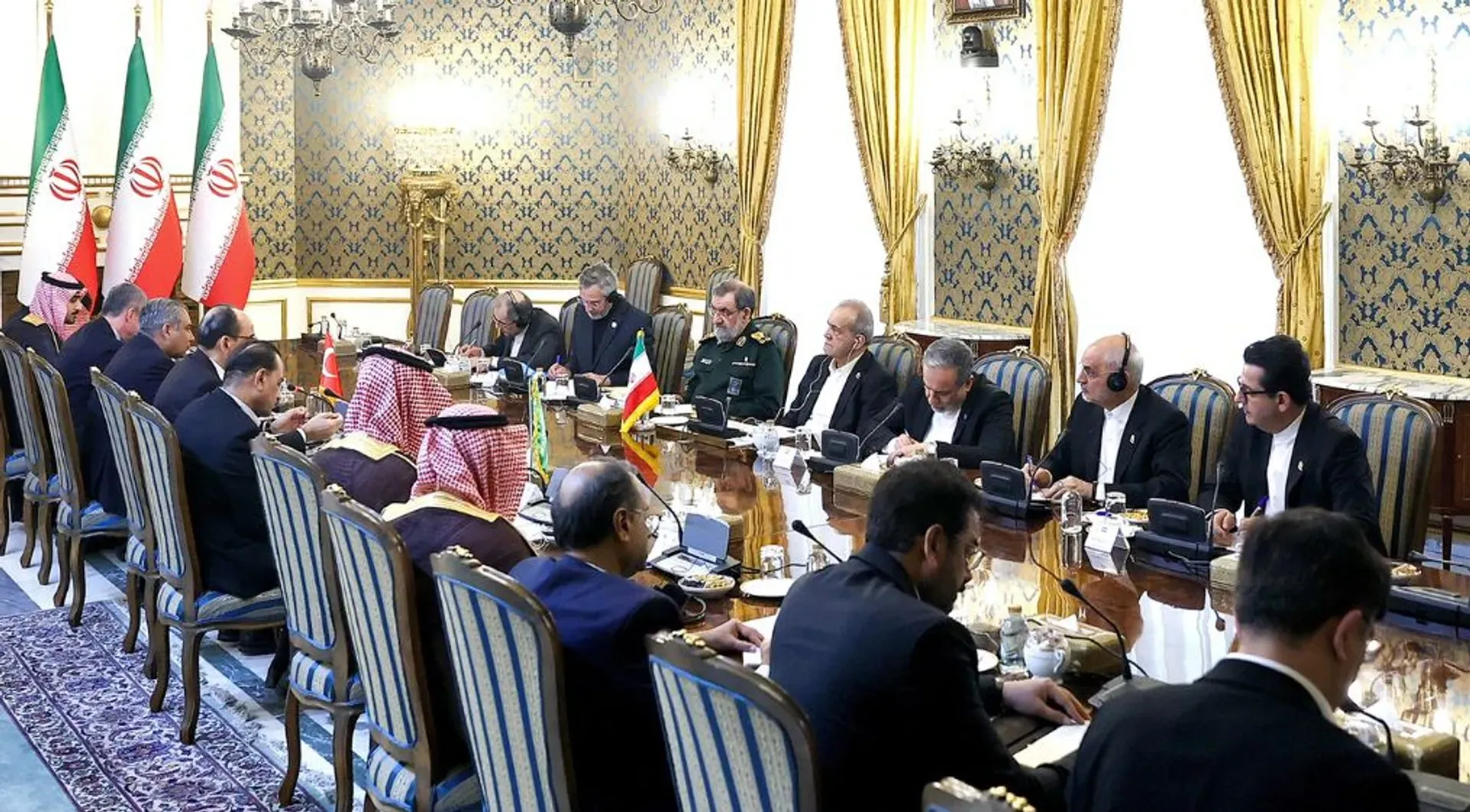
Gulf officials meet in Tehran to discuss new security framework
Officials from Saudi Arabia, Pakistan, and Turkiye met with Iranian leaders in Tehran on Tuesday to discuss regional stability. The meeting comes as tensions rise following signals of potential attacks from the United States and Israel, alongside promises of retaliation from Iran.
November 8, 2026
2 min read
Source: ASHENVOW
Diplomatic efforts in Tehran
Representatives from the Mecca pact nations, including Saudi Arabia, Pakistan, and Turkiye, held discussions with Iranian leadership in Tehran. This gathering is being viewed by analysts as a critical opportunity to defuse escalating tensions across the Gulf region. The meeting follows a period of heightened friction involving several regional and international actors.
The discussions aim to address whether these nations can establish a cohesive security framework. This comes at a time when diplomacy has struggled to produce a lasting peace agreement between the United States and Iran. The stability of the region remains under pressure due to ongoing conflicts and the threat of military escalation.
Regional tensions and conflict spillover
The urgency of these talks is driven by the risk of wider conflict. While international actors signal possible military actions, Iran has maintained that it will respond to any provocations. Furthermore, the conflict in Yemen continues to impact regional security, with fighting spilling over into Saudi Arabian territory.
A Saudi-led coalition recently reported that it successfully intercepted Houthi missiles and drones that were targeted at the kingdom. These incidents highlight the volatility of the current security environment and the necessity for coordinated diplomatic responses to prevent further escalation in the Middle East.
Expert perspectives on the Mecca alliance
The ability of the Mecca alliance to work alongside Iran to secure the region remains a central question for policymakers. The involvement of diverse players such as Ankara and Islamabad suggests a complex attempt to build a multilateral approach to security.
The success of this meeting could determine if a new framework can mitigate the risks posed by both state and non-state actors in the Gulf. Currently, the international community is monitoring whether these high-level talks can translate into tangible de-escalation measures.



