
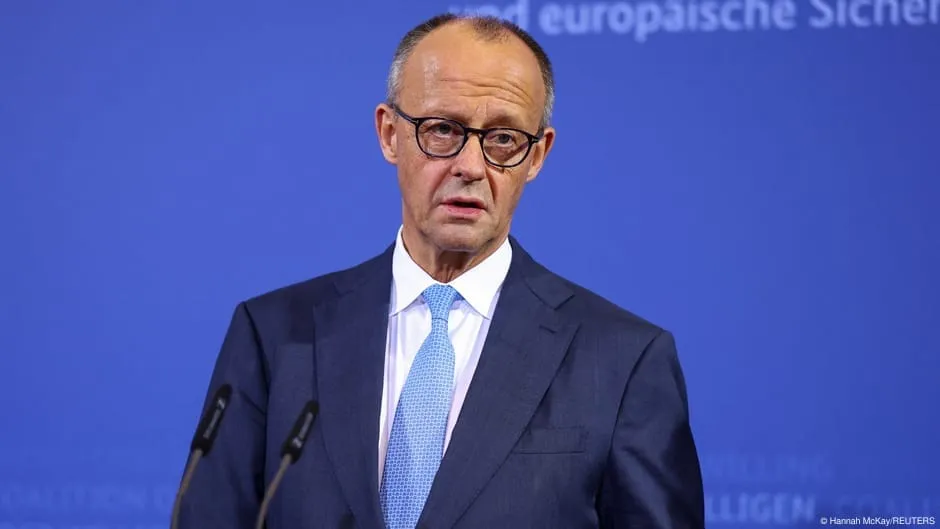
Ukraine peace talks: Merz urges EU role in 2026 negotiations
Ukraine peace talks involving European leaders are expected to occur soon on neutral ground, according to German Chancellor Friedrich Merz. Following a high-level meeting of Ukraine's allies in Berlin, Merz indicated that Germany, France, the UK, Poland, and Italy intend to represent European interests in upcoming negotiations. This push for inclusion comes as the US, Russia, and Ukraine engage in high-level diplomacy, with Merz suggesting locations such as the United Arab Emirates for future discussions to ensure a balanced diplomatic framework.
November 20, 2026
4 min read
Source: ASHENVOW
European representation in upcoming negotiations
German Chancellor Friedrich Merz stated on Thursday that new discussions regarding Russia's invasion of Ukraine will likely take place in the near future. Speaking after a meeting of Ukraine's allies in Berlin, Merz confirmed Germany's readiness to engage in dialogue with Russia, noting that such talks have long been a stated objective. While a specific date for these negotiations has not been established, the Chancellor emphasized that the diplomatic process must include a European dimension.
The proposed framework for these talks aims to ensure that the interests of the European continent are directly addressed. Merz identified a specific group of nations intended to represent the region: Germany, France, the United Kingdom, Poland, and Italy. This coalition seeks to move beyond bilateral or trilateral arrangements that exclude European stakeholders, arguing that the security architecture of the continent cannot be decided solely by external powers.
The Coalition of the Willing summit in Berlin
The announcement followed the 'Coalition of the Willing' summit held in the German capital. The summit brought together a diverse group of international actors, including Ukrainian President Volodymyr Zelenskyy and French President Emmanuel Macron. Also in attendance were British Prime Minister Andy Burnham and US representatives, including Jared Kushner and US Special Envoy Steve Witkoff. The gathering served as a platform for allies to coordinate their positions as the prospect of formal negotiations becomes more immediate.
The push for neutral ground and European inclusion
Negotiations are expected to be hosted on "neutral ground" to facilitate dialogue between the warring parties and their respective allies. Chancellor Merz suggested that the United Arab Emirates could serve as a suitable venue for these upcoming sessions. This move toward a neutral setting is intended to mitigate the political tensions inherent in direct talks between the US, Russia, and Ukraine.
European leaders have expressed increasing criticism regarding the current trajectory of diplomatic efforts. There is a growing concern among EU member states that meetings held exclusively between US, Ukrainian, and Russian representatives sideline European security concerns. By advocating for a seat at the table, leaders like Merz are attempting to prevent a scenario where the future of European security is determined without the direct participation of the continent's primary actors.
Russia's stance and the Shenzhen trilateral summit
Russian President Vladimir Putin has acknowledged the desire of European nations to participate in security discussions, though his stance on their involvement remains conditional. During recent diplomatic movements, Putin stated that Russia has extended invitations to European leaders to visit Moscow. He noted, "We understand that discussing issues linked to security in Europe is pointless without Europeans," while simultaneously maintaining a firm rejection of any military cooperation between Europe and Ukraine.
The diplomatic landscape was further complicated by a significant trilateral meeting in Shenzhen, China. US President Donald Trump met with both Vladimir Putin and Chinese President Xi Jinping in a historic summit. While leaders from China, Russia, and the US described the meeting as a success, the event has triggered international concerns regarding the potential for major powers to establish new spheres of influence. This trilateral engagement has been viewed by some analysts as a shift toward a more multipolar, yet potentially exclusionary, global order.
The Shenzhen meeting and geopolitical implications
The meeting in Shenzhen between Trump, Putin, and Xi Jinping has drawn immediate comparisons to historical precedents of high-level power politics. Observers have noted that the closed-door nature of the talks between Trump and Putin, combined with the presence of the Chinese leadership, creates a dynamic where the interests of smaller or non-aligned nations might be secondary to the strategic calculations of the three major powers. This has intensified the urgency for European leaders to secure their own formal channels of negotiation.
Rejecting the 'Yalta format' for Ukraine
Chancellor Merz has been vocal in his opposition to any peace settlement that mirrors the historical Yalta Conference structure. Following the trilateral summit in China, Merz dismissed the Shenzhen meeting as a "photo opportunity" and warned that a "Yalta format cannot bring peace" to Ukraine. He argued that attempting to divide spheres of influence among major powers is an outdated and dangerous approach to conflict resolution.
Merz's critique is rooted in the historical consequences of the 1945 Yalta Conference, where the US, UK, France, and the USSR divided post-war Europe. He emphasized that such structures historically led to "oppression, insecurity and a lack of peace." To underscore this point, Merz distributed pieces of the Berlin Wall to leaders during the Berlin summit, using the symbol to represent the division and instability caused by previous attempts to partition territories between great powers.
Historical context: The legacy of Yalta
The Yalta Conference of 1945 is frequently cited in modern diplomacy as a cautionary tale. By dividing Germany into four occupation zones—managed by the US, UK, France, and the USSR—the conference set the stage for decades of geopolitical tension. This division eventually manifested in the construction of the Berlin Wall, a physical barrier that became a symbol of the Cold War and the separation of East and West Berlin. Merz's insistence on avoiding a similar framework suggests that any future peace agreement for Ukraine must prioritize the sovereignty and security of the region rather than the strategic convenience of global superpowers.
| Proposed Negotiating Parties | Role/Status |
|---|---|
| Ukraine | Primary Belligerent |
| Russia | Primary Belligerent |
| United States | Key Mediator/Ally |
| Germany, France, UK, Poland, Italy | European Interest Representatives |
| United Arab Emirates (Proposed) | Potential Neutral Host |



