
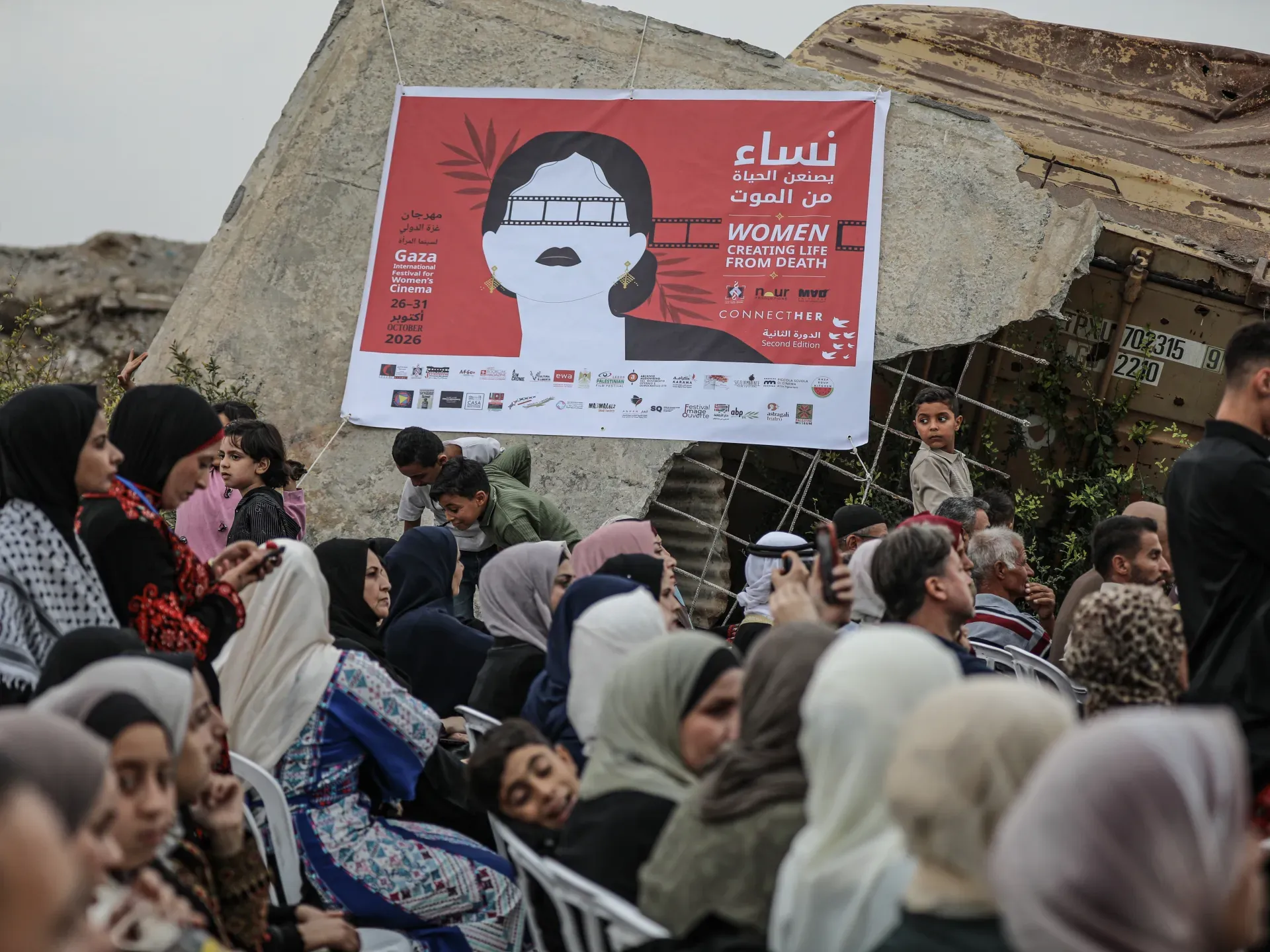
Gaza women filmmakers: Turning trauma into cinema in 2026
Gaza women filmmakers are utilizing cinema to document the profound human cost of the ongoing conflict and preserve collective memory. At the opening of the second Gaza International Women’s Film Festival, five documentaries were screened, marking the official launch of the Gaza Cinema Academy. This initiative aims to transform individual suffering into visual testimony amidst a war that has killed over 74,000 Palestinians. The festival, held under the theme 'Women Creating Life from Death,' provides a platform for emerging Palestinian directors to share their stories. This article examines the films presented, the launch of the new academy, and the systemic challenges facing Palestinian artists.
November 8, 2026
5 min read
Source: ASHENVOW
What is the significance of the Gaza International Women’s Film Festival?
The second Gaza International Women’s Film Festival serves as a critical platform for Palestinian women to reclaim their narratives through visual storytelling. Held at the destroyed al-Nakheel Hall in al-Bureij, the event operates under the slogan 'Women Creating Life from Death,' reflecting the resilience of creators working amidst widespread destruction. The festival is not merely a cultural gathering but an act of resistance against the erasure of Palestinian identity and history.
The current edition of the festival features 73 films from 24 different countries, providing a broader international context for local stories. By showcasing works produced by women who have lived through the siege and bombardment, the festival transforms individual experiences of loss into broader human stories. According to festival director Ezzedine Shallah, these films reveal the psychological and social scars left by war, ensuring that stories which might otherwise remain untold reach a global audience.
The role of visual testimony
Visual testimony acts as a safeguard against the loss of collective memory. In a landscape where cultural institutions have been decimated, the act of filming becomes a method of preserving the reality of daily life, including the struggle for food, the loss of family, and the impact of displacement. These films serve as a bridge between the local reality in Gaza and the international community.
How are Gaza women filmmakers documenting the realities of war?
Emerging filmmakers are using documentary film to explore specific, often overlooked, dimensions of the conflict. Through personal lenses, they capture the nuances of survival, from the trauma of hunger to the unique struggles of the disabled population. These documentaries are the result of a filmmaking diploma programme that began in March, which trained 25 young Palestinian women to translate their lived experiences into cinematic art.
Several key films highlight these diverse realities:
- A Sack of Flour: An 11-minute documentary by Mona Abu Qass that examines the use of starvation as a tool of war. The film uses personal experience to show how the trauma of hunger persists even when food becomes available.
- Beyond Silence: Directed by Raghda al-Buhaisi, this film explores the intersection of disability and war. It follows a deaf artist whose life and livelihood were destroyed by the conflict, using art to communicate what words cannot.
- Soso: The Lifeline: A story focusing on an orphaned child and his donkey, illustrating the small ways people find to survive.
- Remnants of Light: A narrative following a filmmaker dealing with the loss of her home and family.
- Dandana: A poignant look at a mother who lost eight children and uses traditional Palestinian songs to cope with her grief.
What is the purpose of the newly launched Gaza Cinema Academy?
The Gaza Cinema Academy was officially launched during the festival to provide structured, accredited training for the next generation of Palestinian filmmakers. The academy has developed a filmmaking diploma in cooperation with al-Quds Open University, which is accredited by the Palestinian Ministry of Education. This institutional support is vital for building professional skills in an environment where traditional education and cultural infrastructure have been severely compromised.
Beyond technical training, the academy aims to bridge the gap between local production and international recognition. According to Mai Masri, a co-founder of the festival, the academy is actively seeking agreements with distributors to screen these works in educational and cultural institutions worldwide. The goal is to ensure that Palestinian women's voices are heard on global platforms focused on human rights and women's issues, thereby strengthening the presence of Palestinian cinema on the international stage.
Expanding professional horizons
The academy focuses on two main pillars: skill acquisition and international access. By providing a formal curriculum, it helps young women navigate the technical complexities of filmmaking. Simultaneously, by seeking partnerships with international festivals and distributors, it helps overcome the isolation imposed by the siege, opening new horizons for directors to reach global audiences.
What challenges do filmmakers face in the Gaza Strip?
Filmmaking in Gaza is hindered by extreme logistical, financial, and physical constraints. The destruction of cultural institutions, combined with a lack of professional equipment and limited funding, makes even basic production difficult. Furthermore, the ongoing siege creates a landscape of instability that directly impacts the creative process.
The following table summarizes the primary obstacles identified by festival organizers and filmmakers:
Rima Mahmoud, a co-founder of the festival, noted that these pressures often force filmmakers to adopt simple, makeshift methods and self-fund their projects just to document their reality. The lack of translation services and international partnerships further complicates the ability of these creators to share their work with the world.
FAQ: Gaza women filmmakers
What is the Gaza Cinema Academy?
The Gaza Cinema Academy is a new institution launched to provide accredited filmmaking training. It offers a diploma programme in collaboration with al-Quds Open University and is recognized by the Palestinian Ministry of Education, aiming to professionalize local talent despite the ongoing conflict.
Who directed 'A Sack of Flour'?
The documentary 'A Sack of Flour' was directed by emerging filmmaker Mona Abu Qass. The film uses her personal experiences to examine the impact of food shortages and the use of starvation as a tactic during the war in Gaza.
How many films were at the festival?
The Gaza International Women’s Film Festival features a total of 73 films from 24 different countries. While the festival has an international scope, it provides a dedicated platform for local Palestinian women filmmakers to showcase their work.
What is the theme of the festival?
The festival is held under the slogan 'Women Creating Life from Death.' This theme reflects the resilience of the female filmmakers who are using art to process trauma and preserve their stories amidst the destruction of the war.
What are the main goals of the festival organizers?
Organizers aim to provide a space for women to tell their own stories, resist the erasure of their history, and connect Palestinian filmmakers with international distributors and festivals to ensure their voices reach a global audience.
Key takeaways
- The Gaza Cinema Academy provides accredited filmmaking diplomas through al-Quds Open University.
- The festival features 73 films from 24 countries, highlighting local and international perspectives.
- Documentaries like 'A Sack of Flour' and 'Beyond Silence' document hunger and disability during war.
- Filmmakers face severe obstacles including power outages, equipment shortages, and the ongoing siege.
- The academy seeks international distribution to prevent the erasure of Palestinian collective memory.
Conclusion
The launch of the Gaza Cinema Academy and the second Gaza International Women’s Film Festival represents a significant effort to preserve Palestinian identity through art. By turning individual pain into cinematic testimony, these women filmmakers are resisting the erasure of their experiences. While the challenges of equipment shortages, displacement, and the ongoing siege remain formidable, the movement toward professionalized, accredited training offers a path for future generations. Ultimately, these films serve as a vital bridge, carrying the lived realities of Gaza to a global audience and ensuring that the human stories behind the conflict are never silenced.
| Challenge Category | Specific Obstacles |
|---|---|
| Infrastructure | Destruction of halls, power outages, and internet connectivity issues. |
| Resources | Scarcity of filming equipment and lack of financial support. |
| Political/Social | The Israeli siege, displacement, and the physical dangers of war. |
| Professional | Limited access to international training and global festival circuits. |



