
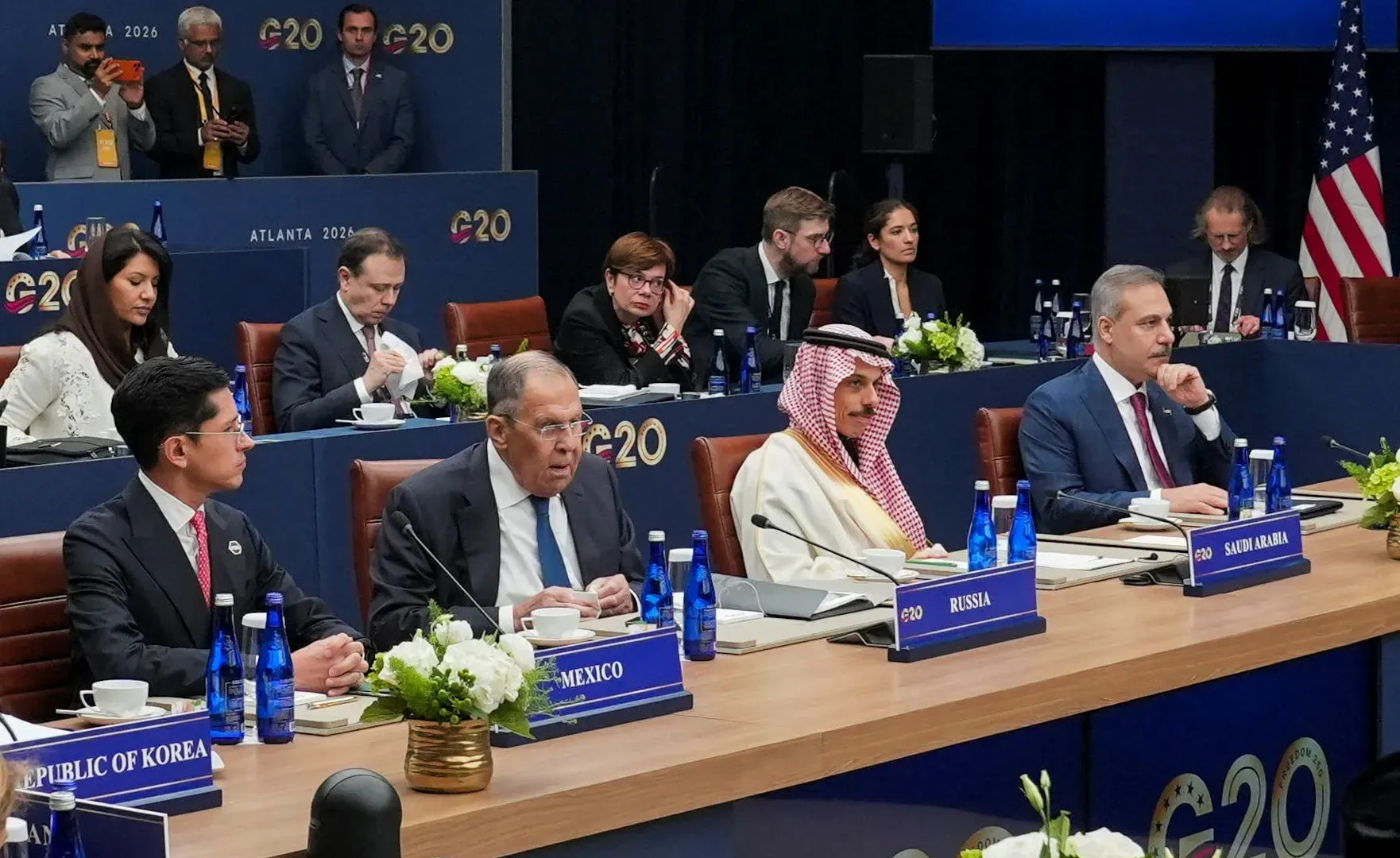
G20 foreign ministers meeting Atlanta: Lavrov controversy
The G20 foreign ministers meeting in Atlanta has been defined by intense diplomatic tension. European officials refused to participate in a traditional group photograph alongside Russian Foreign Minister Sergey Lavrov, signaling deep fractures within the group. As members navigate the fallout from conflicts in Ukraine and Iran, the meeting in the United States faces immense pressure. Beyond these diplomatic boycotts, the summit must address critical global challenges regarding energy security and food supplies. This article examines how current geopolitical conflicts are reshaping international multilateralism and the future of G20 cooperation.
November 8, 2026
5 min read
Source: ASHENVOW
Why was the traditional G20 group photo cancelled in Atlanta?
The United States government scrapped the customary group photograph of foreign ministers because European officials refused to be pictured with Russian Foreign Minister Sergey Lavrov. This move serves as a visible symbol of the deep political divisions currently separating Western nations from the Russian Federation within the G20 framework.
German Foreign Minister Johann Wadephul confirmed the decision, stating that there would be no family photo featuring European partners together with Mr. Lavrov, according to the dpa news agency. This refusal is tied to the ongoing international sanctions against Russia, which were originally implemented following the 2022 full-scale invasion of Ukraine. While Lavrov arrived in Atlanta to participate in the talks, his presence remains a point of intense contention for the European delegation.
The significance of the diplomatic boycott
The cancellation of the photo is more than a mere breach of protocol; it represents a formal refusal by European powers to grant Lavrov the appearance of international legitimacy. By avoiding a joint image, European ministers are signaling that the diplomatic norms of the G20 are being fundamentally altered by the conflict in Ukraine. A diplomatic source told the AFP news agency that Russia’s presence at the meeting does not in any way legitimise its current military actions.
How are the conflicts in Ukraine and Iran impacting G20 talks?
The Atlanta meeting is heavily overshadowed by active military conflicts in Ukraine and the Middle East, which have disrupted global trade and energy stability. US Secretary of State Marco Rubio opened the discussions by emphasizing the need for cooperation to address geopolitical crises that threaten food supplies, energy markets, and the freedom of navigation.
The situation in the Middle East has become particularly acute following the blockade of the Strait of Hormuz by Iran, a development that occurred after US-Israeli strikes began in late February. This blockade has contributed to a sharp rise in global energy prices. Furthermore, the discussions in Atlanta are occurring against the backdrop of recent violence in Ukraine, including a Russian strike on a Ukrainian railway station that killed at least 14 people on the day of the meeting.
Addressing accountability and maritime security
In response to the ongoing violence, the European Union’s foreign policy chief, Kaja Kallas, has pledged to urge G20 partners to strengthen their support for Ukraine. Kallas is advocating for increased accountability through the pursuit of a special tribunal and a claims commission. This push for legal accountability coincides with the broader economic concerns raised by Secretary Rubio, who noted on the X platform that both maritime and food security are essential drivers of economic security.
What is the current state of G20 consensus and cooperation?
The ability of the G20 to reach formal agreements has diminished, with diplomatic sources suggesting that the forum is no longer a venue where foreign ministers can easily produce a unified joint statement. Instead of a collective declaration, the United States intends to publish a chair’s summary drafted by Washington.
This decline in consensus is reflected in the varying levels of representation and the shifting priorities of member states. For instance, China sent Executive Vice Foreign Minister Ma Zhaoxu to the meeting rather than Foreign Minister Wang Yi. Additionally, the composition of the meeting highlights significant geopolitical shifts, such as the exclusion of South Africa—a founding member of the G20—by Washington, while the African Union is represented by Burundi’s Edouard Bizimana.
The role of US policy and economic sanctions
The diplomatic tension is further complicated by recent shifts in US policy. Just weeks before the Atlanta meeting, US President Donald Trump issued sanctions waivers that allowed Russia to export diesel, a move intended to mitigate fuel price increases ahead of the November 3 midterm elections. This creates a complex environment where economic pragmatism occasionally clashes with the strict diplomatic isolation sought by European allies.
When will the next major G20 developments occur?
The Atlanta ministerial meeting serves as the final high-level gathering of the current US G20 presidency before the transition to the next phase of summits. The primary focus now shifts toward the upcoming leaders' meetings scheduled for December.
Following the conclusion of the foreign ministers' talks in Georgia, the global community will look toward Miami, where G20 leaders are set to meet on December 14 and 15. These summits will likely address whether the current ministerial-level rifts can be bridged or if the G20 will continue to operate as a fractured body of competing interests rather than a unified economic and political bloc.
Frequently asked questions
Why did European ministers refuse to pose with Sergey Lavrov?
European ministers refused the photo to avoid providing a platform of legitimacy to the Russian Foreign Minister. This protest is a direct response to Russia's ongoing invasion of Ukraine and the subsequent Western sanctions. The refusal highlights the lack of diplomatic alignment between Europe and Russia within the G20.
What impact has the Strait of Hormuz blockade had on the G20?
The blockade of the Strait of Hormuz by Iran has caused a sharp increase in global energy prices. This instability has forced G20 members to prioritize maritime security and energy stability as critical components of global economic security during the Atlanta ministerial talks.
Is Ukraine a member of the G20?
Ukraine was not invited to the G20 foreign ministers' meeting in Atlanta. While the conflict in Ukraine is a central theme of the discussions, the country does not hold a formal seat within the G20 group, although its security concerns are a primary focus for many members.
Will the G20 release a joint statement after the Atlanta meeting?
A joint statement is not expected from this meeting. Due to the deep rifts among members, Washington has indicated that it will instead publish a chair’s summary. This reflects a growing trend where the G20 struggles to reach consensus on unified official declarations.
Who is representing China at the G20 meeting?
China is represented by Executive Vice Foreign Minister Ma Zhaoxu. This is a notable departure from standard protocol, as the country's Foreign Minister, Wang Yi, did not attend the Atlanta talks personally, according to the delegation list provided by the US Department of State.
Key takeaways
- European ministers refused a group photo with Sergey Lavrov to protest the war in Ukraine.
- The G20 is facing significant internal rifts, making a joint statement unlikely.
- Iran's blockade of the Strait of Hormuz has caused global energy prices to rise.
- The Atlanta meeting is the final ministerial session before the December leaders' summit in Miami.
Conclusion
The G20 foreign ministers meeting in Atlanta underscores a period of intense fragmentation in global governance. The refusal of European nations to participate in a collective photograph with Russia illustrates that the geopolitical realities of the Ukraine and Iran conflicts have fundamentally altered the traditional functioning of multilateral forums. As the G20 moves toward the December summit in Miami, the tension between economic necessity—such as managing energy prices and food security—and the demand for political accountability remains unresolved. The shift toward publishing chair's summaries rather than joint statements suggests a future where the G20 acts more as a platform for divergent interests than a unified voice for global stability.



