
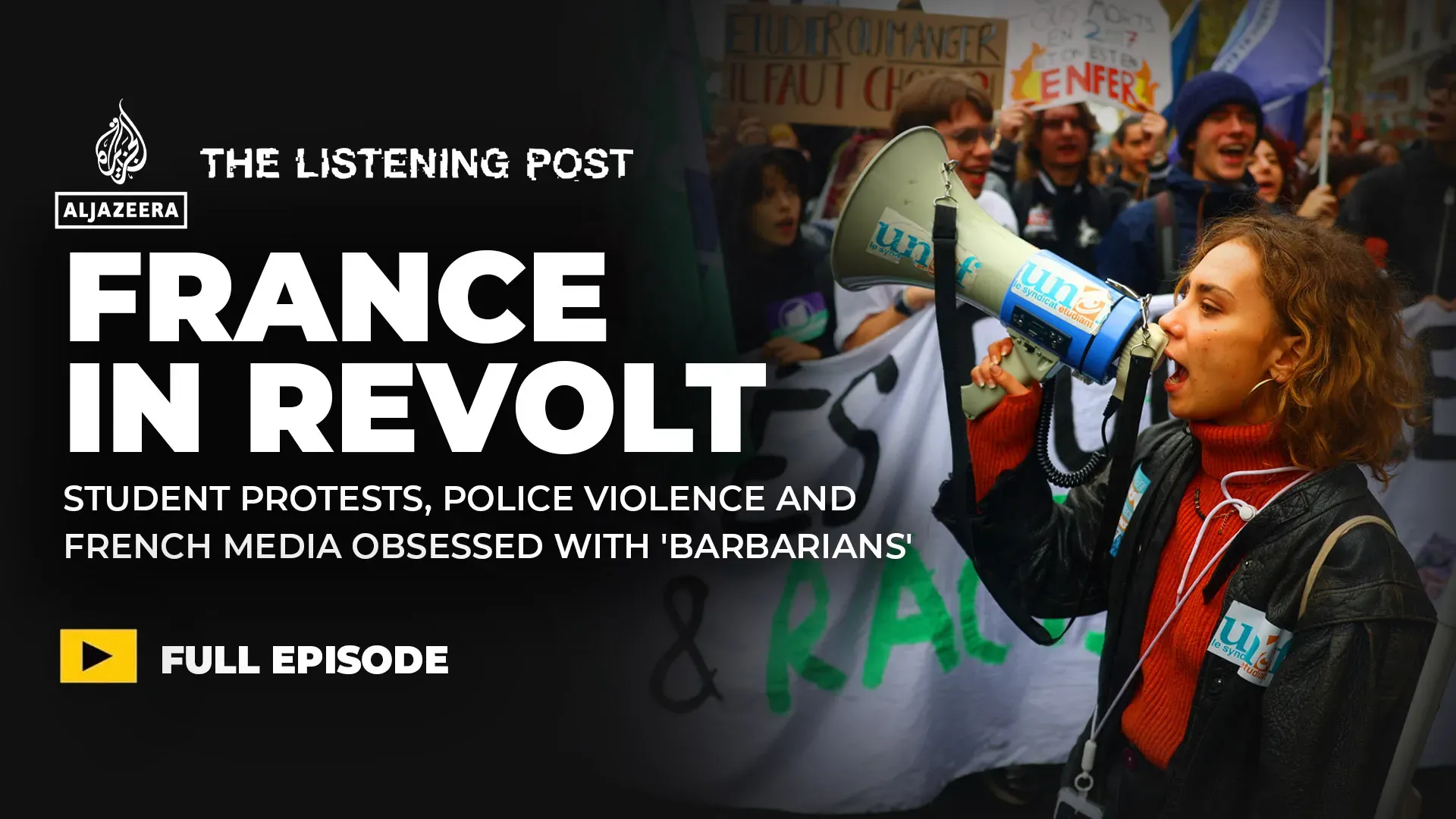
Decoding France's unrest narrative and media bias
France's unrest narrative has become a central point of contention as student protests evolve into widespread civil disturbance. While the movement began with specific educational demands, the public perception is increasingly shaped by media framing rather than the protesters' core grievances. This analysis examines the shift from political discourse to descriptions of violence and the international implications of this media focus. Furthermore, sociologists note that this shift often obscures the underlying socio-economic drivers that originally fueled the demonstrations.
October 27, 2026
4 min read
Source: ASHENVOW
The shift from educational demands to street violence
What originated as a series of protests centered on education reform has rapidly expanded, engulfing French streets in one of the most significant waves of social unrest seen in recent years. As the scale of the demonstrations has grown, the focus of the conversation has undergone a fundamental shift. Rather than addressing the underlying reasons for the mobilization, much of the public discourse has pivoted toward the physical manifestations of the unrest.
Mainstream media outlets have largely prioritized the coverage of looting and violent clashes over the specific policy demands of the demonstrators. This transition in reporting changes how the public perceives the legitimacy of the movement. When the focus remains on chaos, the political substance of the protest often becomes secondary to the spectacle of disorder.
The evolution of the protest movement
The movement's rapid escalation suggests a deep-seated dissatisfaction that extends beyond the initial educational triggers. However, the ability of these protesters to influence policy is frequently hampered by a media environment that emphasizes disruption.
Media framing and the identity of protesters
A significant portion of media airtime has been dedicated to the physical appearance and identities of those participating in the protests. This focus on 'who' is protesting, rather than 'why' they are protesting, has introduced a controversial layer to the national conversation. Reports have frequently utilized terms that carry racist connotations, focusing on the demographic characteristics of the crowds.
By fixating on the perceived 'barbarism' of the protesters, media coverage risks dehumanizing the participants. This framing moves the debate away from social justice or economic reform and toward a narrative of cultural or racial conflict. Such depictions can alienate the broader public from the movement's original objectives.
International echoes of the French narrative
The way France's unrest is portrayed does not stay within national borders; it has significant international ramifications. The specific narratives constructed by French media are being actively adopted by right-wing movements across the globe. This cross-border adoption of domestic unrest narratives demonstrates how media framing can fuel broader ideological shifts.
When mainstream outlets emphasize disorder and use polarizing language, they provide rhetorical ammunition for international actors seeking to promote specific political agendas. The domestic struggle in France thus becomes part of a larger, globalized battle over how social movements and identity are presented to the world.
Expert perspectives on the media battle
The complexity of this situation is highlighted by various academic and journalistic contributors who monitor the intersection of politics and media. Experts such as Philippe Marliere, a professor of French and European politics at University College London, and journalists like Diane de Vignemont, provide critical insights into how these narratives are constructed.
The consensus among these observers suggests that the media's obsession with certain aspects of the unrest serves to obscure the reality of the social tensions at play. By analyzing the messaging, it becomes clear that the battle is not just occurring in the streets, but also in the newsrooms and digital spaces that define public perception.
Frequently Asked Questions
What triggered the current unrest in France?
The unrest initially began as a series of protests focused on education-related issues. However, the movement quickly escalated, transforming into a much broader wave of social and civil disturbance that has affected various sectors of French society and moved beyond its original educational scope.
How is the media portraying the protesters?
Mainstream media coverage has frequently focused on the violence, looting, and the physical appearance of protesters. There is a noted tendency to use polarizing or racist language, which shifts the focus from the demonstrators' actual demands to their identities and perceived behavior.
Does the media coverage affect international politics?
Yes, the narrative regarding France's unrest is being picked up by right-wing movements abroad. The way French media frames the protests provides a template for international political actors to use in their own domestic or regional ideological struggles.
The ongoing struggle for narrative control
The situation in France illustrates the power of media framing to redefine a political movement. When coverage prioritizes the spectacle of violence and the identity of participants over the substance of their grievances, the democratic potential of protest is often diminished. As these narratives are exported and utilized by international political movements, the struggle for control over the story becomes as significant as the protests themselves. Understanding this media dynamic is essential for grasping the true nature of the unrest and its long-term impact on French society and global political discourse.



