
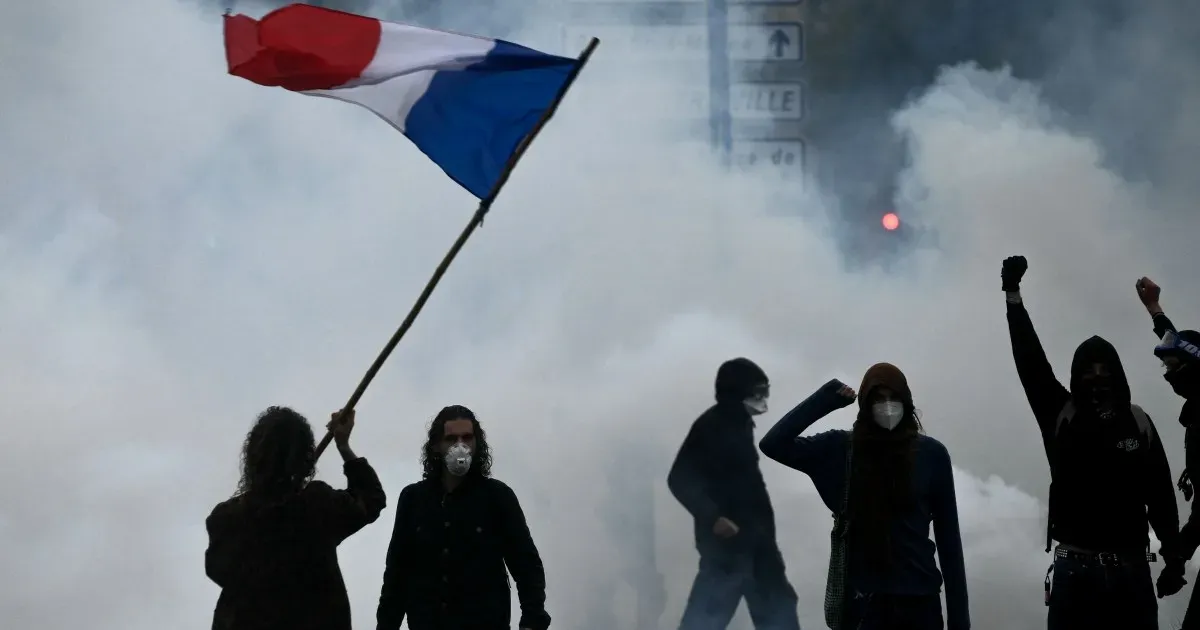
France Halloween protests: 70,000 officers to manage risk
France Halloween protests are expected to face significant security challenges as authorities prepare for widespread demonstrations on October 31, 2026. Interior Minister Laurent Nunez has announced the mobilization of 70,000 police officers and gendarmes to manage the anticipated public disorder. This massive deployment follows recent nationwide unrest involving the Yellow Vest movement and student unions. The government intends to implement strict measures, including the use of armored vehicles and water cannons, to prevent looting and violence. This article examines the security preparations and the political context of the ongoing social unrest in France.
November 8, 2026
5 min read
Source: ASHENVOW
Why is France deploying 70,000 officers for the Halloween protests?
The French government is mobilizing 70,000 police officers and gendarmes to address what Interior Minister Laurent Nunez describes as a "very high risk of public disorder" on October 31, 2026. This massive security presence is an exceptional measure intended to match the scale of deployments seen during previous weeks of civil unrest. The decision comes as various social groups, including the Yellow Vest movement and various student unions, have called for coordinated demonstrations to coincide with the Halloween holiday.
According to the interior ministry, the scale of the deployment is a direct response to the volatility of recent gatherings. For instance, demonstrations held the previous Saturday drew approximately 410,000 protesters nationwide, although labor unions estimated the actual figure to be nearly double that number. The high volume of participants, combined with the potential for spontaneous violence, has forced the state to prioritize large-scale containment strategies.
The scale of recent unrest
The necessity for such a large deployment is underscored by the intensity of recent clashes. The ministry reported that more than 2,700 people were arrested during protests a week prior to this announcement. The government is attempting to preempt a repeat of these figures by saturating urban areas with law enforcement personnel to prevent the escalation of localized protests into nationwide riots.
How will the government manage the risk of masked demonstrators?
Authorities are specifically concerned that the Halloween holiday will be used as a pretext for protesters to conceal their identities while engaging in illegal activities. Interior Minister Laurent Nunez issued a stern warning against demonstrators using Halloween costumes as a "legitimate reason to hide one’s face" to facilitate disturbances in public spaces. This concern stems from previous instances where anonymity allowed for more aggressive tactics against security forces.
To counter this, the government has outlined several restrictive measures:
- Banning city centre gatherings: While demonstrations are technically permitted, Nunez stated they will not be allowed in city centres due to the high risk of disorder.
- Strict enforcement of identity: Law enforcement will be on high alert for individuals using masks to evade detection during civil disobedience.
- Use of specialized equipment: The ministry confirmed that armored vehicles and water cannons, which were introduced last week, will be utilized to maintain control.
The strategy aims to decouple the festive aspects of Halloween from the planned political demonstrations, ensuring that the holiday does not become a shield for those intending to cause chaos.
What are the primary groups driving the upcoming demonstrations?
The upcoming wave of protests is being spearheaded by two major factions: the Yellow Vest movement and various student unions. The Yellow Vest movement has specifically announced a "third act" of its protest campaign, targeting symbolic locations across the country. Their planned actions include demonstrations outside the National Assembly and at all town halls throughout France.
The motivations behind these movements remain rooted in the rising cost of living, which has caused significant economic strain on French households. This economic pressure has served as a catalyst for a series of protests that have frequently transitioned from peaceful marches to large-scale looting and riots. The intersection of economic grievance and organized student activism creates a complex landscape for security forces to navigate.
Political tensions and social movements
The involvement of the "ultra-left" and far-right groups adds another layer of complexity to the security situation. Nunez has accused certain ultra-left elements and Yellow Vest activists of using social media to circulate messages that call for a "revolution" on Halloween evening. Consequently, the government has pledged to ban any gatherings that appear to promote such radical upheaval, signaling a zero-tolerance policy toward revolutionary rhetoric in public spaces.
What is the government's stance on political violence?
The French administration has adopted an "extremely firm" stance regarding any form of excess or violence during the upcoming protests. Interior Minister Laurent Nunez has explicitly warned far-right groups, who have previously clashed with left-wing protesters in approximately 15 French cities, that the state will not tolerate illegal activities. The government's objective is to prevent the cross-ideological clashes that have characterized recent urban unrest.
The government's response is characterized by a dual approach of containment and strict legal enforcement. While the ministry acknowledges the right to demonstrate, it has set clear boundaries regarding where and how these demonstrations can occur. The focus is on preventing the "degenerating" of protests into the looting and riots that have rocked the country in recent months.
Frequently asked questions
How many police officers are being deployed in France?
Approximately 70,000 police officers and gendarmes are being mobilized across the country. This deployment is described by Interior Minister Laurent Nunez as an exceptional measure intended to manage the very high risk of public disorder expected on October 31, 2026.
Can protesters wear masks during the Halloween demonstrations?
Authorities have warned that using Halloween costumes to hide one's face is not a legitimate reason for masking during protests. The government intends to prevent individuals from using the holiday as a cover for causing disturbances or avoiding identification by law enforcement.
Where are the protests allowed to take place?
Demonstrations are permitted, but the government has stated they will not be allowed in city centres. This restriction is a preventative measure designed to mitigate the risk of public disorder and large-scale looting in densely populated urban areas.
What is the main cause of the current unrest in France?
The ongoing protests are primarily driven by concerns over the rising cost of living. This economic pressure has mobilized groups like the Yellow Vests and student unions, leading to widespread demonstrations and, in some cases, violent civil unrest.
What specific equipment will the police use?
The security forces will utilize specialized equipment to maintain order, including armored vehicles and water cannons. These tools were introduced recently and will be strengthened during the upcoming Halloween period to manage potential riots and large crowds.
Key takeaways
- 70,000 police and gendarmes are being deployed to manage high-risk protests.
- The Yellow Vest movement has planned a "third act" of protests on Halloween.
- Authorities have banned demonstrations in city centres to prevent public disorder.
- The government warns against using Halloween masks to hide identities during unrest.
- Protests are largely driven by the rising cost of living in France.
Conclusion
The upcoming Halloween protests in France represent a significant challenge for national security and public order. With 70,000 officers deployed, the government is attempting to preempt the volatility that has characterized recent economic demonstrations. The mobilization of armored vehicles and the restriction of protests in city centres reflect a strategy of firm containment. As the Yellow Vest movement and student unions escalate their actions, the ability of the state to manage these large-scale gatherings without significant violence will be a critical test of French domestic stability and law enforcement effectiveness.



