
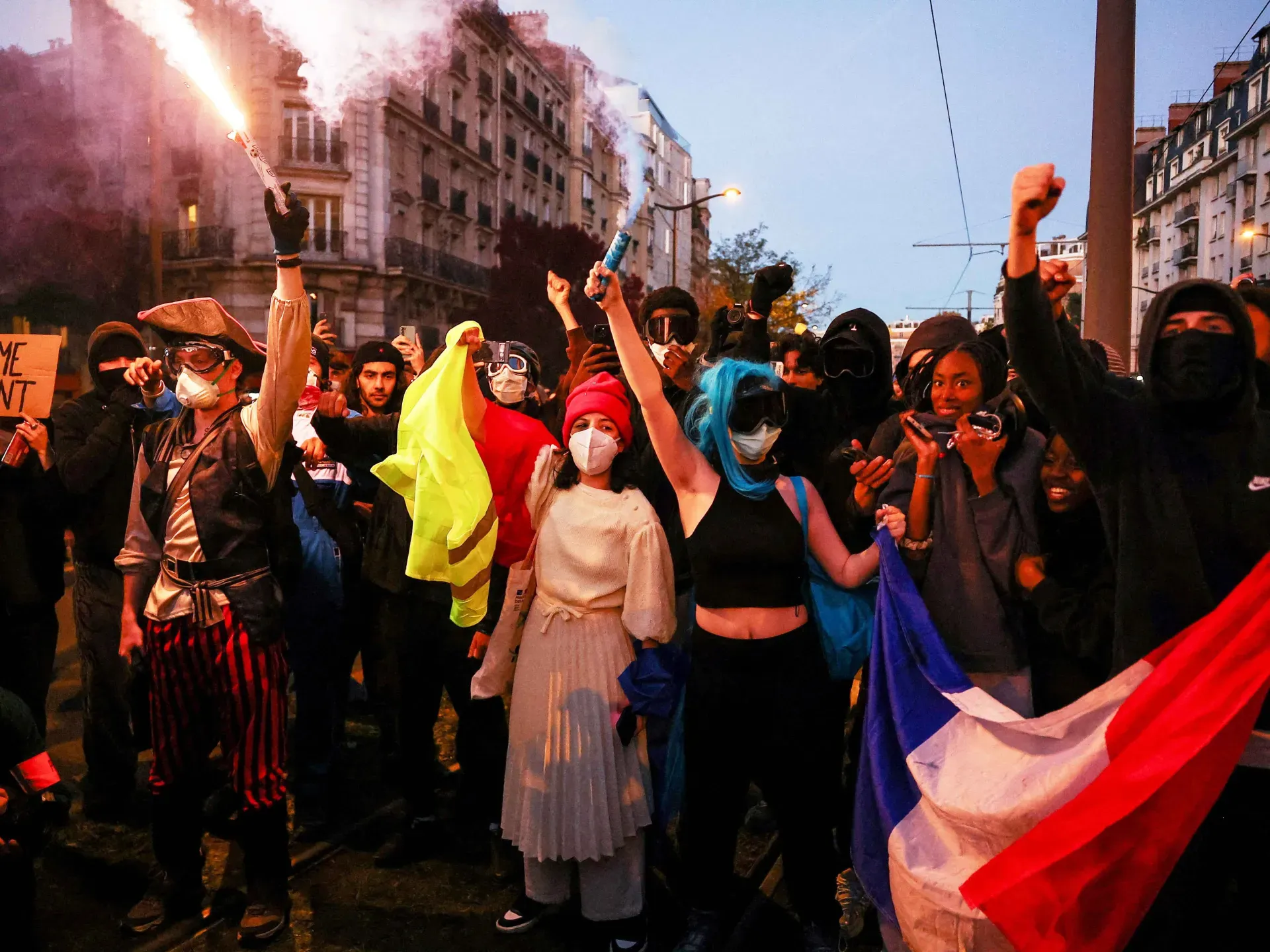
European protests: Why governments struggle to respond in 2026
European protests are intensifying across at least eight nations, driven by a diverse array of social and economic grievances. Demonstrations led largely by young people are surfacing in response to rising costs of living, inadequate school conditions, and broader political instability. While governments have attempted to implement specific material concessions, they frequently rely on security-focused responses that fail to address the underlying lack of public trust. This article examines the multifaceted nature of the unrest, the fiscal limitations facing European states, and the tension between maintaining public order and addressing systemic social demands.
November 8, 2026
6 min read
Source: ASHENVOW
What is driving the current wave of European protests?
The current surge in unrest is characterized by a lack of central coordination, making it difficult for authorities to negotiate with a single entity. According to Alberto Alemanno, a professor of European Union law and policy at HEC Paris Business School, these movements are plural and uncoordinated, lacking a single leader or unified programme. This structure suggests that the demonstrations are less a targeted rejection of a specific policy and more a broader signal that citizens no longer trust the existing system to meet their needs.
While specific triggers vary by country, the underlying themes remain remarkably consistent across the continent. Protesters are demanding improvements in education, more affordable housing, and relief from the rising costs of essential goods like diesel and gasoline. Furthermore, there is a pervasive sense of insecurity regarding the future, with many young people feeling that social mobility and economic opportunities are becoming increasingly unattainable.
A diverse range of grievances
The protests are not monolithic; they encompass a wide spectrum of local and international concerns. In France, students have been blockading schools to demand better teacher staffing and reforms to the Parcoursup admission system. In Germany, the unrest includes labor strikes by metal and electrical workers alongside student protests against potential conscription. Meanwhile, in Italy, unions have mobilized tens of thousands to demand a reduction in military spending. These varied motivations make a unified government response nearly impossible.
How are governments responding to the unrest?
Governments across Europe have largely prioritized public order and security measures over addressing the root causes of social discontent. This approach often focuses on managing the physical manifestations of protest rather than the grievances themselves. Alberto Alemanno notes that when reactions occur, the focus tends to be on public order, partly because small, violent minorities often dominate headlines, which can overshadow the legitimate claims of the wider movement.
In Italy, the government of Giorgia Meloni has taken a particularly stringent approach to maintaining order. Following instances of violence, the state criminalized "violent participation" in demonstrations—defined as groups of five or more people engaging in disruptive acts—carrying penalties of up to five years in prison and significant fines. Additionally, Italy has introduced policies making parents liable for the actions of their children and implementing preventive detention for minors.
In Spain, the response to the housing crisis has involved police interventions to dismantle protest camps, such as the one in Madrid’s Puerta del Sol. While the Spanish government has introduced rent limits and eviction protections, these measures have not prevented the organization of general strikes. The tension between state enforcement and protester demands remains a defining feature of the current political climate.
Why are material concessions failing to quell the unrest?
Despite attempts to provide economic or structural relief, many government measures have failed to satisfy the protesters. For example, French Education Minister Edouard Geffray announced plans to cap class sizes at 28 for first-year high schoolers and create 10,000 new technician programme places. However, these announcements have not stopped school blockades or the momentum behind nationwide strikes regarding the cost of living.
Donatella della Porta, a political science professor at the Scuola Normale Superiore in Florence, suggests that governments are failing to grasp the deeper political dimensions of the movement. She argues that the protests have evolved beyond simple material demands. Today, they encompass fundamental issues such as:
- National military spending levels.
- Alliances with international leaders, specifically the administration of US President Donald Trump.
- Geopolitical tensions, including the war in Iran.
- The ongoing crisis in Palestine.
By treating the protests as isolated economic issues, authorities risk missing the broader systemic critique being leveled against them. When the response is perceived as purely repressive, it can further alienate the population and validate the protesters' claims of a disconnected ruling class.
What fiscal constraints limit the state's ability to act?
Significant budgetary pressures are preventing many European governments from effectively addressing the social demands of their citizens. Many states are currently caught in a fiscal squeeze, attempting to fund increased defense spending and security measures while simultaneously facing demands for higher investment in public services and housing.
The economic realities vary across the continent, but the trend of limited fiscal space is evident in several major economies:
| Country | Key Fiscal Challenge |
|---|---|
| Italy | Public debt is projected to reach 138.5% of GDP in 2026. |
| France | Budget deficit is forecast at 5.4% of GDP, exceeding the EU 3% limit. |
| Spain | Difficulty securing parliamentary approval for new budgets, relying on older spending plans. |
These constraints mean that even if governments were willing to meet all social demands, they may lack the financial capacity to do so. This creates a volatile environment where the state must choose between fulfilling its security obligations, meeting international defense commitments, and addressing the immediate survival needs of its population.
What are the human rights implications of these responses?
The increasing reliance on policing and security-led strategies has drawn sharp criticism from international human rights observers. There is a growing concern that European states are treating social discontent as a security threat to be managed rather than a democratic expression to be addressed. UN High Commissioner for Human Rights Volker Turk has expressed serious concerns regarding the use of force against protesters, including children, across the continent.
Human Rights Watch has also highlighted the use of tear gas and stun grenades by French police as a point of contention, suggesting that authorities should prioritize listening to the demands of the youth rather than resorting to escalation. Donatella della Porta warns that a "counterinsurgency-style approach" to student protests risks long-term political alienation. Instead, she suggests that governments should begin by recognizing the fundamental right to protest as a legitimate component of the democratic process.
Frequently asked questions
What is the main cause of the protests in Europe?
The protests are driven by a complex mix of economic and political factors. While specific triggers include the cost of living, housing shortages, and education funding, the broader cause is a systemic loss of trust in the ability of governments to deliver opportunities and stability for the future.
Why are the protests so difficult for governments to manage?
The movements are largely uncoordinated and lack central leadership, meaning there is no single group with which to negotiate. Additionally, the protests cover a wide range of issues—from local school conditions to international geopolitics—making a single policy solution ineffective.
How are European governments responding to the unrest?
Many governments have responded by prioritizing public order and security. This includes increased policing, stricter laws against demonstration-related violence, and in some cases, the use of force to clear protest sites, rather than focusing solely on the underlying socio-economic grievances.
Do governments have the money to solve these issues?
Many European nations face severe fiscal constraints. High public debt in Italy, significant deficits in France, and budgetary struggles in Spain limit the ability of these governments to increase spending on housing, education, and public services while also meeting defense requirements.
What is the role of young people in these demonstrations?
Young people are the primary drivers of the current wave of unrest. Their involvement is motivated by concerns over education quality, future job security, and the rising costs of living, which they feel are making a stable future increasingly difficult to achieve.
Key takeaways
- Protests across at least eight European countries are driven by a lack of trust in the political system.
- Governments are increasingly prioritizing public order and security over addressing social grievances.
- Fiscal constraints, including high debt and deficits, limit the ability of states to fund social improvements.
- The unrest is characterized by uncoordinated, pluralistic movements rather than centralized leadership.
- Human rights organizations have warned against the excessive use of force against protesters.
Conclusion
The current wave of European protests represents a significant challenge to the continent's political stability. As citizens demand more robust support for housing, education, and social services, governments find themselves caught between mounting fiscal pressures and a growing need to maintain public order. The tendency to respond with increased security and policing rather than addressing the underlying economic and political anxieties risks further eroding public trust. Ultimately, resolving this unrest will require more than just financial concessions; it will require a renewed commitment to inclusive governance and a transparent approach to the difficult trade-offs facing modern European states.



