
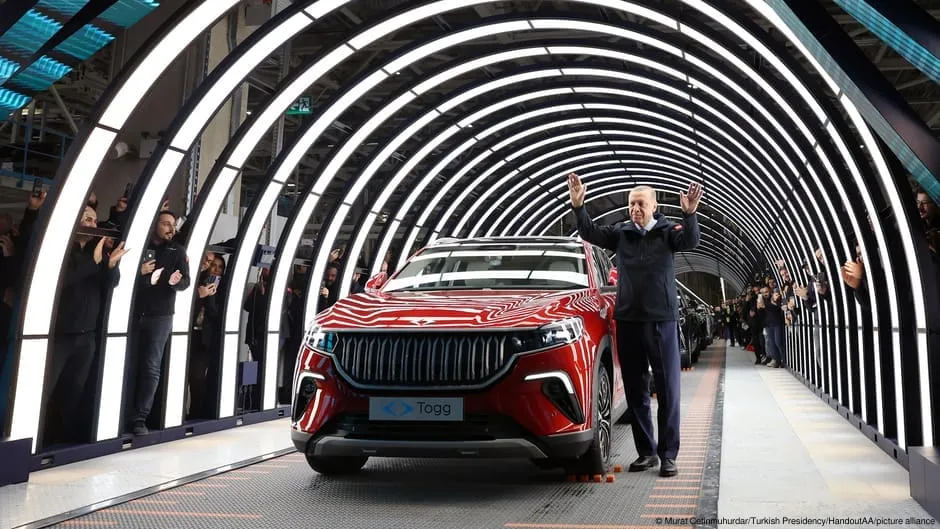
Made in Europe plan: How EU rules impact auto suppliers
The Made in Europe plan, codified through the proposed Industrial Accelerator Act (IAA), seeks to protect the European automotive industry from Chinese competition by subsidizing only locally produced vehicles. This strategy requires that 70% of a vehicle's component value, excluding the battery, be sourced within Europe. While intended to bolster domestic manufacturing, the plan risks disrupting vital supply chains involving partners such as Turkey, Morocco, Japan, and South Korea, potentially affecting hundreds of thousands of jobs and billions in trade.
November 21, 2026
4 min read
Source: ASHENVOW
The Industrial Accelerator Act and the 70% local content requirement
The Industrial Accelerator Act (IAA) aims to upgrade European car factories by tying subsidies strictly to domestic production. Under the current framework, a vehicle must meet a 70% European-origin threshold for its components to qualify for support, a calculation that excludes the battery's value. This threshold is designed to ensure that public funding drives value creation within the EU borders rather than subsidizing foreign-made technologies.
However, the scope of these rules is evolving. While the initial proposal focused on battery-electric vehicles (EVs), plug-in hybrids, and fuel-cell models, recent legislative shifts have expanded the potential impact. According to Tommaso Pardi, director of the international automotive research network GERPISA, the 70% target is relatively high compared to existing production realities. Pardi told DW that if the battery is removed from an average European-made electric car, approximately 83% of the parts are already sourced from Europe.
Expansion to combustion and hybrid models
A significant point of contention involves the extension of these rules to non-EV models. Under a revised Franco-German compromise, certain self-charging hybrids, as well as petrol and diesel vehicles, could remain on the market after 2035 and would be subject to the same "Made in Europe" origin rules. This expansion significantly increases the number of vehicles that could be disqualified from subsidies, as traditional internal combustion engines often rely on a more globalized and less European-centric parts supply chain.
Disruption of established trade partnerships in Turkey and Morocco
The exclusion of key non-EU partners like Turkey and Morocco from the "European origin" status poses a direct threat to existing automotive trade volumes. Turkey is particularly vulnerable due to its deep integration with the European market. Ayhan Zeytinoglu, chairman of the Economic Development Foundation (IKV), stated to DW that 73% of Turkey's total automotive exports are destined for the EU. He warned that a "Made in Europe" barrier would cause great damage to Turkish trade and exports.
The financial scale of this potential disruption is substantial. According to the Turkish auto exporters association (OIB), automotive exports from Turkey to the EU totaled $30.1 billion (€26.8 billion) last year. Beyond Turkey, Morocco serves as a critical low-cost production hub, particularly for French carmakers. Consultancy AlixPartners reports that Morocco has seen over €10 billion ($11 billion) in Chinese investment since the COVID-19 pandemic, specifically targeting batteries and auto parts.
| Country/Region | Key Automotive Role in EU Supply Chain | Primary Risk under IAA |
|---|---|---|
| Turkey | Major exporter of vehicles and parts; 73% of exports go to EU. | Loss of market access and export damage. |
| Morocco | Low-cost production hub; significant Chinese investment in batteries. | Increased costs for French models; exclusion of Chinese-funded parts. |
| Japan/South Korea | Manufacturers of high-tech components and full vehicles. | Loss of subsidies for imported models. |
| UK/Norway | Close industrial partners. | Currently included in "European origin" status via compromise. |
Strategic concerns regarding Chinese "back-door" access
A primary driver for the IAA is the EU's desire to prevent Chinese automakers from using third-party nations to bypass trade barriers. Brussels officials are concerned that Chinese firms are expanding their presence in countries like Turkey and Morocco to gain indirect access to the European market. This concern is grounded in recent industrial shifts in the region.
In Turkey, the presence of Chinese manufacturers has already faced difficulties. SWM Motors was forced to close its factory in Eskisehir within a year because its vehicles failed to meet EU safety standards. Additionally, BYD's plans to establish a $1 billion manufacturing plant in Manisa have been placed on hold. In Morocco, the influx of Chinese capital into the battery and parts sectors has led to calls for stricter definitions of "European origin" to ensure that Chinese-funded production does not benefit from EU industrial support.
Proposed compromises for foreign investment
To balance these concerns, some experts suggest a tiered approach to origin status. Pardi noted that a potential solution could involve granting "European origin" status only to European companies operating within Turkey or Morocco, while explicitly excluding any recent investments involving Chinese capital in those territories. This would allow the EU to maintain its industrial base while still blocking the circumvention of trade rules by Chinese-backed entities.
Conflicting interests between carmakers and parts suppliers
The automotive industry is currently divided between large vehicle manufacturers and component suppliers regarding the intensity of the IAA. Large European car giants are actively lobbying to moderate the legislation. Their primary concern is that high local-content requirements will increase production costs, making them less competitive against Chinese rivals who benefit from lower-cost supply chains. Pardi observed that these companies want to retain the ability to source from abroad, particularly from China, to protect their profit margins.
In contrast, European auto-parts suppliers are calling for much stricter enforcement of the IAA to protect domestic manufacturing. The European Association of Automotive Suppliers (CLEPA) warns of a significant industrial decline if protections are not strengthened. Benjamin Krieger, Secretary General of CLEPA, told DW that up to 650,000 auto jobs in the region could be lost by 2035 without better protection. Krieger emphasized the need to "stop the bleeding" and level the playing field against what he describes as unfair competition from China.
The opt-in mechanism proposal
To resolve the tension between protecting jobs and maintaining trade relations, CLEPA has proposed an "opt-in" mechanism for allied nations. According to Krieger, the EU could offer access to the IAA to partners like Turkey, Morocco, South Korea, and Japan, provided they meet specific objective criteria. These criteria would include:
- Regulatory alignment with EU standards.
- Adherence to social and environmental standards.
- Absence of market distortion.
- Respect for the rule of law and reciprocity.
- Implementation of robust anti-circumvention measures.



