
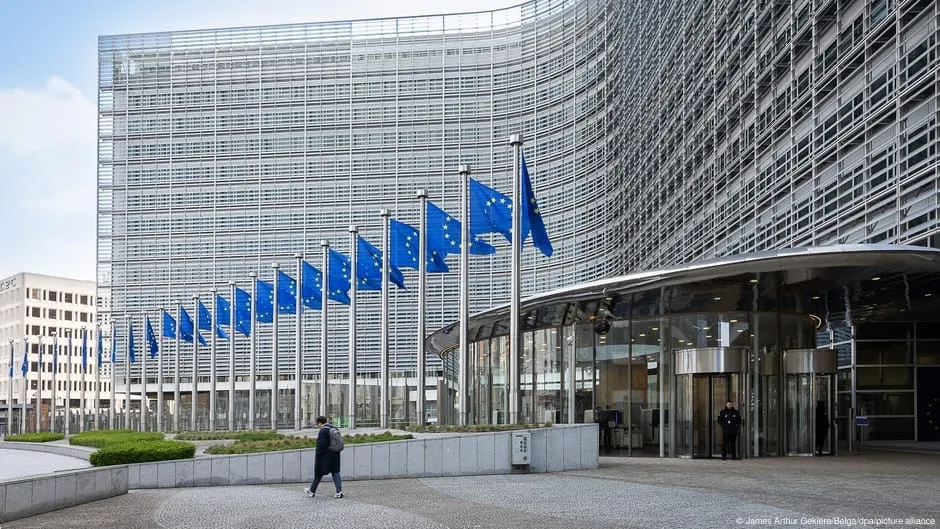
Digital Fairness Act: How the EU Stops Online Deception
The Digital Fairness Act is a proposed European Commission regulation designed to prevent subscription traps, misleading sales tactics, and addictive digital features. Under the Digital Fairness Act, companies must provide reminders before free trials expire and obtain explicit consent before initiating automatic charges. The proposal also targets "dark patterns"—manipulative interfaces used to pressure consumers—and seeks to limit addictive functionalities like autoplay. If passed, the legislation could allow for fines of up to 6% of a company's global annual revenue for non-compliance. The act aims to return control over time and money to online users.
November 21, 2026
5 min read
Source: ASHENVOW
The Digital Fairness Act is a proposed European Commission regulation designed to prevent subscription traps, misleading sales tactics, and addictive digital features. Under the Digital Fairness Act, companies must provide reminders before free trials expire and obtain explicit consent before initiating automatic charges. The proposal also targets "dark patterns"—manipulative interfaces used to pressure consumers—and seeks to limit addictive functionalities like autoplay. If passed, the legislation could allow for fines of up to 6% of a company's global annual revenue for non-compliance. The act aims to return control over time and money to online users.
Preventing subscription traps and automatic renewals
The European Commission's proposal introduces strict requirements for managing digital subscriptions to prevent consumers from being charged unexpectedly after free trials. According to the Commission, companies will be legally required to send notifications to users before a trial period ends. Furthermore, businesses must secure explicit agreement from the consumer before any transition to a paid subscription occurs.
The legislation also aims to simplify the user experience by mandating that it must be as easy to cancel a subscription online as it was to sign up. This measure specifically targets the practice of making cancellation processes intentionally difficult or hidden within complex menu structures. By requiring reminders before certain contracts renew automatically, the EU intends to reduce the frequency of accidental long-term financial commitments.
Mechanisms for subscription transparency
The proposed rules focus on three primary pillars of subscription management: notification, explicit consent, and ease of exit. These pillars are designed to address the common issue of "forgotten" subscriptions that lead to unexpected bank statement entries. Agustin Reyna, director general of the European Consumer Organisation (BEUC), noted that this represents a level of consumer protection reform not seen in the last 20 years. He characterized the proposal as a vital starting point for addressing daily consumer frustrations.
Banning dark patterns and manipulative marketing
A central component of the Digital Fairness Act is the prohibition of "dark patterns," which are deceptive user interface designs intended to manipulate consumer behavior. The proposal targets specific tactics used to create artificial urgency or confusion during the purchasing process.
One example cited involves hotel reservation websites that falsely claim limited availability—such as stating only three rooms are left—to pressure users into immediate booking. The Act also addresses price volatility during the checkout process. For instance, if a concert ticket price increases while a consumer is waiting in an online queue, the seller must disclose the current price and provide the maximum possible price the user might be asked to pay.
| Deceptive Practice | Proposed Regulatory Requirement |
|---|---|
| False Scarcity | Ban on claims of limited availability that are not factually accurate. |
| Price Fluctuations | Mandatory disclosure of current and maximum possible price during queues. |
| Addictive Design | Option for consumers to disable "doomscrolling" features like video autoplay. |
| Targeted Ads | Clear marking of personalized ads and restrictions for children. |
Targeting addictive design in gaming and social media
The proposed regulation extends its reach to digital environments designed to maximize user engagement through addictive loops, particularly in the gaming sector. The Commission seeks to limit features that encourage excessive spending or compulsive usage patterns.
In online gaming, the Act aims to prevent "pay-to-win" models where children can pay to advance to the next level or gain a competitive advantage. Additionally, the regulation addresses "doomscrolling" by requiring platforms to provide users with the option to switch off autoplay functions, which automatically play one video clip after another. These measures are intended to make apps and websites less addictive and give users more control over their digital time.
The debate over gaming industry impact
The gaming sector has expressed significant concern regarding these proposed restrictions. Industry groups, including Video Games Europe and the European Games Developer Federation, have labeled the proposal "unworkable, unjustified and disproportionate." They argue that the language used to ban features that help children advance in games is so broad that it could potentially encompass almost any in-game purchase.
However, some legal experts suggest that these concerns may be misplaced. Christoph Busch, an academic specializing in consumer law and digital services at Osnabrück University, stated that if a business model relies heavily on addictive design features, the model itself may need to be reviewed. This highlights a fundamental tension between maintaining traditional digital business models and enforcing new standards of consumer fairness.
Balancing consumer rights with market innovation
While the Digital Fairness Act seeks to empower users, experts warn of the potential for overregulation that could stifle innovation or burden small businesses. Catalina Goanta, an associate professor of private law and technology at Utrecht University, noted that regulation can easily slide into overregulation. She suggested that many current consumer issues could be addressed by more effectively enforcing existing regulations rather than creating entirely new frameworks.
The impact on the European market is a significant point of contention. Historically, the EU has implemented rules that increase the difficulty for small online businesses to access the single market. Conversely, Agustin Reyna of BEUC argues that the Act actually simplifies the landscape. According to Reyna, instead of companies having to navigate 27 different national regulations, they will eventually adhere to a single set of EU-wide rules, which could streamline compliance for platforms and influencers alike.
The challenge of proportionality and implementation
The debate often centers on the concept of proportionality—finding the right level of intervention that protects users without breaking the digital economy. Christoph Busch argues that some experts believe a more effective approach would be an "opt-in" system, where consumers must actively choose to enable addictive or automated features, rather than the current "opt-out" model proposed by the Commission. However, he acknowledges that legislators are currently attempting to balance these competing interests.
The legislative path and future outlook
The Digital Fairness Act is currently a proposal and has not yet become law. To be formally adopted, the text must pass through the European Parliament and the Council, which represents the governments of the EU member states. This process, known as the "trialogue," is expected to be a difficult negotiation.
The political climate presents a complex environment for the Act's passage. Christoph Busch notes that the current focus on strengthening European competitiveness and the trend toward deregulation may make it difficult to introduce new consumer rights. Despite these hurdles, there is optimism regarding the subject matter. While the European Parliament is currently a divided institution, Reyna suggests that consumer protection often acts as a unifying issue because it delivers tangible, practical benefits to citizens.



