
EU and Canada ties: Strengthening the Alliance for the Future in 2026
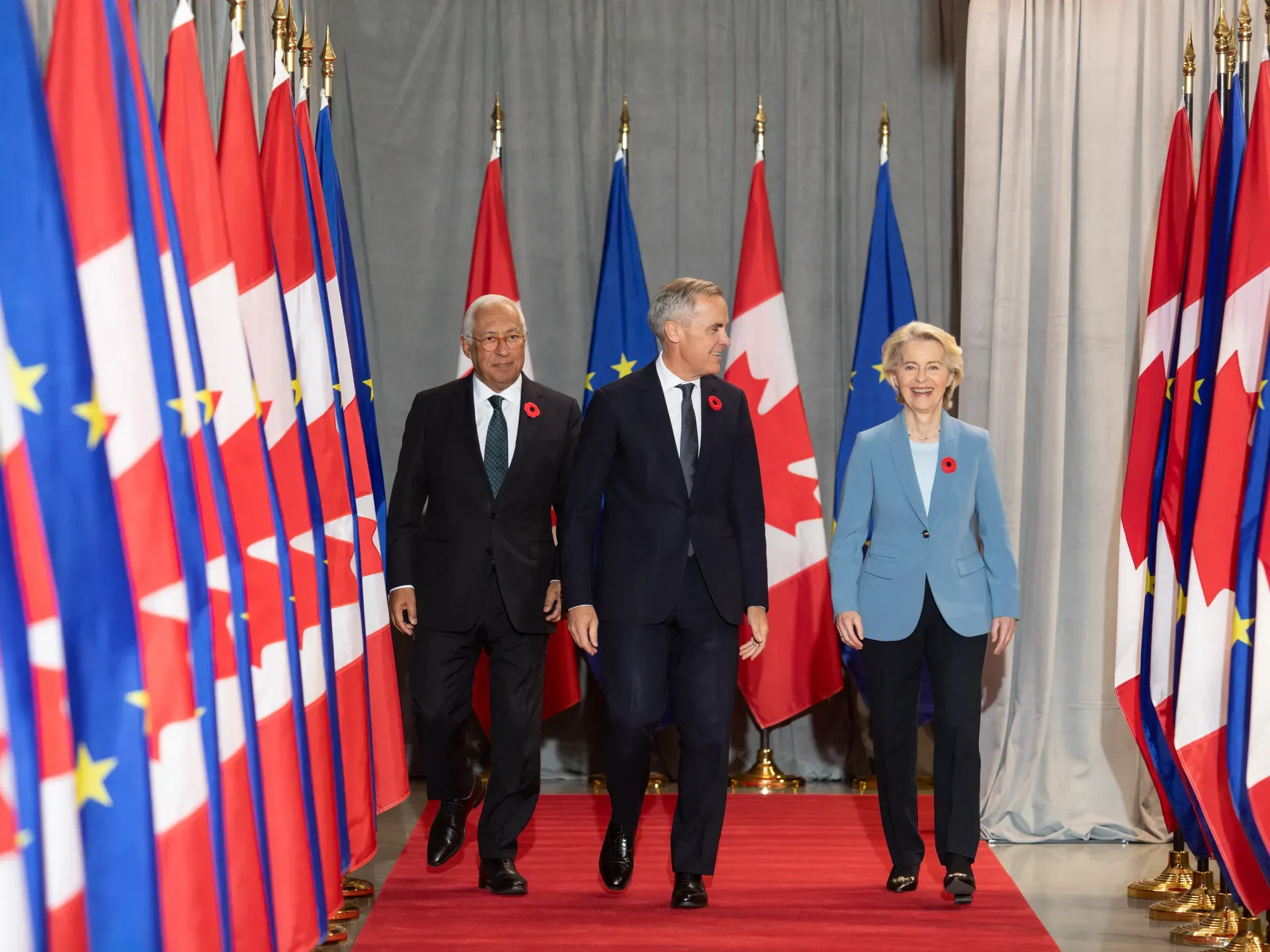
EU and Canada ties have entered a new phase with the launch of the 'Alliance for the Future' during a high-level summit in Montreal. This strategic pivot follows escalating trade tensions between Washington and its traditional allies, prompting Ottawa and Brussels to seek deeper integration. The summit resulted in a landmark digital trade deal and a commitment from the European Investment Bank to fund Canadian critical resources. This development aims to secure supply chains for semiconductors, energy, and AI. This article examines the implications of Canada's proposed associate membership, the new trade frameworks, and the impact on Ukraine's financial support.
November 8, 2026
6 min read
Source: ASHENVOW
What is the 'Alliance for the Future' and why does it matter?
The Alliance for the Future represents a strategic framework designed to deepen the geopolitical and economic integration between the European Union and Canada. Announced during the Canada-EU summit in Montreal on October 30, 2026, the alliance serves as a response to a more volatile global landscape characterized by increasing uncertainty. By establishing this partnership, both entities aim to protect their sovereignty against external economic pressures, particularly those stemming from shifting trade policies in the United States.
Prime Minister Mark Carney emphasized that while the partnership will not reach the level of full EU membership, it is intended to be the closest possible relationship ever established between the two powers. This is evidenced by the proposal to designate Canada as the bloc's first 'associate member.' While this specific term currently lacks a formal legal basis within EU treaties and faces opposition from certain member states, its introduction signals a profound shift in how Canada intends to engage with European institutions.
The alliance is built upon more than twenty distinct measures intended to enhance economic affordability and create new cross-continental opportunities. By aligning their interests, the EU and Canada seek to build a resilient bloc that can withstand the 'dangerous and divided world' described in their joint summit statement. This involves not just trade, but a comprehensive approach to security, technology, and resource management.
How will the new digital trade deal and associate membership work?
The digital trade deal signed in Montreal provides the technical foundation for the Alliance for the Future, focusing on the modernizing of economic exchanges in a digital-first era. This agreement is intended to streamline services and data flows, making it easier for businesses in both jurisdictions to operate across the Atlantic. As Canada moves toward its proposed 'associate member' status, this digital framework will likely serve as the blueprint for deeper regulatory alignment.
Navigating the legal complexities of associate membership
The concept of Canada becoming an 'associate member' is a significant diplomatic maneuver that carries inherent legal challenges. Within the European Union, membership categories are strictly defined by treaty law. Currently, the term 'associate member' is not a recognized legal status in the EU's institutional architecture. This has led to internal debates among EU member states, some of whom view the designation as a potential precedent that could complicate the bloc's traditional expansion processes.
Despite these legal hurdles, the political intent is clear: Ottawa and Brussels are attempting to bypass traditional bureaucratic constraints to achieve a level of cooperation that mirrors membership in several key sectors. This 'functional integration' allows Canada to participate more deeply in EU decision-making processes and economic spheres without the full political obligations of a sovereign state joining the Union. The success of this model will depend on whether the EU can find a way to formalize this relationship without disrupting its existing legal framework.
What role do critical minerals and AI play in this partnership?
A central pillar of the new EU and Canada ties is the securing of supply chains for essential technologies and resources. The summit concluded with a joint agreement stating that the European Investment Bank (EIB) will invest in critical Canadian resources, with a specific focus on raw minerals. This move is designed to reduce dependency on single-source suppliers and ensure that Europe has stable access to the materials required for the green transition and high-tech manufacturing.
The joint statement from the summit highlighted that modern sovereignty is no longer just about food, fuel, and defense. Instead, 'true sovereignty' in the 21st century requires secure access to several key pillars:
- Critical minerals and semiconductors
- Energy and vaccines
- Payment systems and space-based communications
- Artificial intelligence (AI)
To address these needs, the two sides have committed to advancing cooperation on the security and safety of artificial intelligence. As AI becomes central to both economic productivity and national security, the EU and Canada aim to set collaborative standards that ensure these technologies are developed and deployed safely. This technological alignment is intended to create a unified front in the global race for AI supremacy and digital governance.
How does the summit impact support for Ukraine?
The Canada-EU summit also addressed the ongoing conflict in Ukraine, reinforcing the commitment of both parties to Kyiv's stability. Prime Minister Mark Carney announced that Canada will participate in the European Union's massive support loan for Ukraine, which is valued at 90 billion euros (approximately $103 billion). This multilateral financial mechanism is designed to provide sustained economic support to the Ukrainian state during the ongoing crisis.
Canada's specific contribution to this initiative will be an initial sum of 500 million euros (approximately $558 million). This financial pledge underscores the role of Canada as a key player in the European security architecture, even as it seeks to diversify its economic ties away from North American volatility. By participating in the EU-led loan, Canada aligns its foreign policy objectives with those of the European Commission and the European Council, further solidifying the 'Alliance for the Future.'
What are the implications for student exchange and education?
Beyond heavy industry and high-level geopolitics, the summit also focused on the 'soft power' aspects of the Canada-EU relationship, specifically through education and cultural exchange. Both sides have agreed to launch formal negotiations aimed at deepening Canada's participation in Erasmus+, the European Union's flagship student exchange programme. This move is intended to foster closer ties between the next generation of leaders, researchers, and professionals in both regions.
Expanding Erasmus+ access for Canadian institutions would allow for a more seamless flow of academic talent and research collaboration. By integrating Canadian students and scholars more deeply into the European educational ecosystem, the Alliance for the Future seeks to build long-term intellectual and cultural synergies that complement its economic and security goals. This focus on human capital is seen as essential for maintaining a competitive edge in a globalized knowledge economy.
FAQ: EU and Canada ties
What is the main goal of the Alliance for the Future?
The Alliance for the Future aims to create a deeper strategic and economic partnership between Canada and the EU. It focuses on securing sovereignty through cooperation in critical minerals, AI safety, digital trade, and shared security interests, acting as a buffer against global economic uncertainty.
Is Canada actually joining the European Union?
No, Canada is not joining the EU as a full member. Instead, the two sides are pursuing a new status described as 'associate member.' While this term is not currently a legal category in the EU, it represents a push for much closer cooperation than currently exists.
How will the European Investment Bank support Canada?
The European Investment Bank will invest in Canadian critical resources, particularly raw minerals. This investment is intended to secure the supply chains necessary for European industries, specifically regarding semiconductors, energy, and the technologies required for the green transition.
What is Canada's contribution to the Ukraine support loan?
Canada has committed to an initial contribution of 500 million euros (approximately $558 million) to the European Union's 90 billion euro support loan for Kyiv. This contribution is part of a broader effort to support Ukraine's economic resilience.
Will student exchanges change between the EU and Canada?
Yes, negotiations are being launched to increase Canada's involvement in the Erasmus+ programme. This initiative aims to deepen student and researcher exchanges, fostering stronger cultural and intellectual ties between the two regions.
Key takeaways
- The 'Alliance for the Future' establishes a new strategic partnership between Canada and the EU.
- Canada is proposed as the first 'associate member' of the European Union.
- The European Investment Bank will fund Canadian critical minerals and resources.
- Canada will contribute 500 million euros to the EU's 90 billion euro Ukraine support loan.
- A new digital trade deal was signed to modernize economic relations.
Conclusion
The Canada-EU summit in Montreal marks a pivotal shift in transatlantic relations. By launching the Alliance for the Future, Canada and the EU are proactively addressing the vulnerabilities of a fragmented global order. The focus on critical minerals, AI safety, and digital trade suggests a partnership designed for the technological realities of the 21st century. While the legal status of 'associate membership' remains a point of debate, the economic and security commitments made—including support for Ukraine and enhanced student exchanges—demonstrate a shared resolve to build a more resilient and sovereign partnership between the two regions.



