
EU Arctic strategy: Security shifts amid US and Russia pressure
The EU Arctic strategy has been revised to prioritize security and resilience as the bloc faces intensifying geopolitical competition in the High North. The European Commission unveiled the new framework on Tuesday, October 20, 2026, shifting focus from purely environmental concerns to urgent security measures. The strategy introduces a new maritime security hub and aims to expand European icebreaker capacity to monitor maritime activity. This pivot responds to Russia's expanding military footprint and the need to reduce strategic dependence on the United States. This article examines the security implications, the technological push for autonomy, and the shifting geopolitical landscape in the Arctic.
October 27, 2026
6 min read
Source: ASHENVOW
Why is the EU shifting its Arctic strategy toward security?
The European Commission has officially reordered its Arctic priorities, placing security and resilience at the forefront of its four-pillar framework. While climate change, economic prosperity, and the support of Arctic communities remain core objectives, they no longer take precedence over the region's growing geopolitical volatility. This shift reflects a reality where the Arctic is increasingly viewed as a contested zone rather than a purely environmental concern.
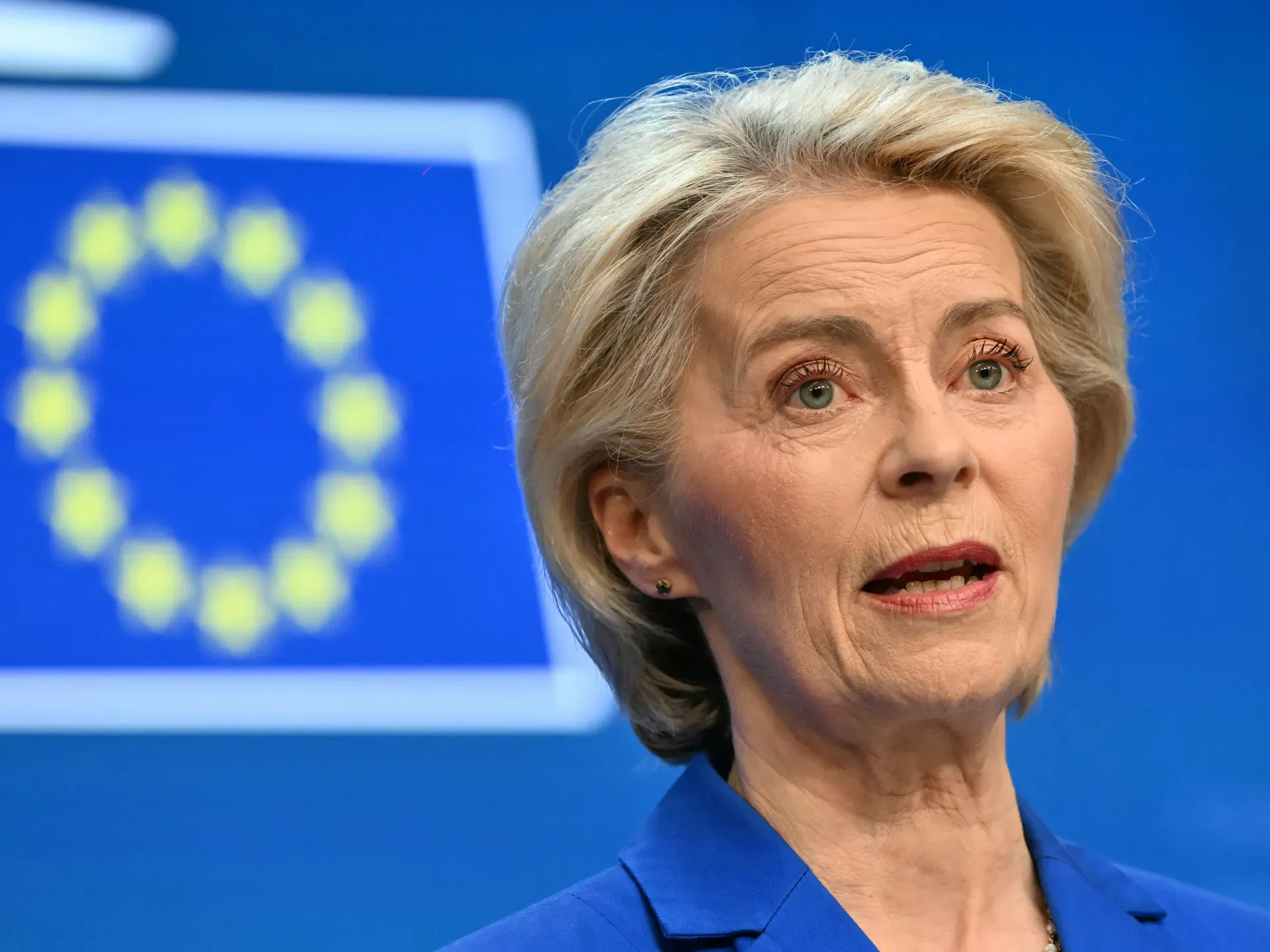
European Commission President Ursula von der Leyen characterized the region as a place where "the tectonic plates of geopolitics are colliding." She emphasized that in this changing landscape, sovereignty and territorial integrity can no longer be assumed as permanent or guaranteed. The Commission's decision to elevate security follows growing evidence of instability in the High North, necessitating a more proactive and defensive posture from the bloc.
The four pillars of the revised strategy
The new strategic framework is built upon four distinct but interconnected priorities designed to address the multifaceted challenges of the region:
- Security and Resilience: The primary focus, aimed at protecting infrastructure and monitoring territorial movements.
- Climate Change: Strengthening research, observation, and monitoring to understand rapid environmental shifts.
- Economic Prosperity: Managing the economic opportunities that arise from melting ice and new shipping routes.
- Arctic Communities: Ensuring that the people living and working in the High North are supported and included in policy decisions.
By placing security first, the EU acknowledges that environmental and economic goals cannot be achieved without first securing the physical and digital infrastructure of the region.
How will the EU enhance maritime security in the Arctic?
A central component of the new strategy is the establishment of a new maritime security hub designed to facilitate information sharing and monitoring among EU member states and their partners. This hub is intended to serve as a centralized intelligence and coordination center to manage the complexities of Arctic waters. Initially focused on maritime activity monitoring, the hub is expected to expand its capabilities significantly over time.
The Commission stated that the hub's scope will eventually include the tracking of "shadow fleet" vessels, which are often used to circumvent international sanctions. Furthermore, the hub will play a critical role in detecting illegal fishing activities and monitoring pollution levels. Beyond surveillance, the facility will also improve the coordination of search and rescue operations, which are becoming increasingly vital as Arctic waters become more navigable.
To support these maritime ambitions, the EU is also working to expand its fleet of icebreakers. These specialized vessels are essential for maintaining safe shipping routes and ensuring that European interests can be physically projected into ice-covered waters. This investment in hardware complements the digital intelligence provided by the new security hub.
What role does Russia play in the new EU Arctic approach?
Russia is identified as the most significant long-term threat to Arctic stability, prompting the EU to adopt a more defensive stance. EU foreign policy chief Kaja Kallas has highlighted several alarming developments regarding Russia's expanding military footprint in the High North. According to reports from the AFP news agency, these activities include drone incursions, GPS jamming, and the sabotage of undersea cables.
This perceived aggression has unified several European leaders in calling for a more strategic response. During a recent summit, Finnish Prime Minister Petteri Orpo explicitly labeled Russia as the most significant long-term threat, urging the EU to treat the Arctic as a strategic frontier. Similarly, German Chancellor Friedrich Merz noted that the era of "high north, low attention" has officially come to an end.
The strategy seeks to counter these threats by building resilience in critical infrastructure. By addressing vulnerabilities such as GPS interference and cable security, the EU aims to mitigate the impact of Russian hybrid tactics. The consensus among the 12 participating nations, including France, Germany, Finland, and Denmark, is that the Arctic can no longer be treated as a peripheral concern.
How is the EU seeking strategic autonomy from the United States?
The revised Arctic strategy includes several measures specifically designed to reduce the European Union's dependence on United States technology and political influence. This move toward strategic autonomy is driven by shifting US political dynamics, particularly concerning the sovereignty of Greenland. While a security deal was signed between Denmark, Greenland, and the US, many in Europe remain wary of American intentions in the region.
One key method of achieving this independence is through the development of secure, European-controlled communication infrastructure. This includes two major technological initiatives:
- Pan-Arctic Fibre-Optic Cable: The EU is backing a strategic project to link Greenland directly to Europe. This cable is part of a wider network intended to connect Canada, Japan, and South Korea, providing a secure alternative to existing routes.
- IRIS² Satellite Constellation: The EU will utilize the IRIS² constellation to provide secure satellite connectivity for government communications. This project is explicitly intended to offer a European alternative to Elon Musk’s Starlink, ensuring that the EU's strategic communications remain under its own control.
By investing in these independent digital arteries, the EU hopes to insulate itself from the potential volatility of US foreign policy and ensure that its Arctic operations are not reliant on foreign-owned commercial or governmental networks.
What are the environmental implications of this strategic shift?
Despite the heavy emphasis on security and geopolitics, the European Commission has maintained its stance on environmental preservation. The EU has reiterated that its position remains unchanged regarding fossil fuels: oil, coal, and gas should remain in the ground, including within the Arctic circle. This creates a complex tension between the desire for economic prosperity and the urgent need for climate action.
To manage this tension, the Commission has pledged to strengthen climate research, observation, and monitoring. The goal is to better understand the rapid environmental changes occurring in the High North and to support effective, science-based responses. The strategy emphasizes that these environmental efforts must be conducted in tandem with the local populations who live and work in the Arctic, ensuring that climate policy is both effective and socially responsible.
FAQ: EU Arctic Strategy
What are the primary goals of the new EU Arctic strategy?
The primary goals are to enhance security and resilience in the High North, address climate change, promote economic prosperity, and support Arctic communities. The strategy marks a shift from focusing primarily on environmental issues to prioritizing the region's growing geopolitical and security challenges.
How does the EU plan to monitor Russian activity in the Arctic?
The EU plans to establish a new maritime security hub to share information and monitor maritime activity. This hub will eventually track shadow fleet vessels, detect illegal fishing, and monitor pollution, while also improving search and rescue coordination in the region.
Why is the EU investing in the IRIS² satellite constellation?
The IRIS² constellation is being developed to provide secure satellite connectivity for European government communications. This initiative is designed to provide a European alternative to US-based technologies like Starlink, thereby increasing the EU's strategic autonomy in the Arctic.
What is the EU's position on Arctic fossil fuel extraction?
The European Commission maintains that oil, coal, and gas should remain in the ground, including in the Arctic. The strategy focuses on climate research and monitoring to address environmental changes rather than promoting the extraction of fossil fuels.
How does the new strategy address the issue of Greenland?
The strategy seeks to reduce dependence on the US by supporting a pan-Arctic fibre-optic cable project that links Greenland directly to Europe. This is part of a broader effort to secure European interests and communications independently of US-controlled infrastructure.
Key takeaways
- The EU has prioritized security and resilience as the top concern in its revised Arctic strategy.
- A new maritime security hub will be established to monitor activity and track illegal vessels.
- The EU is expanding icebreaker capacity to ensure safe navigation and presence in the region.
- Strategic autonomy is being pursued through the IRIS² satellite constellation and new fibre-optic cables.
- Russia is identified by EU leaders as the most significant long-term threat to Arctic stability.
Conclusion
The revision of the EU Arctic strategy represents a fundamental acknowledgement that the High North has entered a new era of geopolitical competition. By elevating security and resilience to its highest priority, the European Union is preparing for a landscape defined by Russian military expansion and the need for technological autonomy from the United States. While the bloc remains committed to climate research and the preservation of Arctic ecosystems, the focus has undeniably shifted toward protecting sovereignty and securing critical maritime and digital infrastructure. As the Arctic continues to transform, the EU's proactive stance will be essential in navigating the colliding interests of global powers.



