
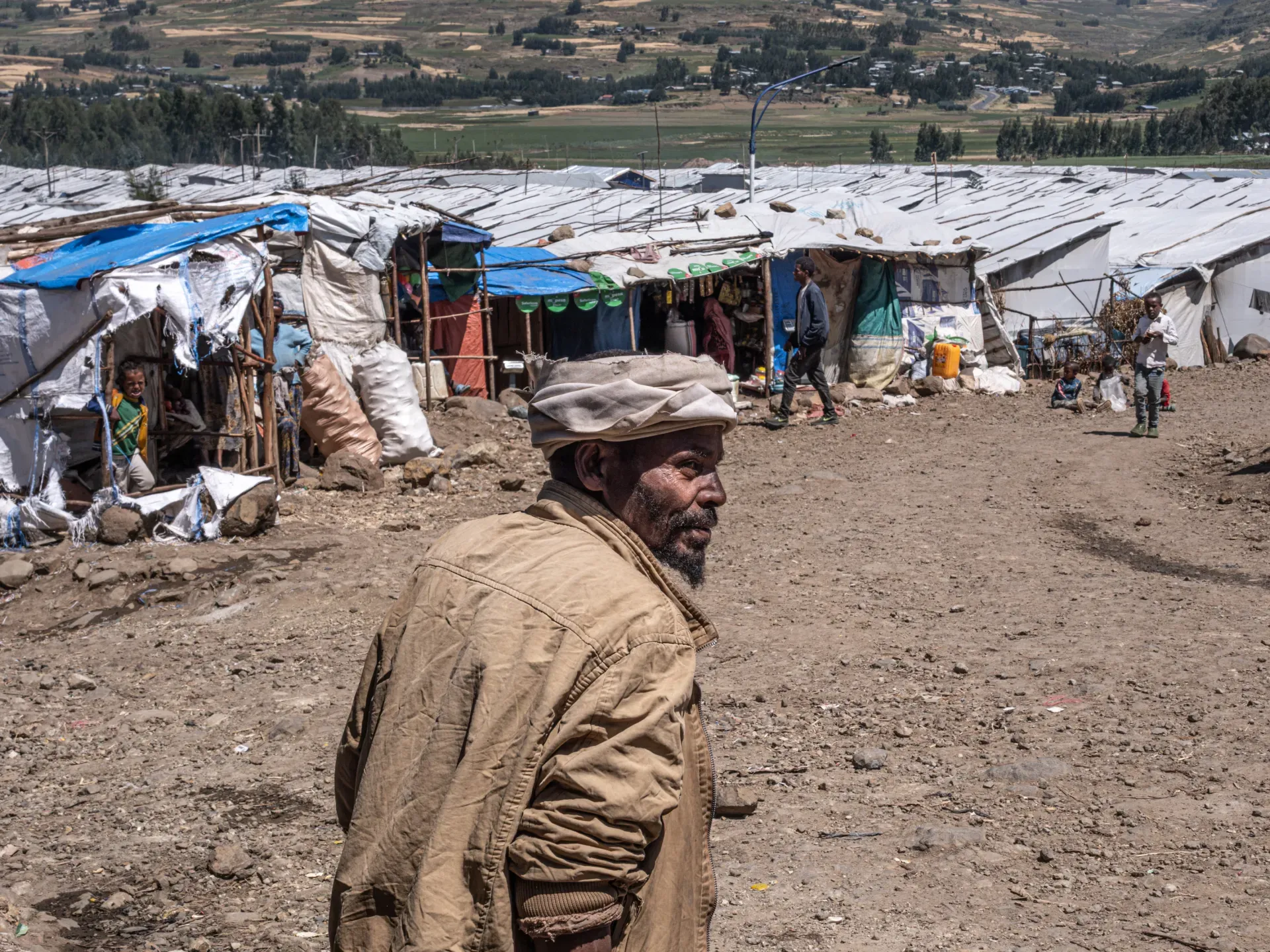
Ethiopians fleeing to Kenya as Moyale clashes erupt
Ethiopians fleeing to Kenya have increased significantly following violent skirmishes in the strategic border town of Moyale. Hundreds of individuals, consisting largely of women and children, have crossed the frontier to escape escalating tensions between regional forces. This movement follows reports of gunfire and chaos triggered by symbolic political disputes. Local aid agencies report that the influx is straining border resources. This article analyzes the origins of the Moyale conflict, the humanitarian response currently underway, and the broader regional instability affecting Ethiopia.
October 27, 2026
4 min read
Source: ASHENVOW
The origins of the Moyale border conflict
Violent clashes in the border town of Moyale were reportedly triggered by a symbolic political dispute involving regional identities. According to Ethiopian media, the fighting began on Sunday following an incident where loyalists publicly raised the flag of the Somali Regional State, a majority-Somali territory in eastern Ethiopia. This act appears to have served as a flashpoint for deep-seated tensions between different ethnic and political factions.
The dispute quickly escalated from a symbolic gesture into active combat between forces representing the Oromia and Somali regional states. Kenyan police confirmed that the unrest resulted in scenes of chaos and widespread gunfire within the Moyale area. While the specific political motivations of the combatants remain a subject of local debate, the immediate consequence has been a breakdown of order in this critical transit zone.
The conflict highlights the fragile nature of regional administrative boundaries and the volatility of ethnic representation in the borderlands. As forces from the Oromia and Somali regions engaged, the proximity to the Kenyan border turned a domestic regional dispute into a cross-border humanitarian concern. The speed with which the situation transitioned from a flag dispute to armed engagement underscores the high level of tension currently permeating Ethiopia's regional states.
Movement of displaced populations into Kenya
Hundreds of Ethiopians have crossed into Kenyan territory through multiple entry points to escape the violence. Kenyan police reported on Thursday that the influx of people was concentrated in several specific areas around Moyale, including Sessi, Kore, Biashara, Foundation, and Miti. The demographic profile of those fleeing is notably vulnerable, with police noting that the displaced are mostly women and children.
The sudden movement of people across the border creates immediate logistical and security challenges for Kenyan authorities. The use of multiple entry points suggests a disorganized and rapid flight from the combat zones, as families attempt to find safety away from the gunfire. This migration is a direct result of the instability between the leaders of the Oromia and Somali regional states, according to local police reports.
The influx of refugees into Moyale places additional pressure on local resources in a region that is already sensitive to population shifts. As more individuals arrive, the need for coordinated border management and humanitarian assistance becomes increasingly urgent to ensure the safety of both the arriving displaced persons and the local Kenyan communities.
Humanitarian response and aid distribution
The Kenya Red Cross has initiated emergency measures to provide relief to those arriving from the conflict zone. In a statement released on Thursday, the organization confirmed it is setting up temporary shelters to accommodate the displaced. The immediate priority is the distribution of essential food items, such as cereal and porridge flour, to mitigate the risk of hunger among the arriving populations.
According to the Kenya Red Cross, the initial phase of the humanitarian response will target 1,000 households. This targeted approach aims to provide a baseline of survival needs while more comprehensive data is gathered. Simultaneously, experts from the organization are conducting field assessments to determine the total number of people affected and to identify specific long-term requirements, such as medical supplies or clean water.
The scale of the assessment is critical, as the number of Ethiopians fleeing to Kenya may continue to rise if the fighting in Moyale does not subside. The transition from emergency food distribution to sustained shelter management will depend heavily on the stability of the border and the continued availability of international and local resources.
Broader context of Ethiopian regional instability
The clashes in Moyale occur against a backdrop of significant, ongoing conflict within other parts of Ethiopia. While the Moyale fighting is centered on the Oromia and Somali regional tensions, it is geographically distinct from the major conflict in the northern Tigray region. The Tigray conflict involves government forces and a rebel alliance led by the Tigray People’s Liberation Front (TPLF), representing a different dimension of the country's internal struggles.
The existence of multiple, simultaneous conflict zones—ranging from the northern Tigray region to the southeastern borderlands—suggests a pattern of widespread regional volatility. These localized disputes, whether driven by ethnic identity, political representation, or administrative control, contribute to an overall environment of instability that impacts both domestic security and international borders.
Understanding the Moyale incident requires viewing it not as an isolated event, but as part of a complex landscape of regional power struggles. The ability of the Ethiopian state to manage these diverse and geographically dispersed tensions will likely determine the long-term stability of the region and the frequency of cross-border humanitarian crises.



