
Ebola suspected cases in Nigeria: Northeast region investigation
Ebola suspected cases in Nigeria have triggered an immediate investigation in the country's northeast region following the identification of two potential infections. The Nigeria Centre for Disease Control and Prevention (NCDC) confirmed on October 31, 2026, that both individuals have been isolated as laboratory testing and contact tracing proceed. This development follows Nigeria's first confirmed Ebola case in over a decade, reported on October 20. The current crisis is linked to the Bundibugyo strain, which has caused a massive outbreak in the Democratic Republic of the Congo. This article examines the Nigerian response, the characteristics of the Bundibugyo strain, and the broader regional health crisis.
November 8, 2026
5 min read
Source: ASHENVOW
What is the current situation regarding Ebola suspected cases in Nigeria?
Health authorities in northeastern Nigeria are currently investigating two individuals identified as suspected Ebola cases. According to a statement released by the Nigeria Centre for Disease Control and Prevention (NCDC) on October 31, 2026, the two individuals have already been placed in isolation to prevent further transmission. The NCDC emphasized that these individuals are currently classified as 'suspected' rather than 'confirmed,' as definitive diagnosis depends entirely on pending laboratory results.
The investigation is moving through several critical stages of infectious disease management. These include the identification and listing of all potential contacts who may have been exposed to the suspected individuals, alongside rigorous laboratory testing to verify the presence of the virus. This rapid response is essential given Nigeria's recent history with the virus; the country had previously reported its first case in more than ten years on October 20, 2026.
The importance of isolation and contact tracing
Isolation serves as the primary barrier to preventing an outbreak from scaling into a national epidemic. By separating suspected cases from the general population immediately, health officials aim to break the chain of transmission. Simultaneously, contact tracing allows epidemiologists to map the movement of the virus, identifying anyone who may have been in close proximity to the infected persons. This process is vital for proactive containment, even before a formal diagnosis is reached.
How did the Bundibugyo strain reach Nigeria?
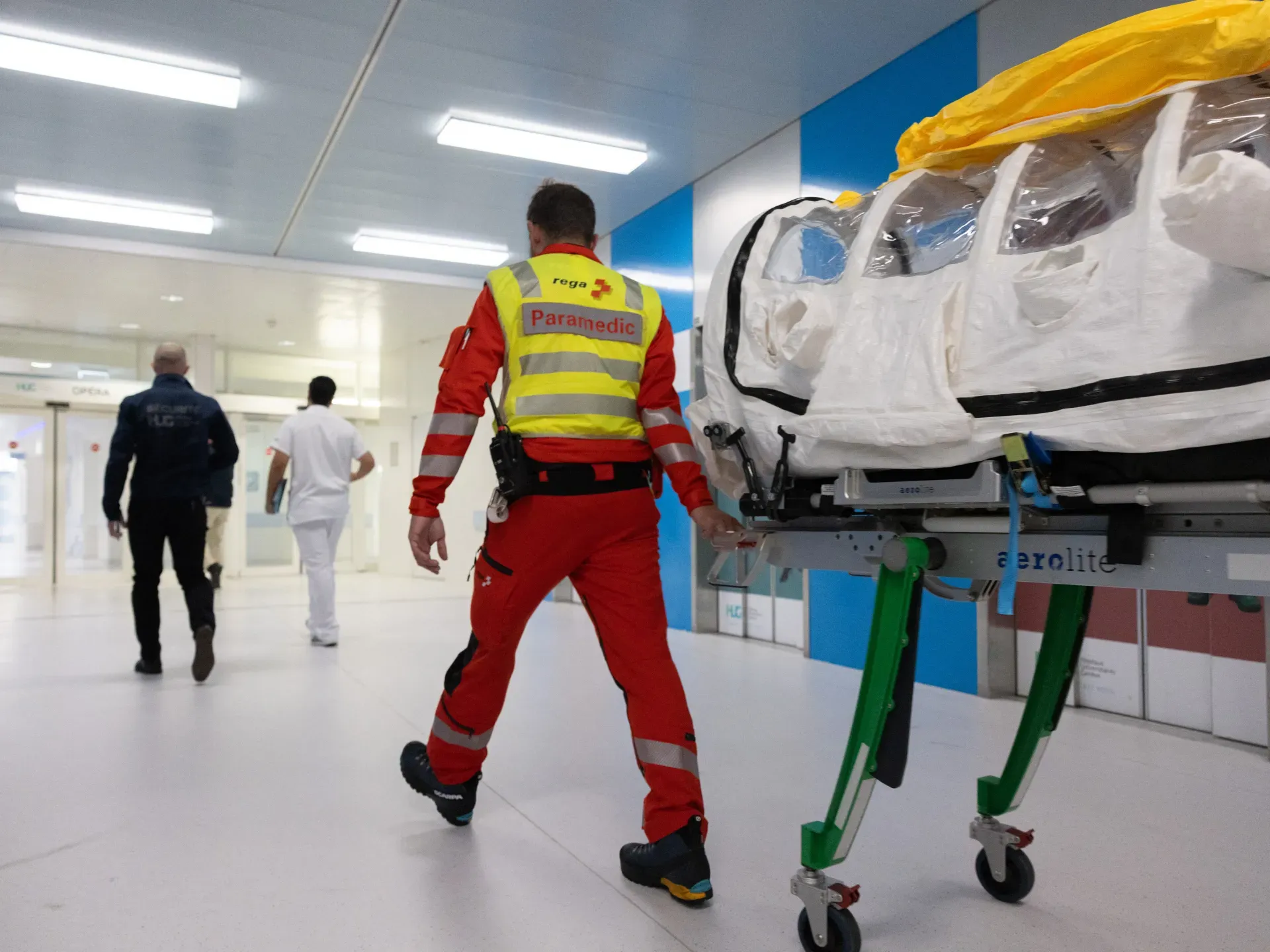
The introduction of the Bundibugyo strain into Nigeria was linked to an imported case involving international travel. Nigeria became the fifth country to report this specific strain after a Swiss woman, who had traveled from Uganda, tested positive for the virus. This case highlighted the risks of cross-border transmission during active outbreaks in neighboring regions.
Following her diagnosis, the Swiss woman and her husband, a Swiss diplomat, were evacuated to Switzerland on October 26, 2026. The presence of the Bundibugyo strain in Nigeria marks a significant escalation in the geographical spread of the virus, which has already been documented in the Democratic Republic of the Congo (DRC), Uganda, France, and Kenya. The ability of the virus to traverse international borders via travelers necessitates heightened vigilance in global health monitoring systems.
What is the scale of the Ebola outbreak in the Democratic Republic of the Congo?
The Democratic Republic of the Congo is currently facing the largest Ebola outbreak in its history, driven by the highly virulent Bundibugyo strain. Since the outbreak emerged in May 2026, the DRC has reported more than 10,300 confirmed cases. The virus has spread extensively, affecting eight of the country's 26 provinces.
The human cost of the outbreak in the DRC has been devastating. According to health reports, the death toll in the DRC has surpassed 5,000 people. The scale of the crisis is compounded by the difficulty of reaching affected areas and the challenges of managing the virus in large, diverse populations. The rapid growth of the outbreak has placed immense pressure on the country's healthcare infrastructure and international aid organizations.
Challenges in managing the DRC outbreak
One of the primary obstacles to controlling the transmission in the DRC is the weakness in early detection systems. Health authorities have noted that only approximately 12 percent of confirmed cases in the DRC have been identified among previously known contacts. This low rate of contact identification means that many individuals remain unaware of their exposure, leading to significant community transmission. Consequently, a high number of deaths are occurring within local communities rather than in controlled clinical settings, making it harder to track and contain the spread.
What are the medical challenges and risks to healthcare workers?
There is currently no approved vaccine or specific medical treatment for the Bundibugyo strain of Ebola. While vaccine trials are actively underway, the lack of established pharmaceutical interventions leaves healthcare providers and patients vulnerable. This absence of preventative and curative tools significantly increases the danger posed by every new suspected case.
The risk to frontline medical staff is particularly acute. The Africa Centers for Disease Control and Prevention (Africa CDC) issued a call for enhanced protection measures for healthcare workers following the recent deaths of two young Congolese doctors in the North Kivu and Ituri provinces. These deaths underscore the lethal nature of the virus for those providing direct care. Without adequate personal protective equipment (PPE) and stringent safety protocols, the medical workforce remains at high risk of infection, which can further cripple the response to the outbreak.
Frequently asked questions
What is the difference between a suspected and a confirmed Ebola case?
A suspected case is an individual showing symptoms or having exposure that suggests Ebola, but without laboratory proof. A confirmed case is only declared after laboratory testing provides definitive evidence of the virus. In Nigeria, the two current cases remain in the suspected category pending these results.
Can the Bundibugyo strain be prevented with a vaccine?
Currently, there is no approved vaccine specifically for the Bundibugyo strain. Although clinical trials are being conducted to develop effective vaccines, medical professionals must rely on strict isolation, contact tracing, and personal protective equipment to manage and prevent the spread of the virus.
How does Ebola spread between people?
Ebola is transmitted through direct contact with the blood, secretions, organs, or other bodily fluids of infected people, or with surfaces and materials (such as bedding or clothing) contaminated with these fluids. This is why isolation and contact tracing are the most critical tools for containment.
Why is contact tracing so difficult in the DRC?
Contact tracing is hindered by weaknesses in early detection and the ability to track individuals in remote or unstable regions. In the DRC, only about 12 percent of cases are linked to known contacts, meaning much of the transmission happens undetected within communities.
Has the virus spread outside of Africa?
Yes, the Bundibugyo strain has been reported outside of the African continent. Specifically, cases have been documented in France, demonstrating that international travel can facilitate the movement of the virus across global borders.
Key takeaways
- Nigeria is investigating two suspected Ebola cases in its northeast region.
- The Bundibugyo strain has caused over 10,300 cases in the DRC since May.
- There is currently no approved vaccine or treatment for this specific strain.
- The death toll in the DRC has exceeded 5,000 people during this outbreak.
- Nigeria is the fifth country to report the Bundibugyo strain.
The evolving landscape of the Ebola crisis
The emergence of suspected cases in Nigeria highlights the persistent threat that the Bundibugyo strain poses to regional and global health security. As the virus continues to move through diverse geographies—from the massive outbreak in the Democratic Republic of the Congo to the recent reports in Nigeria—the necessity for robust early detection and contact tracing becomes even more critical. The lack of a dedicated vaccine or treatment means that containment relies heavily on the speed of public health responses and the protection of frontline workers. The situation remains highly volatile, requiring continuous international monitoring and support for local health authorities to prevent further escalation.



