
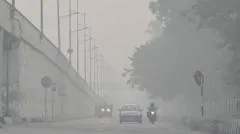
Delhi air quality worsens ahead of Diwali 2026: AQI hits 377
Delhi air quality has deteriorated sharply as the city enters the 'very poor' category with an Air Quality Index (AQI) of 377. This spike in PM2.5 particulate matter coincides with the onset of winter and the upcoming Diwali festival. Authorities have activated Stage II of the Graded Response Action Plan (GRAP) to mitigate rising pollution levels. The current crisis is driven by seasonal shifts, crop residue burning in neighbouring states, and upcoming festive activities. This article examines the health implications, the emergency GRAP measures, and the legal restrictions on Diwali fireworks.
November 8, 2026
5 min read
Source: ASHENVOW
Why has Delhi air quality deteriorated so rapidly?
The sudden decline in Delhi air quality follows an unusually clean October, which saw the city's lowest average AQI for that month in eight years. This recent improvement was temporarily aided by a storm that brought rain and stronger winds, effectively clearing the atmosphere. However, as weather conditions stabilized, the air quality plummeted due to a combination of meteorological and human-driven factors.
Falling temperatures and low wind speeds have trapped pollutants near the ground, preventing the natural dispersion of smog. Furthermore, northwesterly winds are now carrying smoke from crop-residue burning in the neighbouring states of Punjab and Haryana toward the capital. This seasonal pattern is a recurring crisis for northern India, reaching its peak during the winter months and the Diwali festival period.
The role of seasonal weather patterns
The transition from the monsoon to winter creates a 'trap' for pollutants. While summer and monsoon winds often disperse particulate matter, the winter's stagnant air and northwesterly winds concentrate emissions from vehicle exhaust, industrial activities, and agricultural burning into a dense, toxic haze.
What are the health risks of the current AQI levels?
The Air Quality Index (AQI) in Delhi reached 377 on Wednesday morning, placing it firmly in the 'very poor' category. This measurement is heavily influenced by PM2.5, which consists of fine particulate matter approximately 30 times smaller than the width of a human hair. Because of their microscopic size, these particles can penetrate deep into the lungs and enter the bloodstream.
Prolonged exposure to such high concentrations of PM2.5 is linked to significant respiratory problems and the exacerbation of existing chronic illnesses. While the entire population is at risk, medical experts highlight that children and the elderly are particularly vulnerable to the physiological stresses caused by breathing polluted air. The AQI scale classifies readings between 301 and 400 as 'very poor,' while levels exceeding 400 are designated as 'severe.'
How is the government responding through GRAP Stage II?
Authorities have invoked Stage II of the Graded Response Action Plan (GRAP), an emergency framework that introduces increasingly stringent measures as pollution levels rise. The primary goal of these interventions is to curb dust, reduce vehicle emissions, and limit other major pollution sources during periods of hazardous air quality.
The current GRAP Stage II measures include several practical shifts in urban management:
- Enhanced Road Maintenance: More intensive road cleaning to reduce the amount of dust suspended in the air.
- Public Transport Expansion: The Delhi Metro has introduced 20 additional weekday train trips to accommodate commuters.
- Traffic Management: Authorities have been directed to stagger government office timings to reduce peak-hour traffic congestion.
- Vehicle Disincentives: Implementation of higher parking charges to discourage the use of private vehicles.
In extreme scenarios, the city has also utilized hybrid schooling models, work-from-home arrangements, and specific vehicle restrictions to minimize human activity that contributes to emissions.
What are the new restrictions on Diwali fireworks?
With the Diwali festival approaching, the Supreme Court of India has issued specific directives to manage the inevitable spike in pollution caused by celebrations. While the festival is traditionally marked by lights and fireworks, the resulting release of fine particles and harmful gases poses a severe threat to the city's air quality.
The Supreme Court has permitted the use of 'green firecrackers' under strictly controlled conditions. These are modified chemical formulations designed to produce fewer emissions than conventional pyrotechnics. To ensure compliance, these crackers must feature QR codes that allow authorities to verify their manufacturer and certification status. However, the court noted that conventional firecrackers are frequently sold under the guise of being green alternatives, despite existing bans.
Legal constraints and enforcement
To combat the illegal sale of non-compliant fireworks, the court has mandated the following restrictions for the Diwali weekend on 7 and 8 November:
- Time Windows: Fireworks may only be set off between 06:00–07:00 and 20:00–22:00 local time.
- Silence Zones: A total ban on fireworks remains in effect within 300m of hospitals, schools, and care homes.
- Police Oversight: Law enforcement has been directed to patrol sales areas, perform random QR-code checks, and seize illegal stock.
Is the pollution crisis limited to Delhi?
The air quality crisis is not exclusive to the capital, though the drivers vary by region. Mumbai, India's financial hub, has also experienced elevated pollution levels recently. On 24 October, Mumbai's AQI reached 322, entering the 'very poor' category, despite the city's coastal location which usually provides ventilating winds.
In Mumbai, the pollution spike was attributed to construction dust, garbage burning, and pollutants carried from neighbouring regions, alongside the expected impact of firecracker emissions. While Mumbai's air quality showed signs of recovery—recording an AQI of 89 (satisfactory) on Wednesday—the situation in northern India remains critical. Nearby Navi Mumbai recorded a 'moderate' AQI of 118, illustrating the varying degrees of impact across the country's urban centres.
Key takeaways
- Delhi's AQI reached 377, placing the city in the 'very poor' pollution category.
- GRAP Stage II measures include increased Metro trips and staggered government office hours.
- The Supreme Court has restricted Diwali fireworks to specific hours on 7 and 8 November.
- Green firecrackers must carry QR codes for verification to prevent illegal sales.
- Pollution is driven by crop burning, low wind speeds, and seasonal temperature drops.
FAQ: Delhi Air Quality
What does an AQI of 377 mean for my health?
An AQI of 377 falls into the 'very poor' category. This level is driven by high PM2.5 concentrations, which can cause respiratory distress and worsen existing lung or heart conditions, particularly in children, the elderly, and those with pre-existing illnesses.
What are 'green firecrackers'?
Green firecrackers are pyrotechnics designed with modified chemical formulations to produce lower emissions than standard fireworks. To be legal in Delhi, they must carry a QR code that allows authorities to verify their certification and manufacturer details.
What is GRAP Stage II?
The Graded Response Action Plan (GRAP) Stage II is a set of emergency measures triggered by rising pollution. It includes actions like increased road cleaning, higher parking fees to reduce car use, and additional Delhi Metro services to manage transit.
Why is the air so bad during Diwali?
Diwali involves the widespread use of fireworks, which release massive amounts of fine particulate matter and harmful gases. When combined with the winter's low wind speeds and stagnant air, these emissions become trapped in the city's atmosphere.
How is the Supreme Court enforcing firework bans?
The Supreme Court has directed police to patrol sales areas and conduct random QR-code checks on firecrackers. They are also tasked with seizing illegal, non-certified fireworks and enforcing the 300m buffer zone around hospitals and schools.
Conclusion
The deterioration of Delhi's air quality to an AQI of 377 marks a critical seasonal shift that threatens public health. The convergence of crop residue burning, stagnant winter weather, and the upcoming Diwali celebrations creates a complex environmental challenge. While the activation of GRAP Stage II and the Supreme Court's restrictions on green firecrackers provide a framework for mitigation, enforcement remains a significant hurdle. As the city navigates this period, the balance between cultural traditions and the fundamental right to breathe clean air continues to be a central tension for Indian authorities.



