
Public media funding reforms in Czech Republic: Protests and risks
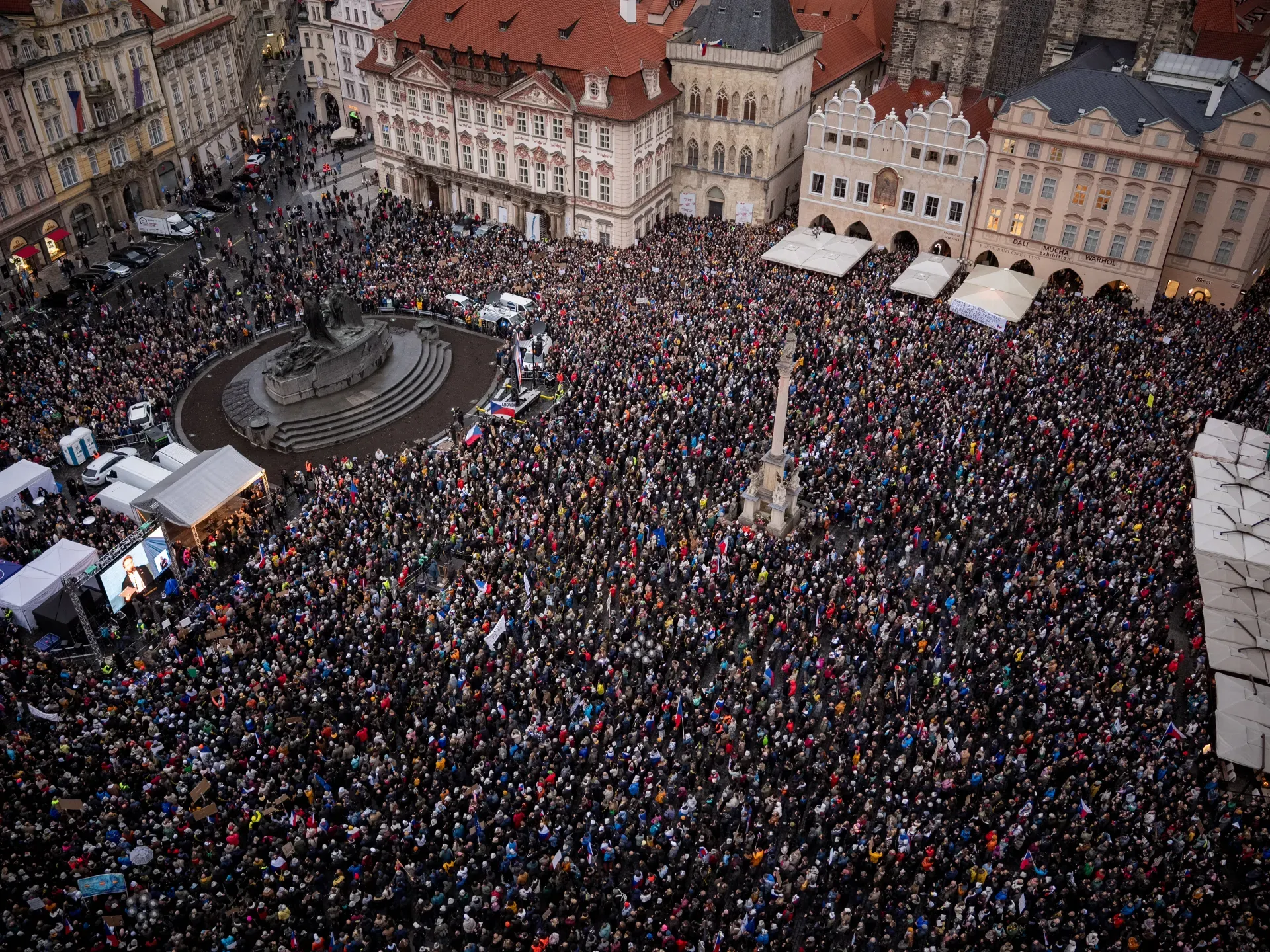
Public media funding reforms in the Czech Republic have sparked mass demonstrations in Prague following a controversial parliamentary vote. The proposed legislation seeks to abolish existing household licence fees, replacing them with direct allocations from the state budget for public radio and television. This shift could result in a funding reduction of approximately 15 percent, potentially starting as early as next year. Critics and protesters argue the move threatens media independence and press freedom. This article examines the legislative process, the scale of the protests, and the broader political implications for the Czech Republic.
October 27, 2026
6 min read
Source: ASHENVOW
What are the proposed public media funding reforms?
The core of the legislative dispute involves a fundamental shift in how Czech public broadcasting is financed. Currently, public radio and television are supported through household licence fees paid directly by citizens. The new bill, proposed by the governing coalition, seeks to eliminate these individual fees and instead provide funding through direct allocations from the state budget.
According to the proposed plan, this transition would lead to a significant budgetary contraction. Estimates suggest that public media funding could be cut by approximately 15 percent. Protesters and media advocates are concerned that this reduction, combined with the change in the source of revenue, will undermine the autonomy of broadcasters. The shift from a user-funded model to a state-funded model is viewed by opponents as a mechanism for increased government influence over editorial content.
The financial impact of the 15 percent cut
The projected 15 percent reduction in funding represents a substantial challenge for public broadcasters. Such a cut would likely necessitate changes in programming, staff reductions, or a decrease in the quality of investigative journalism. Because the funding would become a line item in the state budget, media organizations could become more vulnerable to political shifts and annual budget negotiations, potentially leading to greater instability in long-term planning.
Why did the Czech parliament fast-track the legislation?
The Czech lower house of parliament approved the bill through a rapid, overnight vote on Saturday, a move that has drawn intense criticism from the opposition. This rare legislative maneuver allowed the governing coalition to pass the bill during the early morning hours, significantly limiting the time available for opposition parties to engage in meaningful debate or propose amendments.
Protesters in Prague have specifically referenced this tactic, chanting "4:36" during demonstrations to mark the early morning hour when the draft was approved. The speed of the vote has been characterized by opponents as an attempt to bypass democratic scrutiny. While the governing coalition argues the move was necessary to address the issue promptly, the opposition has pledged to challenge the legality of the process and the legislation itself in the constitutional court.
Who is leading the opposition against the reforms?
The opposition to the funding reforms is broad, spanning political, social, and professional sectors. At the forefront of the resistance are the public media staffers themselves, who have announced plans to go on strike on November 3. This labor action is supported by a wide array of influential entities, including labor unions, university rectors, religious institutions, and various international media organizations.
In the streets of Prague, thousands of demonstrators have gathered to voice their dissent. These protests are not merely political but are framed as a defense of fundamental democratic values. The movement has gained momentum through social media and is organizing further large-scale actions, including a significant rally planned for November 15 in Prague’s Letna Park. This date is particularly symbolic, occurring just two days before the anniversary of the 1989 Velvet Revolution, which ended decades of totalitarian rule in the country.
How does the political context influence the media debate?
The debate over media funding is inextricably linked to the political agenda of Prime Minister Andrej Babis and his governing coalition. The coalition, which includes two far-right parties, has a documented history of friction with the press. Critics argue that the push for state-controlled funding mirrors the tactics used by populist leaders in neighboring countries to consolidate power.
Specific comparisons have been drawn between the current Czech government and the administrations of Hungarian Prime Minister Viktor Orban and Slovak Prime Minister Robert Fico. In those nations, changes to media financing and ownership have been central to efforts to reduce the influence of independent journalism. Furthermore, the coalition's broader political platform, which includes reducing support for Ukraine during its ongoing conflict with Russia, adds another layer of complexity to the domestic struggle for media independence.
Comparing regional media trends
The concerns raised by Czech media advocates are part of a wider regional trend in Central and Eastern Europe. Analysts note that when media funding shifts from independent user fees to direct state control, the risk of "media capture" increases. This phenomenon occurs when the government uses its budgetary power to reward friendly outlets and penalize critical ones, effectively narrowing the space for public discourse.
What is the official stance of Prime Minister Andrej Babis?
Prime Minister Andrej Babis has defended the proposed reforms, rejecting the notion that they constitute an attack on the independence of the media. According to the Prime Minister, the primary objective of the legislation is to increase funding transparency. He maintains that moving away from the household licence fee system is a matter of administrative efficiency and clarity in how public funds are managed.
However, this defense has done little to quell the fears of the opposition and media professionals. While the government frames the issue as a technical and fiscal reform, the protesters see it as a strategic attempt to stifle dissent. The tension between the government's claim of "transparency" and the critics' warning of "control" remains the central conflict in this ongoing political crisis.
Frequently asked questions
What is the main goal of the proposed media reforms?
The primary goal of the legislation is to replace the current system of household licence fees with direct funding from the state budget. The government claims this will increase transparency, while critics argue it will allow for greater political control over public radio and television services.
How much will public media funding be reduced?
The proposed reforms are expected to result in a funding cut of approximately 15 percent for public media. This reduction could take effect as early as next year, potentially impacting the operational capacity and programming of Czech public broadcasters.
When is the planned media strike scheduled to occur?
Public media staffers, supported by labor unions and various institutional bodies, have announced they will go on strike on November 3. This action is a direct response to what they perceive as a government threat to the independence of their profession.
Why is the timing of the parliamentary vote controversial?
The vote was held in the early hours of a Saturday morning, a rare overnight session that limited the opposition's ability to debate the bill. This rapid passage has led to accusations that the government is bypassing standard democratic processes and parliamentary scrutiny.
What are the next steps for the legislation?
While the lower house has approved the bill, it must still pass through the upper house of parliament to become law. Additionally, the opposition has signaled its intention to bring the legislation before the constitutional court to challenge its validity.
Key takeaways
- The Czech government proposes replacing household licence fees with direct state budget allocations.
- Proposed funding cuts for public media are estimated at approximately 15 percent.
- Protesters and media staff have scheduled strikes and rallies to oppose the reforms.
- The opposition intends to challenge the legislation in the constitutional court.
The future of Czech media independence
The standoff between the Babis government and the proponents of media independence represents a critical juncture for the Czech Republic's democratic institutions. The outcome of the upper house vote and the potential constitutional court challenge will determine whether the country maintains its current model of public broadcasting or shifts toward a state-funded system. As the November 3 strike and the November 15 rally approach, the tension between government fiscal policy and the protection of press freedom is set to intensify, reflecting broader regional struggles over the role of independent media in a democratic society.



