
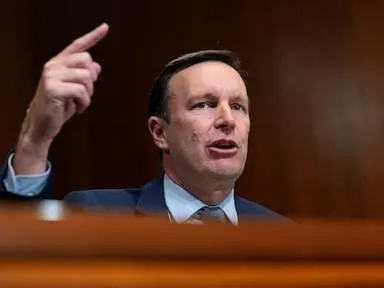
Chris Murphy stroke: Senator discharged to rehab facility
Senator Chris Murphy has been discharged from the hospital following a small hemorrhagic stroke and is transitioning to a rehabilitation facility. The Chris Murphy stroke occurred after the 53-year-old Connecticut Democrat called 911 on October 31, 2026, after noticing physical irregularities. According to a statement from Murphy, he will miss several weeks of Senate votes during his recovery process. Dr. Jose Suarez of Johns Hopkins Hospital stated that a full recovery is expected following the rehabilitation period. The Senator's office confirmed he remains in stable condition.
November 13, 2026
3 min read
Source: ASHENVOW
Medical diagnosis and immediate recovery steps
Senator Chris Murphy was diagnosed with a small hemorrhagic stroke, a condition characterized by bleeding within the brain. The Senator reported that he initiated emergency medical services on October 31 after feeling that something was physically incorrect. Following his initial stabilization at Johns Hopkins Hospital, Murphy has been moved to a dedicated rehabilitation center to facilitate his recuperation.
The medical assessment provided by the hospital indicates a positive trajectory for the Senator's health. Dr. Jose Suarez, the chief of neurosciences critical care at Johns Hopkins Hospital, noted that Murphy has demonstrated significant progress during his hospital stay. The medical team's current expectation is that the Senator will achieve a full recovery through the structured rehabilitation process.
The nature of the medical event
A hemorrhagic stroke occurs when a weakened blood vessel ruptures and bleeds into the surrounding brain tissue. In Murphy's case, the medical team classified the event as "small," which often influences the speed and nature of the subsequent rehabilitation. Murphy described the incident as a "scary experience" for both himself and his family, emphasizing the need for privacy during this sensitive period.
Impact on Senate duties and legislative work
The Senator will be absent from the United States Senate for several weeks as he focuses on his physical recovery. This absence comes at a time when Murphy holds significant responsibilities, including his membership on the Senate Appropriations Committee. His absence will temporarily affect his ability to participate in active floor votes and committee deliberations.
To mitigate the disruption to his legislative responsibilities, Murphy has implemented a remote engagement strategy. He stated that he remains in contact with his team and colleagues digitally to maintain a level of oversight. His office staff has been tasked with ensuring that the daily operations and constituent services of his Connecticut office continue without interruption.
Political context and recent activity
Murphy's health emergency follows a period of intensive political campaigning and international travel. Leading up to the stroke, the Senator was actively supporting Democratic candidates during the midterm election cycle, which resulted in the party securing a majority on Tuesday. His recent schedule included high-profile engagements that spanned from domestic campaigning to Middle Eastern diplomacy.
The Senator's recent itinerary included several key political and diplomatic milestones:
- October 2026: Campaigning in Connecticut for Governor Ned Lamont.
- Early October 2026: A diplomatic trip to the Middle East, including meetings with Saudi Crown Prince Mohammed bin Salman.
- Late September 2026: Completion of his annual 70-mile "walk across Connecticut" to engage with constituents.
- Prior to Midterms: Campaigning in Minnesota alongside Lt. Gov. Peggy Flanagan.
Beyond his immediate legislative work, Murphy is viewed as a prominent figure within the Democratic Party. He is frequently cited as a potential candidate for senior Senate leadership roles and is considered among the group of Democrats who may seek the White House in 2028.
Precedents of stroke among Senate Democrats
The Senator's medical situation mirrors recent health challenges faced by other members of the Democratic caucus. Within the last few years, three other Democratic Senators have navigated recovery from strokes, highlighting a recurring health concern within the body. These cases demonstrate varying degrees of long-term adaptation to the condition.
The following table outlines recent stroke incidents among Senate Democrats:
| Role/Responsibility | Status during recovery |
|---|---|
| Senate Voting | Absent for several weeks |
| Appropriations Committee | Limited participation |
| Office Operations | Continuing via staff |
| Remote Engagement | Active with team/colleagues |
Long-term adaptation and support
The recovery of Senator John Fetterman provides a specific example of how members of Congress manage life after a stroke. While Fetterman has returned to his duties, he utilizes adaptive technology to assist with communication and information processing. This includes the use of live captioning on mobile devices to transcribe spoken words in real-time, aiding his ability to participate in Senate proceedings. Following the news of Murphy's diagnosis, Fetterman expressed his support for the Connecticut Senator and his family.
| Senator | State | Year | Recovery Status |
|---|---|---|---|
| Ben Ray Lujan | New Mexico | 2022 | Recovered |
| Chris Van Hollen | Maryland | 2022 | Recovered |
| John Fetterman | Pennsylvania | 2022 | Uses adaptive technology |



