
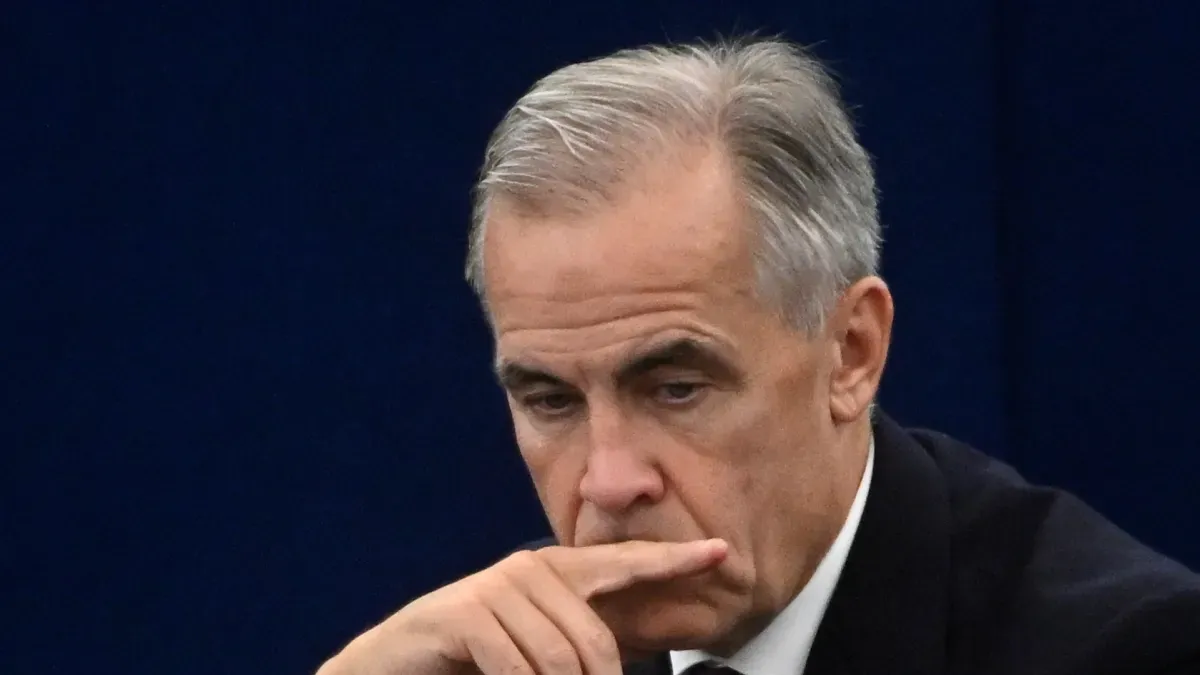
Canada-US trade deal talks: Carney signals progress in 2026
Canada-US trade deal talks have seen renewed momentum following an announcement by Canadian Prime Minister Mark Carney regarding constructive discussions with the United States. Carney indicated on November 1, 2026, that teams from both nations will work in the coming weeks to finalize a mutually beneficial agreement. This development follows a period of intense trade friction, including a 50 percent levy imposed by the Trump administration on $20bn of Canadian goods. The timing is critical as the US midterm elections approach on November 3. This article examines the current state of negotiations, the impact of existing tariffs, and Canada's strategic pivot toward the European Union.
November 8, 2026
5 min read
Source: ASHENVOW
What is the current status of the Canada-US trade deal talks?
Canadian Prime Minister Mark Carney has signaled that progress is being made toward a new bilateral trade agreement with the United States. In a social media post on X on November 1, 2026, Carney confirmed he had a "good conversation" with US President Donald Trump regarding the future of the economic relationship between the two nations.
The Prime Minister noted that the discussions have established outlines for a deal that both sides hope will be mutually beneficial. According to Carney, technical teams from Ottawa and Washington are scheduled to begin intensive work in the immediate weeks following his announcement to deliver a concrete outcome. While President Trump recently stated his expectation that a new agreement would be reached "pretty soon," specific details regarding the framework of the deal remain undisclosed.
This diplomatic movement follows a period of significant volatility. The relationship between the two North American neighbors has been characterized by an escalating trade war, marked by reciprocal tariffs that have affected billions of dollars in bilateral commerce. The current push for a deal represents an attempt to de-escalate these tensions before the political landscape in the US shifts following the upcoming elections.
How have tariffs impacted the North American trade relationship?
The trade relationship between Canada and the US has been severely strained by high-level tariff escalations. In August 2026, high-level negotiations between the two governments collapsed, leading to aggressive protectionist measures from the Trump administration.
According to the reported figures, President Trump imposed a 50 percent levy on $20bn worth of Canadian goods, representing approximately 5.5 percent of Canada's total exports. This move was part of a broader trend in the second Trump term, which has seen the US administration implement tariffs against various allies to reshape global trade dynamics.
The scope of reciprocal Canadian tariffs
Canada responded to the US levies by implementing its own set of equivalent tariffs aimed at specific American sectors. These retaliatory measures were designed to exert economic pressure on the US by targeting key industries. The Canadian response included tariffs on several critical categories of goods:
- Industrial and Agricultural: US steel and dairy products.
- Consumer Goods: Various household appliances.
- Resource and Equipment: Farm equipment, pulp, and paper.
- Technology: Electronic components and devices.
The economic fallout from these measures has been significant, creating uncertainty for businesses that rely on cross-border supply chains and affecting the cost of goods for consumers in both countries.
Why are the US midterm elections influencing trade negotiations?
The timing of the trade discussions is heavily influenced by the US midterm elections scheduled for November 3, 2026. The outcome of these elections will determine which party controls the US Congress, a factor that carries significant weight for future trade policy and legislative priorities.
Trade tensions have become a pivotal campaign issue in specific US states where the economic impact of tariffs is most visible. In Michigan and Maine, Republican candidates have faced intense political pressure due to the tariffs. Local businesses in these regions have been reportedly hurt by the trade war, making the issue a potential liability for the Republican party during the election cycle.
The push for a trade deal before the elections can be seen as an attempt to provide economic stability or to navigate the political sensitivities of key swing states. Depending on the election results, the leverage and priorities of the US negotiating team could shift significantly, making the current window of discussion particularly sensitive.
How is Canada diversifying its trade through the European Union?
As a strategic response to the volatility of its relationship with the United States, Canada has actively sought to diversify its international trade partners. A central component of this strategy involves deepening ties with the European Union.
Canada recently moved toward a closer relationship with the EU through a proposal for "associate membership." Prime Minister Carney has expressed strong support for this initiative, framing it as a "unique alliance" rather than a traditional path to full EU membership. This distinction suggests a desire for deep economic integration and strategic cooperation without the full political obligations of standard membership.
This pivot serves two primary functions for Ottawa:
- Risk Mitigation: By expanding its market reach, Canada reduces its economic vulnerability to US policy shifts and unilateral tariff decisions.
- Strategic Autonomy: Strengthening ties with the EU provides Canada with alternative high-standard regulatory and trade frameworks, enhancing its position in the global economy.
While the EU has previously shown hesitation regarding the specificities of Canada's associate membership, the ambition of the proposal remains a cornerstone of Canada's long-term economic diplomacy.
FAQ: Canada-US trade deal talks
What was the main cause of the recent trade tensions?
The tensions were driven by an escalating trade war where the US and Canada imposed significant tariffs on each other. This included a 50 percent levy by the US on $20bn of Canadian goods in August 2026, following the breakdown of high-level talks.
When are the US midterm elections taking place?
The US midterm elections are scheduled for November 3, 2026. These elections are critical as they will determine which party holds control of the US Congress, which in turn influences future trade and economic policies.
What goods did Canada target with its retaliatory tariffs?
Canada responded to US tariffs by targeting US steel, dairy, appliances, farm equipment, pulp and paper, and electronics. These measures were intended to match the economic impact of the levies imposed by the Trump administration on Canadian exports.
What does "associate membership" in the EU mean for Canada?
Associate membership refers to a proposed unique alliance with the European Union. Prime Minister Carney describes it as an ambitious way to deepen ties and diversify trade options without pursuing conventional full EU membership, focusing on strategic and economic cooperation.
Who is leading the trade negotiations for Canada?
Prime Minister Mark Carney is leading the diplomatic efforts. He has been in direct communication with US President Donald Trump to discuss the outlines of a mutually beneficial trade deal and has directed teams to work on the outcome.
Key takeaways
- Mark Carney signaled progress in Canada-US trade talks following discussions with President Trump.
- The US imposed a 50 percent tariff on $20bn of Canadian goods in August 2026.
- Canada retaliated with tariffs on US steel, dairy, appliances, and electronics.
- The US midterm elections on November 3, 2026, are a major factor in trade timing.
- Canada is pursuing an "associate membership" alliance with the European Union.
The future of North American economic stability
The current movement toward a Canada-US trade deal represents a critical attempt to stabilize one of the world's most significant economic corridors. While the recent history of 50 percent tariffs and reciprocal levies highlights the volatility of the current era, the commitment from both Carney and Trump to engage technical teams offers a path toward de-escalation. However, the ultimate success of these talks remains tethered to the political outcomes of the US midterms and Canada's ability to balance its North American obligations with its strategic diversification toward the European Union.



