
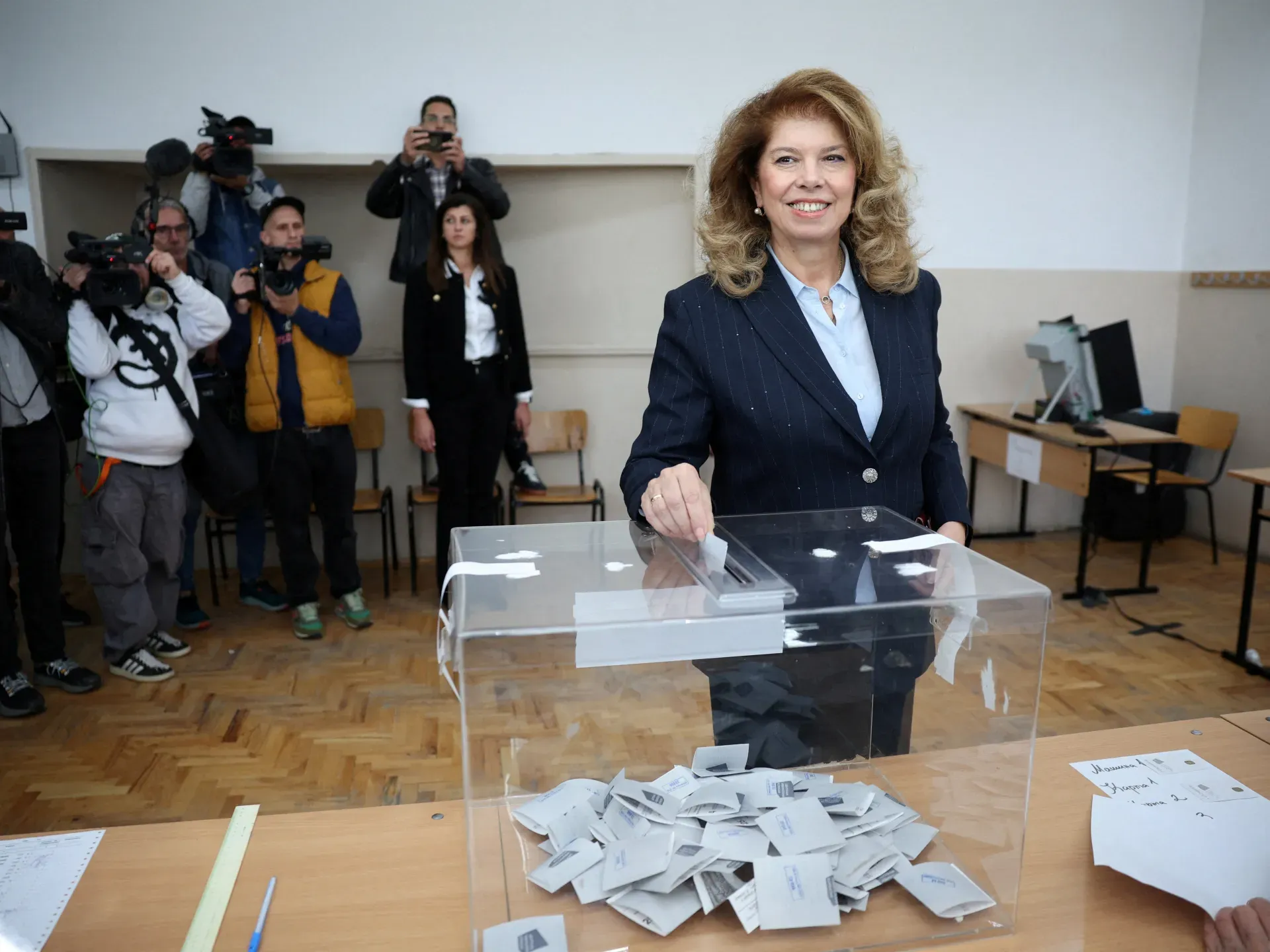
Bulgaria presidential election heads to run-off: Yotova vs Gyurov
The Bulgaria presidential election has moved to a second round after no candidate secured a majority in the first round of voting. Iliana Yotova received 34.7 percent of the vote, while former caretaker Prime Minister Andrey Gyurov followed with just under 32 percent. A run-off is required because no candidate reached the 50 percent threshold. Voter turnout remained low, recorded at 22.2 percent according to Radio Bulgaria. This article examines the candidates, the security concerns in the Black Sea, and the geopolitical implications of the upcoming vote.
October 27, 2026
6 min read
Source: ASHENVOW
Why is a run-off required for the Bulgaria presidential election?
A run-off is necessary because none of the 27 candidates participating in the first round managed to secure more than 50 percent of the total votes. Under Bulgarian electoral rules, a candidate must obtain a majority of the votes to win in the first stage. Additionally, the election requires a minimum turnout of at least 50 percent of registered voters to be valid in the initial round.
The first round of voting concluded on Sunday, October 25, 2026, with the results showing a significant gap between the top two contenders and the required winning threshold. Iliana Yotova led the field with 34.7 percent of the vote, while Andrey Gyurov secured just under 32 percent. Because neither reached the 50 percent mark, the two highest vote-getters will now face each other in a head-to-head contest scheduled for next Sunday.
Despite the high stakes, voter engagement appears to be a significant challenge for the democratic process in the country. According to Radio Bulgaria, voter turnout was measured at 22.2 percent as of the morning following the vote. This low level of participation highlights a potential disconnect between the electorate and the political leadership, even as the nation faces critical security and economic pressures.
Electoral rules and thresholds
To win the presidency in a single round, a candidate must satisfy two specific conditions: achieving more than 50 percent of the votes cast and ensuring that the total turnout meets the 50 percent threshold of registered voters. The failure to meet these benchmarks in the first round necessitates the second round, where the field is narrowed to the two most popular candidates.
Who are the leading candidates in the run-off?
The upcoming run-off features two distinct political figures: the incumbent President Iliana Yotova and former caretaker Prime Minister Andrey Gyurov. While the Bulgarian presidency is largely a ceremonial role, the holder maintains significant powers, including leading the armed forces, the ability to veto legislation, and the authority to sign international treaties.
Iliana Yotova enters the second round with the momentum of the current administration. A former journalist and member of the European Parliament, she has served as president since January. She ran as an independent candidate but holds the crucial backing of both the Socialist Party and Prime Minister Rumen Radev’s Progressive Bulgaria party. Her platform focuses on addressing domestic poverty, regional inequalities, and maintaining stability. While she is expected to keep Bulgaria aligned with European Union standards, she has also expressed a desire to seek improved relations with Russia.
Andrey Gyurov represents the pro-Western opposition. Having served briefly as the country's caretaker prime minister earlier this year, Gyurov has positioned himself as a candidate of progress and European integration. His political stance is characterized by a strong commitment to Western security frameworks, evidenced by his previous signing of a security cooperation agreement with Ukraine. Gyurov has called for a debate with Yotova before the next round, framing the election as a choice between two different national directions.
Candidate profiles and political backing
| Candidate | Political Background | Primary Support | Core Policy Focus |
|---|---|---|---|
| Iliana Yotova | Former MEP and Journalist | Socialist Party, Progressive Bulgaria | Poverty reduction, stability, improved Russia relations |
| Andrey Gyurov | Former Caretaker PM | Pro-Western Opposition | European integration, security cooperation, Ukraine ties |
What security concerns dominated the election campaign?
Security issues, particularly regarding the Black Sea and the ongoing war in Ukraine, were central themes during the campaign. As a member of both NATO and the European Union, Bulgaria finds itself in a sensitive geopolitical position, facing direct external threats that have shaped the political discourse.
A series of drone strikes on maritime vessels off the Bulgarian coast became a dominant headline throughout the election period. These attacks in the Black Sea have increased anxieties regarding regional stability and the safety of maritime trade routes. Both Yotova and Gyurov condemned these strikes, though their proposed approaches to managing these tensions differ based on their respective foreign policy leanings.
The proximity to the conflict in Ukraine has forced Bulgarian voters to consider how the nation should navigate its relationship with both the West and Russia. The election is not merely a domestic affair but a referendum on how Bulgaria should manage its security obligations within NATO while dealing with the fallout of regional aggression. The candidates' views on these matters will likely determine the country's strategic posture in the coming years.
How do economic factors influence the Bulgarian electorate?
Economic instability, driven by rising energy costs and inflation, served as a primary concern for voters leading up to the election. These domestic pressures have compounded the geopolitical anxieties caused by the conflict in Ukraine, creating a complex environment for the Bulgarian electorate.
Inflation and the cost of living have remained persistent issues, impacting the daily lives of citizens and shaping the political priorities of the candidates. Iliana Yotova specifically identified the "dire issue of poverty" and regional inequalities as key areas requiring urgent government attention. This focus suggests that a significant portion of the electorate is concerned with the economic fallout of global instability and its local consequences.
The intersection of energy security and economic health is particularly acute in Bulgaria. As energy prices fluctuate due to regional tensions, the government's ability to provide stability is under constant scrutiny. The outcome of the run-off will likely signal whether the public prefers the continuity of the current administration's approach or a shift toward the opposition's vision for a more integrated European economic and security framework.
FAQ: Bulgaria presidential election
What is the result of the first round of the Bulgarian election?
The first round resulted in no winner, as no candidate secured the required 50 percent majority. Iliana Yotova finished first with 34.7 percent of the vote, followed by Andrey Gyurov with just under 32 percent. This necessitates a run-off election between the two candidates.
When will the second round of the election take place?
The run-off election is scheduled to take place next Sunday. This second round will be a direct competition between the two top candidates from the first round, Iliana Yotova and Andrey Gyurov, to determine the new president.
What are the powers of the Bulgarian president?
Although the role is considered largely ceremonial, the president holds significant constitutional powers. These include serving as the commander-in-chief of the armed forces, the authority to veto legislation passed by parliament, and the power to sign international treaties on behalf of the state.
How did the candidates react to the election process?
Minister of Interior Ivan Demerdzhiev reported that the election was conducted peacefully and without typical instances of vote buying or manipulation. Candidates focused on their respective visions, with Gyurov calling for a debate and Yotova emphasizing the need for peace and stability.
What were the main issues during the campaign?
The campaign was dominated by concerns over rising inflation, increasing energy costs, and security threats in the Black Sea. Additionally, the ongoing war in Ukraine and the impact of drone strikes on regional shipping were critical topics for the Bulgarian voters.
Key takeaways
- No candidate won a majority in the first round, leading to a run-off between Yotova and Gyurov.
- Voter turnout was notably low, recorded at 22.2 percent according to Radio Bulgaria.
- Security concerns in the Black Sea and the war in Ukraine were central campaign themes.
- The run-off will decide Bulgaria's strategic direction regarding the EU, NATO, and Russia.
The path forward for Bulgaria
The upcoming run-off represents a pivotal moment for Bulgaria's political and strategic future. With the country navigating a landscape of low voter engagement and high regional tension, the choice between Iliana Yotova and Andrey Gyurov offers more than just a change in leadership. It presents a fundamental decision regarding Bulgaria's geopolitical alignment and its approach to domestic economic challenges. Whether the nation leans toward Yotova's focus on stability and improved relations with Russia or Gyurov's staunchly pro-Western security stance, the result will significantly influence Bulgaria's role within the European Union and NATO in the years to come.



