
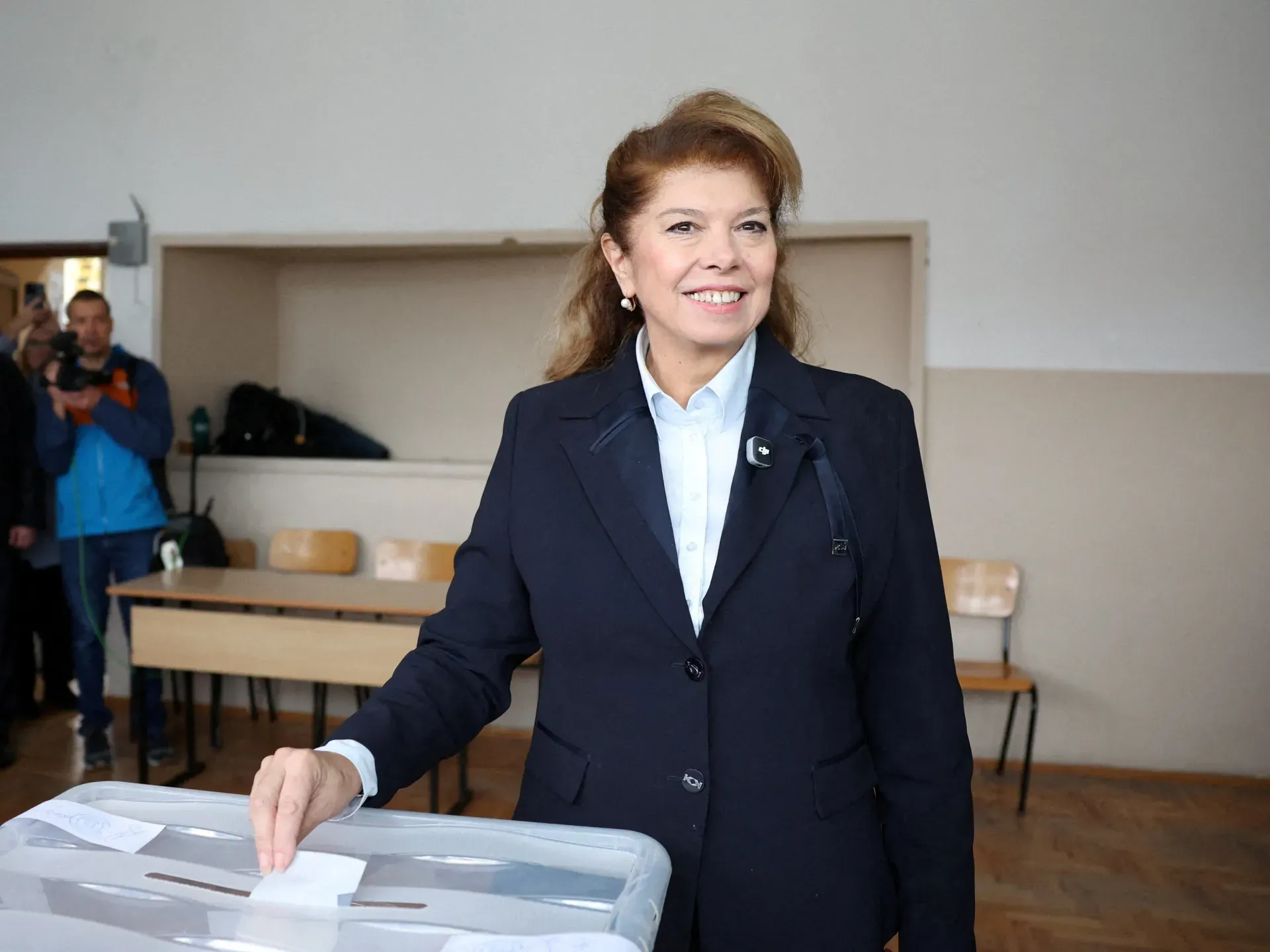
Iliana Iotova Bulgarian presidential election: Runoff results 2026
Iliana Iotova has emerged as the apparent winner of the Bulgarian presidential runoff election held on November 1, 2026. According to initial polling agency counts, Iotova secured approximately 58 percent of the vote, while her opponent, former interim Prime Minister Andrey Gyurov, trailed at roughly 38 percent. If these results are confirmed by official counts, Iotova will become Bulgaria's first elected female head of state. The election took place amid significant regional tension following recent drone attacks on the Black Sea coast. This article examines the election outcome, the shift in Bulgarian foreign policy, and the security implications for the Black Sea region.
November 8, 2026
5 min read
Source: ASHENVOW
Who is the winner of the Bulgarian presidential runoff?
Acting President Iliana Iotova is the projected victor of the Bulgarian presidential runoff, according to preliminary data released following the vote on Sunday. Iotova, 61, secured a significant majority of approximately 58 percent of the vote, according to several polling agencies. Her primary challenger, Andrey Gyurov, a former interim Prime Minister and banker, has conceded the election, stating that the results must be accepted as they stand. Gyurov's performance placed him at approximately 38 percent of the total vote.
The victory marks a historic moment for the nation, as Iotova is poised to become the first woman to be elected as Bulgaria's head of state. She has served as acting president since January 2026, following the resignation of her longtime ally, Prime Minister Rumen Radev, who stepped down to pursue a parliamentary election victory.
The margin of victory and first-round context
While the 20-point lead in the runoff represents a decisive mandate, the path to this victory was more contested than initial projections suggested. In the first round of voting held the previous week, Iotova secured 35 percent of the vote, narrowly leading Gyurov, who received 32 percent. This initial gap was significantly smaller than the 20-point lead that many opinion polls had forecasted for Iotova leading up to the runoff.
What does Iotova's victory mean for Bulgarian foreign policy?
The election of Iliana Iotova signals a potential shift in Bulgaria's diplomatic stance regarding Russia and its role in the conflict in Ukraine. Throughout her campaign, Iotova has consistently advocated for dialogue with Moscow and has expressed opposition to the provision of military aid to Ukraine. Her platform emphasizes a desire for Bulgaria to remain "sovereign in its decisions" while maintaining a position within a "strong Europe." This stance contrasts sharply with the pro-Western opposition represented by Andrey Gyurov. During televised debates, Gyurov criticized Iotova for her perceived hesitation in explicitly attributing regional security threats to Russian aggression. While Gyurov argued that Russia must cease its aggression to facilitate future diplomatic steps, Iotova maintained that "peace can come only through negotiations."
International reactions have already begun to shape the post-election landscape. European Commission President Ursula von der Leyen was among the first to offer congratulations via social media, expressing a desire to continue joint work on critical issues including energy independence, competitiveness, and security and defense. This suggests that despite Iotova's specific policy preferences regarding Russia, the institutional ties between Sofia and Brussels are expected to remain intact.
How did security concerns in the Black Sea influence the vote?
The presidential election was conducted under the heavy shadow of recent maritime instability in the Black Sea. A series of drone attacks last month targeted commercial vessels off the Bulgarian coast, resulting in at least 21 people remaining missing, according to reports from the Prime Minister. These incidents are widely suspected to be spillover from the ongoing war in Ukraine.
Although the Bulgarian government stated there was no direct evidence definitively linking the attacks to Moscow, Prime Minister Radev indicated that the strikes appeared to serve Russian interests. The tension in the Black Sea served as a central theme during the election cycle, with voters weighing the candidates' ability to navigate the security threats posed by the conflict. Both Iotova and Gyurov officially condemned the attacks and called for a diplomatic resolution to the war, yet their differing approaches to Russian accountability remained a point of contention for the electorate.
Voter sentiment and the "lesser evil" narrative
Interviews with voters in Sofia suggest a degree of disillusionment with the available political choices. Some citizens expressed that they felt compelled to vote for a candidate they did not fully support, viewing the choice as a selection of the "lesser evil" rather than an endorsement of a specific vision for democracy. This sentiment reflects a broader political fatigue within the country, as voters navigate the complexities of regional warfare and domestic leadership transitions.
What was the voter turnout for the 2026 election?
Voter participation in the runoff showed a slight increase compared to the initial round, though it remained historically low. Exit polls indicated that participation levels were between 27 and 29 percent. While this represents an improvement over the first-round turnout, which saw a record low of 23 percent, it underscores a significant level of voter apathy or disenfranchisement in the Bulgarian electoral process.
The low engagement levels have been a recurring theme in recent Bulgarian politics. The disparity between the high stakes of the presidential role—which remains largely ceremonial—and the low number of citizens participating in the decision-making process highlights a challenge for the incoming administration in terms of establishing a broad-based democratic mandate.
Frequently asked questions
Will the election results be officially confirmed immediately?
No, the results currently reported are based on initial counts and exit polls. Official results are expected to be finalized on Monday as the formal counting of ballots concludes. Until then, the victory of Iliana Iotova remains the apparent outcome based on polling agency data.
What is the role of the Bulgarian president?
The presidency in Bulgaria is primarily a ceremonial position. While the head of state holds significant symbolic importance and represents the nation in various capacities, the core executive functions and government administration are handled by the Prime Minister and the Council of Ministers.
How did the Black Sea drone attacks affect the election?
The drone attacks created a climate of heightened security concern during the campaign. The incidents, which left 21 people missing, forced candidates to address their stances on Russian aggression and the safety of Bulgarian maritime interests, ultimately influencing how voters perceived the candidates' readiness for regional instability.
Who is Andrey Gyurov?
Andrey Gyurov is a former interim Prime Minister and a professional banker. He ran as the pro-Western candidate in the 2026 presidential election, supported by the opposition. He has conceded the runoff to Iliana Iotova, acknowledging the will of the Bulgarian voters.
Is Iliana Iotova the first female president in Bulgaria?
Yes, if the official results confirm the current counts, Iliana Iotova will become the first elected female head of state in Bulgaria's history. She has been serving as the acting president since January 2026.
Key takeaways
- Iliana Iotova won the runoff with approximately 58 percent of the vote.
- Iotova will become Bulgaria's first elected female head of state.
- The runner-up, Andrey Gyurov, received approximately 38 percent of the vote.
- Voter turnout in the runoff was estimated between 27 and 29 percent.
- The election occurred amid security concerns following Black Sea drone attacks.
Conclusion
The victory of Iliana Iotova marks a pivotal moment in Bulgarian politics, both for its historical significance as the first female presidency and for its implications for regional diplomacy. While her mandate is clear based on initial counts, the low voter turnout and the polarized views on Russian engagement present ongoing challenges. As Bulgaria navigates the security complexities of the Black Sea and its relationship with both the European Union and Russia, Iotova's administration will be tasked with balancing national sovereignty with collective European security interests in an increasingly volatile geopolitical environment.



