
Brazil presidential election 2026: A deadlocked run-off
The Brazil presidential election 2026 reaches a critical juncture as Luiz Inácio Lula da Silva and Flavio Bolsonaro prepare for a decisive run-off vote. Recent data from a CNT/MDA survey indicates a statistical tie, with Bolsonaro at 46.3% and Lula at 45%, within a 2.2 percentage point margin of error. This election determines if Brazil maintains its current left-wing leadership or shifts toward the right. This article examines the final campaign rallies, the latest polling data, and the deep ideological divisions shaping the electorate.
October 27, 2026
6 min read
Source: ASHENVOW
How close is the race in the 2026 Brazil presidential election?
The presidential run-off in Brazil is currently a statistical dead heat between the incumbent left-wing leader and the right-wing challenger. According to a CNT/MDA survey released on Saturday, October 24, 2026, Flavio Bolsonaro holds 46.3% of the projected vote, while Luiz Inácio Lula da Silva follows closely at 45%.
This narrow gap highlights the extreme polarization of the Brazilian electorate. The margin of error for this specific poll is 2.2 percentage points, meaning that both candidates could theoretically lead or trail depending on the final tally. This follows a previous poll from the same week that showed an even tighter contest, with Bolsonaro at 46.8% and Lula at 45.9%.
The first round of voting set the stage for this confrontation. Bolsonaro, a senator and the son of former President Jair Bolsonaro, secured 47% of the vote in the initial round, narrowly outpacing Lula’s 45%. The transition from the first round to this final stage has not widened the gap, suggesting that the undecided voters and those shifting between camps will be the ultimate arbiters of the presidency.
Polling trends and statistical significance
While the latest CNT/MDA figures suggest a slight advantage for the Bolsonaro camp, the fluctuations in weekly polling indicate a highly volatile environment. The decrease from 46.8% to 46.3% for Bolsonaro suggests a minor cooling of momentum, yet the gap remains within the threshold of statistical insignificance. For voters, these numbers underscore a country that is almost perfectly split between two diametrically opposed visions for the future.
What are the core arguments presented in the final rallies?
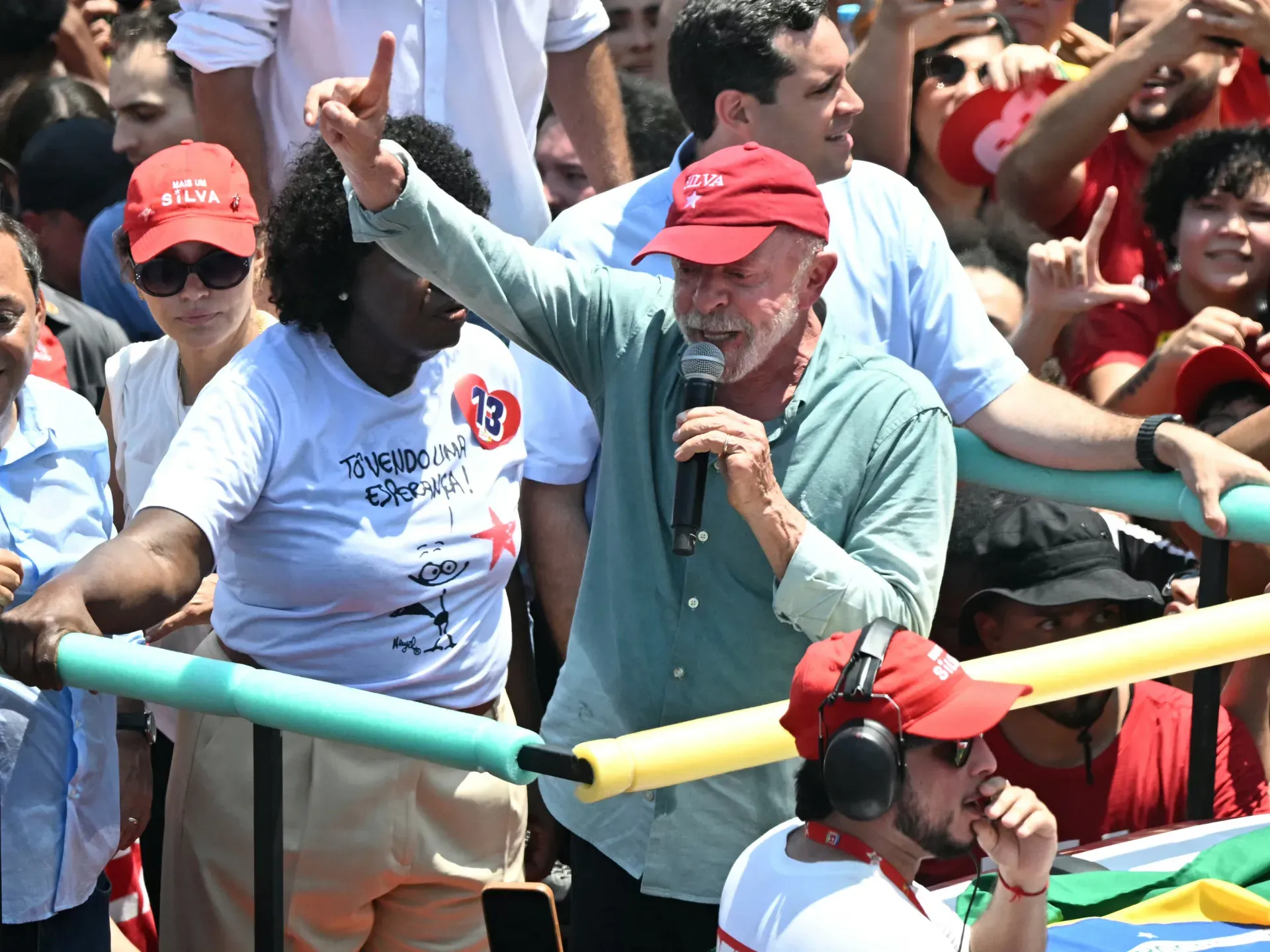
Final campaign rallies in Rio de Janeiro and Minas Gerais have emphasized the ideological divide between national sovereignty and international alignment. On Saturday, Lula addressed a large crowd at Copacabana Beach, framing the choice as one between a leader who prioritizes the Brazilian flag and one who aligns with foreign interests.
Lula, seeking a fourth non-consecutive term, specifically targeted Bolsonaro’s perceived ties to US President Donald Trump. By framing the election as a choice between national identity and external influence, the 80-year-old incumbent attempted to consolidate his base of left-wing supporters. His supporters gathered in major hubs like Sao Paulo, emphasizing a desire for continuity in his administration's social and economic policies.
Conversely, the Bolsonaro campaign has focused on themes of family values, economic independence, and law and order. In Minas Gerais, supporters gathered in significant numbers, including large groups of motorcyclists, to voice opposition to the current administration. The rhetoric from the right-wing camp has centered on criticizing the Workers' Party (PT) for what they describe as a culture of government dependency.
The ideological clash: Welfare vs. Hard Work
A primary point of contention during these final rallies has been the role of the state in the lives of citizens. Supporters of Flavio Bolsonaro, such as Ebert Dorigo, have publicly accused the Lula administration of fostering a reliance on welfare programs. The argument presented by the right-wing camp is that true national progress is achieved through individual achievement and hard work rather than state-led redistribution. This clash represents a fundamental disagreement over the social contract in Brazil.
What are the key policy differences between Lula and Bolsonaro?
The candidates have presented vastly different solutions to Brazil's most pressing challenges, including crime, government spending, and economic stability. While their final debate on Friday was noted for a calmer tone than previous encounters, the underlying policy disagreements remain stark.
Flavio Bolsonaro has campaigned on a platform of significant state contraction and increased judicial rigor. His primary pledges include:
- Substantial cuts to government spending to address economic difficulties.
- The creation of hundreds of thousands of new prison positions to combat crime.
- A shift toward conservative social values centered on the family unit.
Lula, on the other hand, represents the continuation of the Workers' Party's approach, which focuses on social welfare and state-supported economic structures. The debate between the two has frequently devolved into critiques of their respective records, with Lula defending his administration's social impact and Bolsonaro attacking the economic management of the country.
Why is the political environment in Brazil so deeply divided?
The current election is not merely a contest between two individuals but a reflection of a profound societal schism. This division is exacerbated by the historical and legal context surrounding the Bolsonaro family and the recent history of political unrest in the country.
The shadow of former President Jair Bolsonaro looms large over this election. Having served from 2019 to 2022, he is currently serving a 27-year prison sentence following an attempt to overturn the results of the 2022 election. This legal reality adds a layer of intensity to the campaign, as Flavio Bolsonaro seeks to represent the legacy of his father while navigating the legal and political fallout of the previous administration.
For many voters, the choice is not between a preferred candidate and an alternative, but between two perceived extremes. This sentiment was echoed by voters in the field, who expressed frustration at the lack of a middle-ground option. The bitterness of the campaign has exposed fundamental disagreements regarding the very future of Brazil's democratic and economic institutions.
The 'Lesser Evil' dilemma among voters
A significant portion of the electorate appears to be experiencing voter fatigue and disillusionment. Interviews with citizens suggest that many do not feel represented by either candidate. This "lesser evil" mentality suggests that a large segment of the population is voting based on fear of the opponent rather than enthusiasm for their chosen candidate. This dynamic could significantly impact turnout and the legitimacy of the eventual winner.
FAQ: Brazil presidential election 2026
Who are the main candidates in the 2026 run-off?
The two main candidates are the incumbent President Luiz Inácio Lula da Silva, representing the left-wing Workers' Party, and Senator Flavio Bolsonaro, representing the right-wing movement. The election is a direct contest between the current administration's policies and a conservative alternative.
What do the latest polls say about the election outcome?
Recent polling from CNT/MDA shows a very close race. Flavio Bolsonaro is at 46.3% and Lula is at 45%. Given the 2.2 percentage point margin of error, the race is considered a statistical tie, meaning neither candidate has a clear lead.
What are the main campaign themes for Flavio Bolsonaro?
Flavio Bolsonaro is focusing on cutting government spending, increasing prison capacity to fight crime, and promoting traditional family values. His campaign also emphasizes a move away from what they characterize as excessive government welfare dependency.
What is Lula's primary campaign strategy?
Lula is focusing on themes of national sovereignty and social stability. He has framed the election as a choice between a leader who protects the Brazilian flag and one who is too closely aligned with the interests of the United States.
How does the history of Jair Bolsonaro affect this election?
The legacy of Jair Bolsonaro is central to the race. His 27-year prison sentence for attempting a coup after the 2022 election creates a high-stakes environment for his son, Flavio, who is attempting to carry forward the family's political influence.
Key takeaways
- The 2026 run-off is a statistical tie between Lula (45%) and Bolsonaro (46.3%).
- The margin of error for recent CNT/MDA polling is 2.2 percentage points.
- Flavio Bolsonaro is campaigning on crime reduction and government spending cuts.
- Lula is focusing on national sovereignty and defending his social welfare record.
- The election reflects a deep ideological divide over the role of the state.
Conclusion
The 2026 Brazil presidential election stands as a defining moment for the nation's political trajectory. With the electorate split almost exactly in half, the outcome will determine whether Brazil continues its current social and economic path under Lula or pivots toward the conservative, market-oriented, and socially traditionalist vision offered by the Bolsonaro camp. As the country moves toward the final vote, the tension between these two visions—and the dissatisfaction of voters caught in the middle—suggests that regardless of the winner, the challenges of national unity and political reconciliation will remain at the forefront of the Brazilian agenda.



