
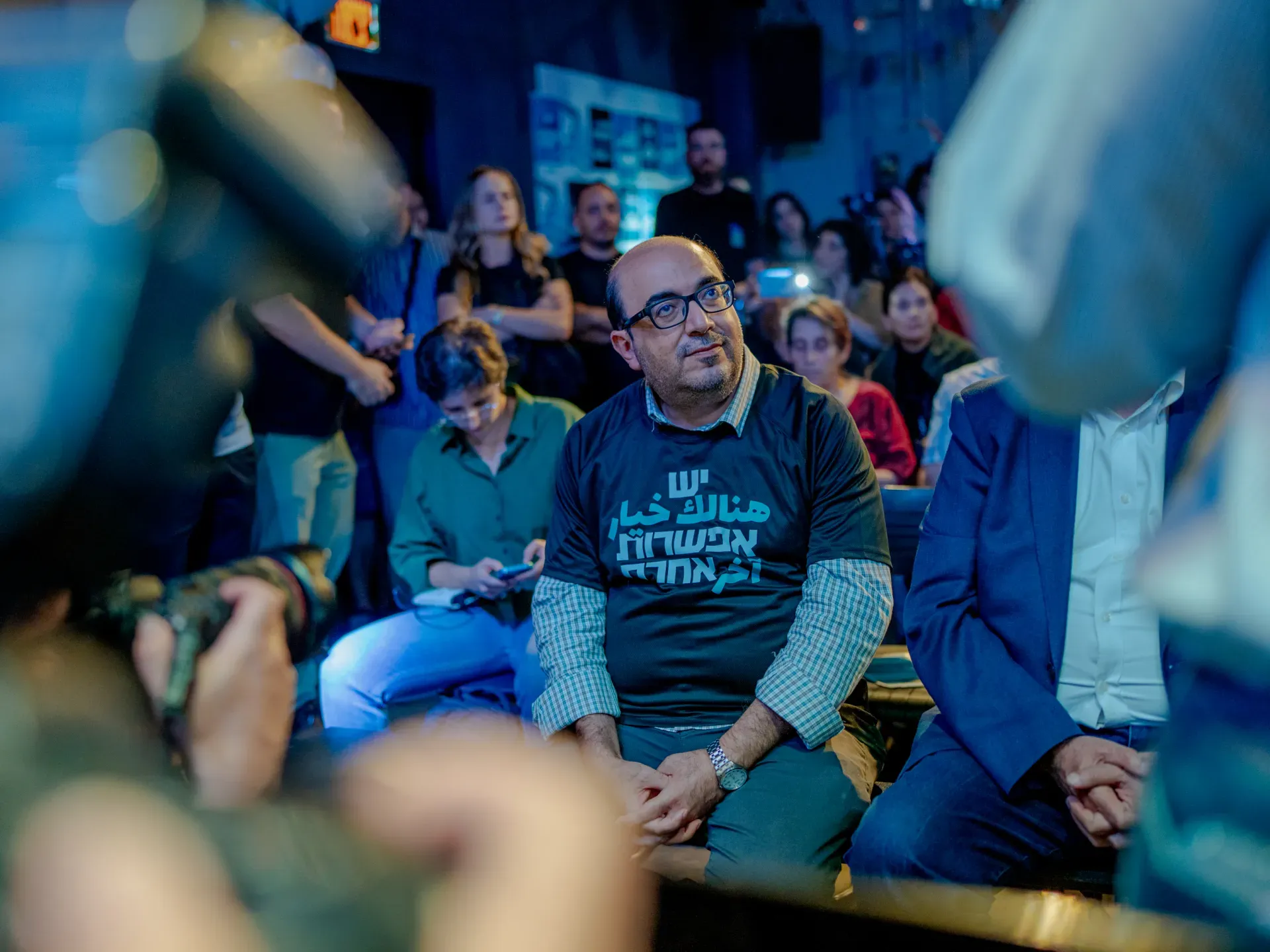
Arab parties in Israel face exclusion despite record seat projections
Arab parties in Israel are positioned to hold significant influence following the 2026 elections, despite facing systematic exclusion from major political coalitions. With 85 percent of votes counted, no single bloc has secured the 61 seats required to govern, leaving the door open for potential kingmakers. While Arab parties are on track for a record 19 seats, the main opposition and right-wing blocs have signaled resistance to formal alliances. This article examines the political deadlock, the disqualification controversy surrounding Balad leader Sami Abu Shehadeh, and the implications of high Palestinian voter turnout for the next Israeli parliament.
November 8, 2026
5 min read
Source: ASHENVOW
Why are Arab parties in Israel facing political exclusion?
Arab parties in Israel are being systematically sidelined by the country's primary political blocs, despite their potential to act as decisive kingmakers in the current parliamentary deadlock. As the 2026 election results emerge, the main opposition bloc, led by Gadi Eisenkot, has indicated a preference for forming a Zionist government rather than seeking alliances with Arab representatives. This reluctance creates a significant gap between the mathematical reality of the vote and the practical formation of a governing coalition.
Sami Abu Shehadeh, the leader of the Balad party, has described this refusal to negotiate as a form of racism. He argues that Palestinian citizens of Israel, who constitute approximately 20 percent of the nation's population, are being denied their status as legitimate political partners. According to Abu Shehadeh, the high turnout among this demographic demonstrates a clear mandate for their leadership, yet they remain excluded from the central decision-making processes of the state.
The mathematical potential for a coalition
Mathematically, the current seat distribution suggests that the opposition could bypass the deadlock through strategic cooperation. With 85 percent of the vote counted, Benjamin Netanyahu’s bloc holds at least 53 seats, while Gadi Eisenkot’s opposition bloc holds 48. Neither side has reached the 61-seat threshold necessary to establish a stable government. If the opposition were to align with the projected 19 seats held by Arab parties, they would comfortably exceed the requirement for a majority. However, as former Israeli ambassador Danny Ayalon noted to Al Jazeera, achieving this would require "political wizardry" due to the ideological resistance from the opposition leadership.
How did the disqualification of Sami Abu Shehadeh impact the election?
The disqualification of Sami Abu Shehadeh, a prominent figure in the Joint List, remains a central point of contention regarding the fairness of the electoral process. Abu Shehadeh was disqualified by Israel’s elections committee following a request from far-right Security Minister Itamar Ben-Gvir. The move was based on allegations that Abu Shehadeh had supported the October 7, 2023, Hamas attacks, specifically citing an article in which he described the event as an "important historical event."
While Abu Shehadeh contested these claims in the Supreme Court, stating that he does not support "armed struggle" and that his previous comments were intended to advocate for a political process, the legal pressure led to his withdrawal from candidacy in October. He has since criticized the judiciary, suggesting that the legal proceedings reflect a dual system in Israel where different standards are applied to Jewish and Arab citizens. His absence from the ballot has added a layer of complexity to the representation of Palestinian citizens within the legislative framework.
What is the impact of Palestinian voter turnout on the 2026 results?
The unprecedented turnout among Palestinian citizens of Israel has fundamentally altered the political landscape, providing Arab parties with significant leverage. Danny Ayalon observed that the participation levels were "really unprecedented," which directly translates into increased political clout for the parties representing this minority. This surge in engagement has allowed Arab parties to project themselves as a unified force capable of influencing the direction of the country.
Yousef Jabareen, leader of the Joint List, has expressed a willingness to cooperate with other factions to oust Benjamin Netanyahu from power. The high participation rate serves as a rebuttal to claims of political apathy and reinforces the demand for a political alternative that addresses the concerns of the Arab minority. For many voters in this community, the primary objective was to prevent the return of the current right-wing leadership, including Netanyahu and ministers such as Bezalel Smotrich and Itamar Ben-Gvir.
What are the core political demands of the Arab minority?
The political platform of the Arab minority focuses on a fundamental shift in how Palestinian citizens are treated within the Israeli state, moving away from what they describe as apartheid and genocide. Sami Abu Shehadeh has articulated a vision based on the values of freedom, justice, and equality for all people living between the Jordan River and the Mediterranean Sea. This vision seeks to replace the current security-focused governance with a political alternative that recognizes the rights of the national minority.
Central to these demands is the rejection of the current administration's policies. Abu Shehadeh has characterized Prime Minister Netanyahu as a "war criminal," a sentiment echoed by recent international scrutiny. A UN commission report published on Monday stated that Israel has continued to commit genocide in Gaza following the US-brokered ceasefire. Furthermore, the International Criminal Court issued an arrest warrant for Netanyahu in 2024 regarding war crimes during the Gaza conflict. These international legal developments heavily influence the domestic political discourse and the demands for systemic change within Israel.
FAQ: Arab parties in Israel
Why are Arab parties not joining the government coalition?
Mainstream political blocs, including Gadi Eisenkot's opposition, have indicated they prefer to form a Zionist government rather than allying with Arab parties. This refusal is driven by ideological resistance and the political pressure to maintain a specific national identity in the governing coalition.
How many seats are Arab parties expected to win?
Arab parties are currently on track to secure a record 19 seats in the Israeli parliament. This number would provide them with significant leverage in a hung parliament, where no single bloc has reached the 61-seat majority required to govern.
Who is Sami Abu Shehadeh?
Sami Abu Shehadeh is the leader of the Balad party, one of the three parties within the Joint List. He was a prominent candidate whose disqualification by the elections committee became a major point of political and legal controversy during the 2026 election cycle.
What was the reason for Abu Shehadeh's disqualification?
Security Minister Itamar Ben-Gvir requested his disqualification based on allegations that Abu Shehadeh supported the October 7, 2023, attacks. While Abu Shehadeh argued his comments were about historical context and political processes, the elections committee moved to bar him from running.
What is the current status of the Israeli election results?
As of the latest count, with 85 percent of votes tallied, the election is in a deadlock. Benjamin Netanyahu's bloc holds at least 53 seats, while the opposition holds 48, leaving both sides short of the 61 seats needed to form a government.
Key takeaways
- Arab parties are projected to win a record 19 seats in the 2026 Israeli election.
- No major political bloc has reached the 61-seat threshold required to govern.
- Sami Abu Shehadeh was disqualified from candidacy following a request from Itamar Ben-Gvir.
- Palestinian citizen turnout has reached unprecedented levels, increasing their political leverage.
The future of Israeli political stability
The 2026 election results have left Israel in a state of profound political uncertainty. The inability of the main blocs to reach a majority, combined with the systematic exclusion of a significant and highly engaged minority, suggests a period of prolonged instability. While the mathematical possibility for a broad coalition exists, the ideological divide between Zionist priorities and the demands of the Arab minority remains a formidable barrier. The outcome will likely depend on whether political leaders can find a way to integrate the voices of the 20 percent minority or if the current deadlock will lead to further fragmentation of the Israeli political system.



