
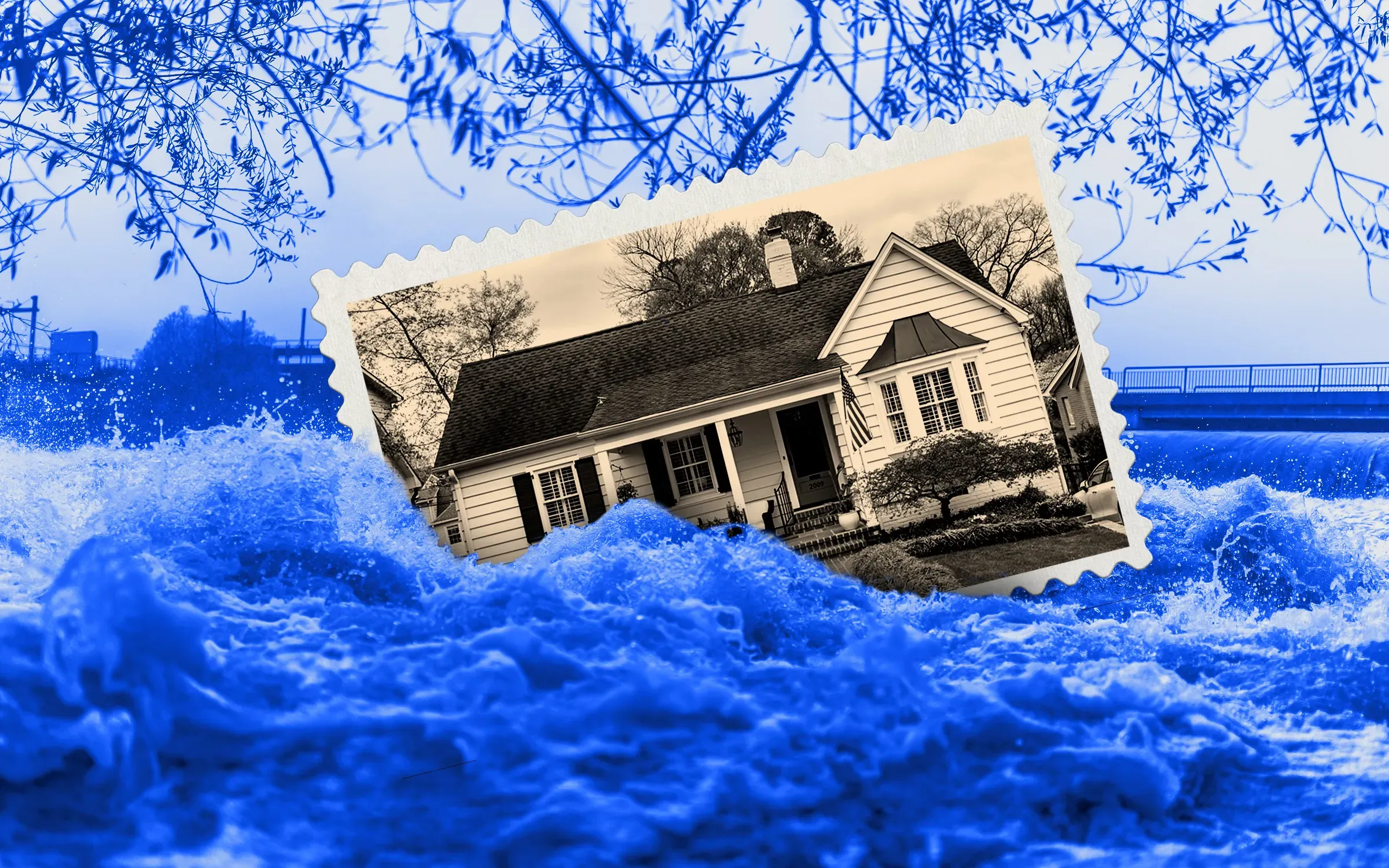
American Dream and climate change: Is homeownership a trap?
The American Dream and climate change are increasingly at odds as environmental disasters threaten the stability of homeownership. Rising climate risks could reduce the value of American homes by nearly $1.5 trillion by 2055, according to a report by First Street titled "Property Prices in Peril." As floods and fires drive up insurance costs and damage infrastructure, the traditional path to building generational wealth through real estate is becoming a source of significant financial precarity for many families. This shift forces homeowners to confront a reality where their most valuable asset may become a liability.
November 14, 2026
4 min read
Source: ASHENVOW
The American Dream and climate change are increasingly at odds as environmental disasters threaten the stability of homeownership. Rising climate risks could reduce the value of American homes by nearly $1.5 trillion by 2055, according to a report by First Street titled "Property Prices in Peril." As floods and fires drive up insurance costs and damage infrastructure, the traditional path to building generational wealth through real estate is becoming a source of significant financial precarity for many families. This shift forces homeowners to confront a reality where their most valuable asset may become a liability.
The financial erosion of the suburban ideal
Climate-related disasters are fundamentally altering the economic promise of owning a home, turning a primary vehicle for wealth accumulation into a potential liability. While the suburban house with a white picket fence has long been the cultural benchmark for prosperity, recent environmental shifts are exposing the fragility of this model. The risk is no longer theoretical; it is manifesting in direct property devaluation and increased living costs.
According to a report by the firm First Street, titled "Property Prices in Peril," climate risks are projected to knock nearly $1.5 trillion off the value of American homes by the year 2055. This massive loss of equity threatens the core mechanism of the American middle class, which relies on home appreciation to fund retirement and education. Sociologist Rebecca Elliott has noted that this shift could transform the dream of homeownership into a "nightmare" for those caught in high-risk zones.
The shift from asset to liability
For decades, homeowners have viewed their property as a safe haven for life savings. However, the increasing frequency of extreme weather events means that a home can become economically worthless even before it is physically destroyed. This "trap" occurs when homeowners find themselves unable to sell their properties due to climate risks, yet unable to afford the rising costs of insurance and maintenance required to keep them.
Real-world impacts: The case of Asheville and Hurricane Helene
The devastation caused by Hurricane Helene in September 2024 serves as a stark illustration of how climate-driven disasters can shatter local economies and individual security. In western North Carolina, the impact was widespread, affecting tens of thousands of residents and causing massive uninsured losses.
In the aftermath of the storm, the statistics highlight a significant gap in disaster preparedness and financial protection. In western North Carolina, more than 74,000 homes were damaged, yet only approximately 4 percent of those homes held flood insurance. This lack of coverage resulted in an estimated $9.5 billion in uninsured residential property losses. The economic fallout has also been visible in local real estate markets; while the national average home price increased by 1.2 percent over the past year, Asheville’s average home price saw a 5 percent decline.
| Metric | Asheville / Western NC | National Average |
|---|---|---|
| Home Price Change (Past Year) | -5% | +1.2% |
| Damaged Homes (Western NC) | 74,000+ | N/A |
| Flood Insurance Rate (Western NC) | ~4% | N/A |
| Uninsured Property Losses | $9.5 Billion | N/A |
Market pricing and the reality of overvaluation
Housing markets are beginning to reflect environmental hazards, but research suggests that many properties remain significantly overpriced relative to their true climate risk. While some devaluation is occurring, there remains a massive disconnect between market prices and the actual probability of disaster-related loss.
A 2023 study published in the journal Nature Climate Change found that homes located within FEMA’s high-risk flood zones sell for an average of 2.8 percent less than comparable homes outside those zones. However, the researchers also identified a significant bubble, noting that homes exposed to flood risk were still overvalued by between $121 billion and $237 billion. Appalachia was specifically identified as a "hot spot" of this overvaluation prior to the impact of Hurricane Helene.
This overvaluation creates a dangerous scenario for buyers. If the market eventually corrects itself to account for these risks, homeowners could face sudden and massive losses in equity. This phenomenon is not limited to floods; as people become increasingly wary of living in coastal areas or wildfire-prone regions, the demand for these properties may drop, leading to a broader economic contraction in affected sectors.
Public perception and the political landscape
Widespread anxiety regarding the intersection of climate change and economic stability is influencing the American political landscape. Voters are increasingly recognizing that environmental shifts directly impact their ability to achieve long-term financial goals.
Exclusive polling conducted for Grist by the think tank Data for Progress reveals that 58 percent of likely U.S. voters believe climate change will hinder their ability to achieve the American Dream over the next 20 years. This concern is not bipartisan; 42 percent of Republicans surveyed expressed similar fears. This sentiment suggests that the cost of living and the stability of assets like housing are becoming central drivers in voter behavior.
The debate over how to address these risks is often framed through the lens of the "American way of life." Historically, fossil fuel interests have linked the consumption of oil and gas to national prosperity and comfort. The Trump administration has frequently argued that regulations aimed at reducing emissions—such as those involving the EPA's authority to regulate climate change—threaten the American Dream. Conversely, critics argue that the current fossil-fueled model is actually dismantling the dream by ushering in a period of climate-driven precarity that undermines the ability of future generations to thrive.
The social harm of uneven devaluation
The economic consequences of climate change are not distributed equally, leading to what experts describe as profound social inequity. As property values shift, certain populations are left with assets that are rapidly losing value, while others have the mobility to relocate.
Sociology professor Rebecca Elliott emphasizes that the devaluation of homes in high-risk zones causes "tremendous social harm." This is particularly evident in cases where homeowners become "stranded." Following Superstorm Sandy in 2012, many residents in New York City and New Jersey found themselves in a position where they could not sell their homes for enough money to purchase replacement housing in safer areas. This effectively locks vulnerable populations into high-risk environments, preventing them from escaping the very hazards that threaten their lives and livelihoods.



