
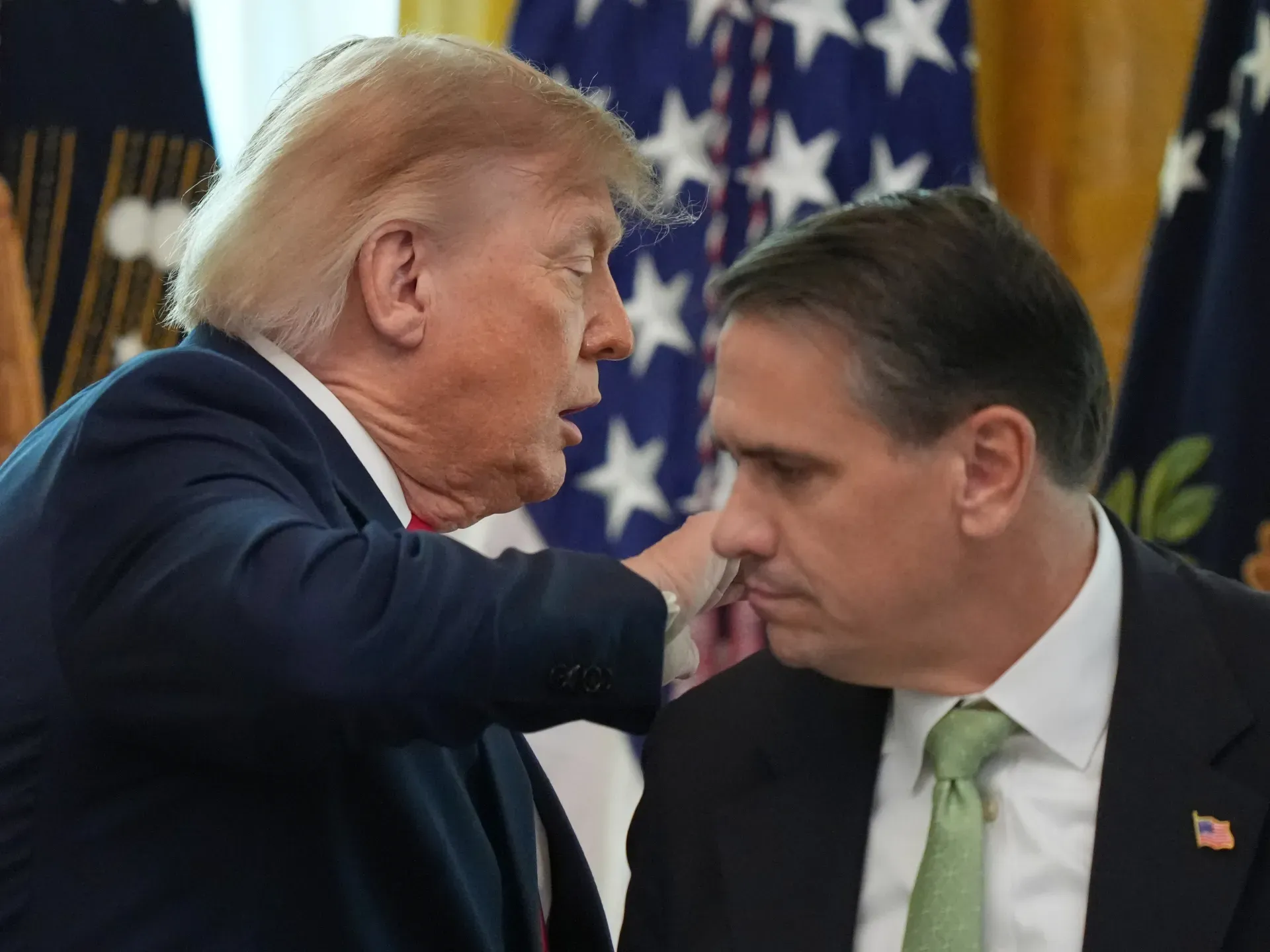
Alaska Senate election lawsuit: DOJ defends legal challenge
The Alaska Senate election lawsuit has become a focal point of tension between the Department of Justice and state election authorities. US Attorney General Todd Blanche defended the DOJ's decision on October 25, 2026, to sue to prevent the certification of the race, citing potential voter confusion. The lawsuit follows the presence of two Republican candidates named Sullivan on the ballot. This legal battle occurs as the 2026 midterms approach, with the outcome potentially deciding the Republican majority in the US Senate. This article examines the legal arguments, the candidates involved, and the broader political implications.
October 27, 2026
6 min read
Source: ASHENVOW
Why is the Department of Justice suing over the Alaska Senate race?
The Department of Justice (DOJ) argues that the inclusion of a second candidate with a similar name on the ballot threatens the integrity of the election. Specifically, the DOJ claims that the presence of Daniel J. Sullivan could lead to significant voter confusion, thereby tainting the final results. On October 22, the department filed a lawsuit requesting that the US District Court in Alaska declare any subsequent certification of the race as "unlawful."
Attorney General Todd Blanche has maintained that the legal action is a preventative measure intended to ensure a remedy is available if confusion occurs. During media appearances on Sunday, Blanche argued that the current ballot configuration is inherently flawed. He stated that the system should not allow a situation where a candidate's presence on a ballot serves no purpose other than to confuse the electorate.
However, the legal basis for this intervention is being heavily scrutinized. Under the US Constitution, the power to administer and certify elections is primarily reserved for the states. While Congress possesses regulatory authority over federal elections, the move by a presidential administration to intervene in a state's certification process is considered highly irregular. Legal experts have suggested that such an injection of federal authority into state-run processes may be deemed illegal by the courts.
Who are the candidates involved in this contested race?
The Alaska Senate race features a high-stakes competition between a Democratic challenger and two Republican candidates with nearly identical names. The primary contest is between the Republican incumbent, Senator Dan S. Sullivan, and the Democratic former US Representative, Mary Peltola. As the November 3 midterm elections approach, the race is viewed as a critical battleground for control of the Senate.
The complexity arises from the presence of a third candidate, Dan J. Sullivan, a former Forest Service employee who is also running as a Republican. This has led to widespread allegations that the second Sullivan is a "spoiler candidate" intended to siphon votes away from the incumbent Republican. Despite these accusations, the candidate has denied any coordination with the Democratic campaign.
The dispute over the "spoiler" allegations
Dan J. Sullivan has addressed the controversy directly, asserting that his candidacy is a legitimate exercise of his political rights. In a letter sent to Alaska's lieutenant governor prior to the primaries, he stated that his decision to run was motivated by a belief that the incumbent Senator Sullivan has failed the people of Alaska. He explicitly denied being a registered Democrat or having any communications with Mary Peltola's campaign, calling the allegations of being a manufactured spoiler "entirely false."
To mitigate the confusion, Alaska's Division of Elections has implemented specific measures for the November 3 ballot. The incumbent, Dan S. Sullivan, will be identified as a "registered Republican." The challenger, Dan J. Sullivan, will have the suffix "Jr" added to his name, and his party affiliation will be left blank on the ballot, despite his self-identification as a Republican. These measures follow a June ruling by the Alaska Supreme Court that permitted both men to remain in the race.
How does the lawsuit impact the 2026 midterm elections?
The Alaska Senate election lawsuit is a central component of the broader 2026 midterm elections, which will determine if Republicans can maintain their slim 53-seat majority in the 100-member Senate. With only 35 seats up for grabs due to the staggered nature of Senate terms, every individual race carries significant weight for the balance of power in Washington.
The Alaska race is specifically identified as a "toss-up" election. Recent polling suggests a significant advantage for the Democratic candidate; according to a poll released by The New York Times and Siena College in early October, Mary Peltola leads the incumbent Sullivan by nearly 7 percentage points. This margin is one of the widest among the highly contested seats in the country.
The DOJ's intervention adds a layer of legal uncertainty to an already volatile political environment. Critics argue that the lawsuit is a strategic attempt by the Trump administration to lay the groundwork for contesting a potential Democratic victory. While Blanche framed the suit as a way to ensure ballots are preserved for potential investigation, the timing—less than two weeks before the election—has drawn bipartisan criticism regarding the administration's motivations.
What are the political implications of the DOJ's stance?
The stance taken by Attorney General Todd Blanche has reignited debates over the independence of the Department of Justice and the potential for the politicization of federal prosecutorial powers. Blanche, who previously served as Donald Trump's personal lawyer, has been accused by critics of using the DOJ to advance the President's political interests.
During televised interviews on CNN and CBS, Blanche faced intense questioning regarding the legality of the lawsuit and the President's involvement. President Trump has publicly claimed responsibility for the legal action, stating, "I'm the one who said do it." Blanche defended this, suggesting that the President's role is to ensure the country's systems, including elections, are functioning correctly. However, Blanche declined to provide specific details regarding his direct communications with the President, citing a policy of non-disclosure regarding presidential communications.
The tension between the DOJ and the media was also evident during Blanche's appearance on CNN's *State of the Union*. When host Dana Bash raised concerns regarding the administration's history of election denialism and the events of January 6, 2021, Blanche responded with frustration, attempting to redirect the conversation away from the President's past rhetoric regarding the 2020 election. This friction underscores the polarized atmosphere in which the Alaska legal battle is unfolding.
Frequently asked questions
What is the primary goal of the DOJ's lawsuit in Alaska?
The primary goal is to prevent the state from certifying the Senate election results if the DOJ believes the outcome has been compromised by voter confusion. The department seeks a court order to declare any certification "unlawful" due to the presence of two similar names on the ballot.
Why are there two Republicans named Sullivan in the race?
The race includes the incumbent Republican, Dan S. Sullivan, and a former Forest Service employee, Dan J. Sullivan, who is also running as a Republican. The Alaska Supreme Court ruled that both candidates are permitted to compete in the election.
Is Mary Peltola leading in the polls?
Yes, recent data indicates a Democratic advantage in the race. A poll from The New York Times and Siena College in early October showed Mary Peltola leading the incumbent Dan S. Sullivan by approximately 7 percentage points.
How is the state of Alaska attempting to reduce voter confusion?
The Alaska Division of Elections is using specific identifiers on the ballot. The incumbent will be listed as a "registered Republican," while the second candidate will have "Jr" added to his name and his party affiliation will be left blank.
Does the President have authority over this lawsuit?
While the President has claimed to have authorized the lawsuit, the DOJ operates under the principle of judicial independence. Attorney General Blanche has defended the President's interest in election integrity but refused to discuss specific private communications with him.
Key takeaways
- The DOJ is suing to prevent the certification of the Alaska Senate race, citing voter confusion.
- Two Republican candidates, Dan S. Sullivan and Dan J. Sullivan, are competing for the same seat.
- Mary Peltola leads the incumbent by nearly 7 points according to recent polling data.
- The election outcome is critical for maintaining the Republican majority in the US Senate.
- The lawsuit faces criticism for potentially infringing on state authority over election administration.
Conclusion
The legal challenge brought by the Department of Justice in Alaska represents a significant escalation in the tension surrounding the 2026 midterm elections. By questioning the validity of the state's certification process, the DOJ has moved into a traditionally state-governed domain, sparking intense debate over federal overreach and political neutrality. As the November 3 election approaches, the dual pressures of a highly competitive race and a complex legal battle will likely shape the political landscape, potentially influencing the final composition of the United States Senate.



