
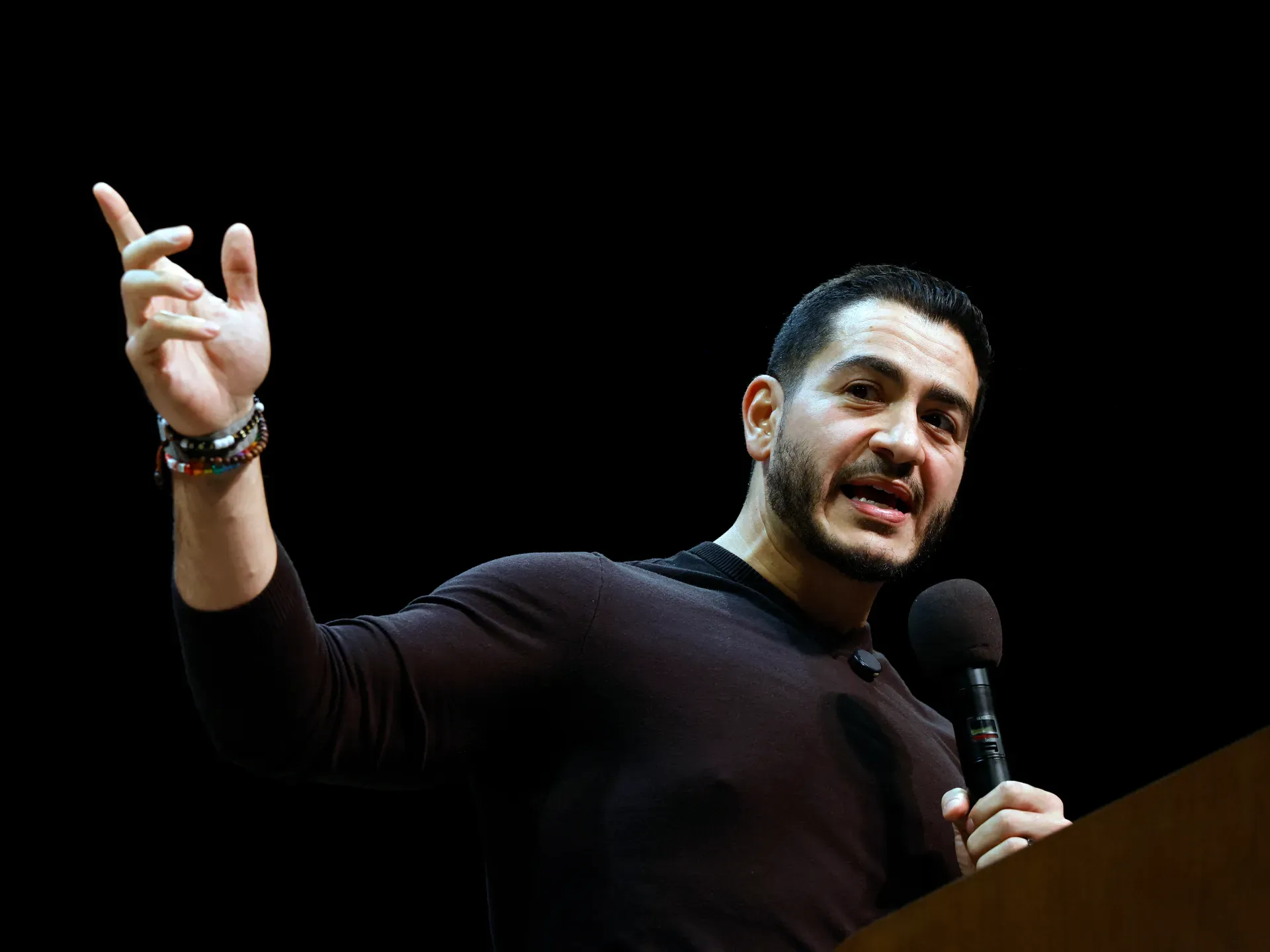
Abdul El-Sayed responds to Trump's anti-Muslim attacks in Michigan
Abdul El-Sayed, the Democratic candidate for the US Senate in Michigan, has dismissed recent Islamophobic attacks from President Donald Trump as strategic deflections. During a press conference in Detroit on October 26, 2026, El-Sayed argued that the President's accusations are intended to divert public attention from critical issues such as petrol prices and the conflict involving Iran. As the midterm election approaches, this high-stakes contest between El-Sayed and Republican Mike Rogers could determine the control of the Senate majority. This article examines the rhetoric used in the campaign, the specific allegations made by both sides, and the broader implications for the 2026 midterms.
November 8, 2026
5 min read
Source: ASHENVOW
How has Donald Trump targeted Abdul El-Sayed during the campaign?
President Donald Trump has utilized aggressive rhetoric to target the Democratic candidate, making several baseless claims regarding El-Sayed's religious identity and perceived allegiances. During a campaign rally in Michigan on Sunday, October 25, 2026, Trump accused the Democrat of intending to impose Sharia law on the United States. The President further employed personal insults, suggesting that El-Sayed would require a metal detector to enter the Senate building.
These attacks represent a significant escalation in the personal nature of the Michigan Senate race. By framing the candidate through the lens of religious extremism, the Trump campaign has sought to cast El-Sayed as an outsider to traditional American values. This tactic is part of a broader pattern of political discourse that critics argue relies on identity-based fear rather than policy debate.
The rhetoric of security and identity
Trump's comments regarding metal detectors and Sharia law are designed to trigger security concerns among the electorate. By implying that El-Sayed poses a physical or systemic threat to the legislative institution, the President moves the conversation away from governance and toward personal characterization. This approach attempts to define the candidate's identity before he can define his own platform for Michigan voters.
What is Abdul El-Sayed's response to these allegations?
Abdul El-Sayed has characterized the attacks as "deflections and deceptions" that lack any evidentiary basis. Speaking at a news conference in Detroit on Monday, October 26, 2026, the former public health official argued that the Republican strategy is to avoid discussing the actual problems facing American households. He specifically pointed to the rising costs of gas, groceries, and housing as the issues that should be the focus of political discourse.
El-Sayed has also taken a defiant stance against the personal nature of the insults. When Trump made jokes regarding his name and misrepresented it as "Mohamed," El-Sayed responded by tying his identity back to the economic struggles of his constituents. He stated that his name and faith are not the reasons why citizens cannot afford rent, mortgages, or medical care, effectively pivoting the conversation back to the economic realities of the Michigan electorate.
Furthermore, El-Sayed used humor to neutralize some of the more aggressive personal insults. In response to the suggestion that he might be a physical threat to Congress, he referenced his alma mater, the University of Michigan, jokingly mentioning his "Wolverine claws." This attempt to use levity serves to contrast his demeanor with the high-tension rhetoric employed by his opponents.
What role does Mike Rogers play in the Michigan Senate race?
Mike Rogers, the former Republican Congressman, is the primary opponent in this closely contested election. Rogers has integrated themes of national security and religious affiliation into his campaign strategy, making several unfounded allegations against El-Sayed. Specifically, Rogers has attempted to link the Democratic candidate to controversial organizations including the Muslim Brotherhood, Hamas, and Hezbollah.
The competition between Rogers and El-Sayed is not merely a local struggle; it is a battle for the direction of the US Senate. Because the race is described as being locked in a close contest, every campaign tactic—including the use of identity-based accusations—is amplified by its potential to swing undecided voters. The outcome of this race could ultimately decide which party holds the majority in the Senate for the next two years.
Why are these attacks considered strategic deflections?
According to El-Sayed, the focus on his religious background is a calculated move to distract from the current administration's record. He argued that the Republican attacks are designed to prevent a discussion on substantive issues like petrol prices, clean air, clean water, and foreign policy tensions regarding Iran. By creating a sense of cultural crisis, the campaign can avoid accountability for economic volatility.
El-Sayed's argument rests on the idea that the government is failing to solve the fundamental problems of daily life, and that the political opposition is using "small-minded" tactics to avoid addressing these failures. He characterized those using such rhetoric as "small people" who seek to make the country feel smaller and more divided, whereas he positioned his campaign as one representing a "big America" that is open-minded and big-hearted.
FAQ: Abdul El-Sayed and the Michigan Senate Race
What are the main accusations against Abdul El-Sayed?
The primary accusations against Abdul El-Sayed include claims by Donald Trump that he wishes to impose Sharia law and suggestions that he might pose a security risk. Additionally, his opponent Mike Rogers has made unfounded allegations linking him to groups such as Hamas, Hezbollah, and the Muslim Brotherhood.
How has El-Sayed responded to the religious attacks?
El-Sayed has dismissed the attacks as baseless deceptions intended to distract from economic issues. He has also responded to personal insults regarding his name and faith by stating that his identity is not the cause of the economic hardships, such as high grocery and gas prices, faced by voters.
Why is this specific Senate race significant?
The race between Abdul El-Sayed and Mike Rogers is considered a critical battleground because it could determine which party secures the majority in the US Senate for the upcoming two-year term. The outcome has implications for national policy and legislative control.
What economic issues did El-Sayed highlight?
El-Sayed emphasized several economic concerns that he believes the Republican campaign is attempting to avoid. These include the costs of petrol, groceries, rent, and mortgages, as well as broader issues like access to medical care and the cost of living.
What is the political context of the 2026 midterms?
The 2026 midterms are occurring amidst significant political tension, with candidates using high-intensity rhetoric. The Michigan race specifically highlights the intersection of identity politics, national security concerns, and economic dissatisfaction within the current American political landscape.
Key takeaways
- Abdul El-Sayed dismissed Donald Trump's Islamophobic attacks as strategic deflections from economic issues.
- Trump accused El-Sayed of wanting to implement Sharia law during a Michigan rally.
- Republican candidate Mike Rogers has made unfounded claims linking El-Sayed to Hezbollah and Hamas.
- The Michigan Senate race is a critical contest that could decide the US Senate majority.
- El-Sayed pivoted the campaign focus toward gas prices, groceries, and housing affordability.
Conclusion
The Michigan Senate race between Abdul El-Sayed and Mike Rogers has become a focal point for the broader tensions defining the 2026 midterm elections. The use of identity-based attacks and allegations of religious extremism by both Donald Trump and Mike Rogers highlights a campaign environment where personal characterization often supersedes policy debate. While El-Sayed attempts to refocus the electorate on economic stability and the cost of living, the intensity of the rhetoric suggests that the battle for the Senate majority will be fought as much on cultural identity as on legislative capability. The final result will have significant consequences for the political balance of power in Washington.



