
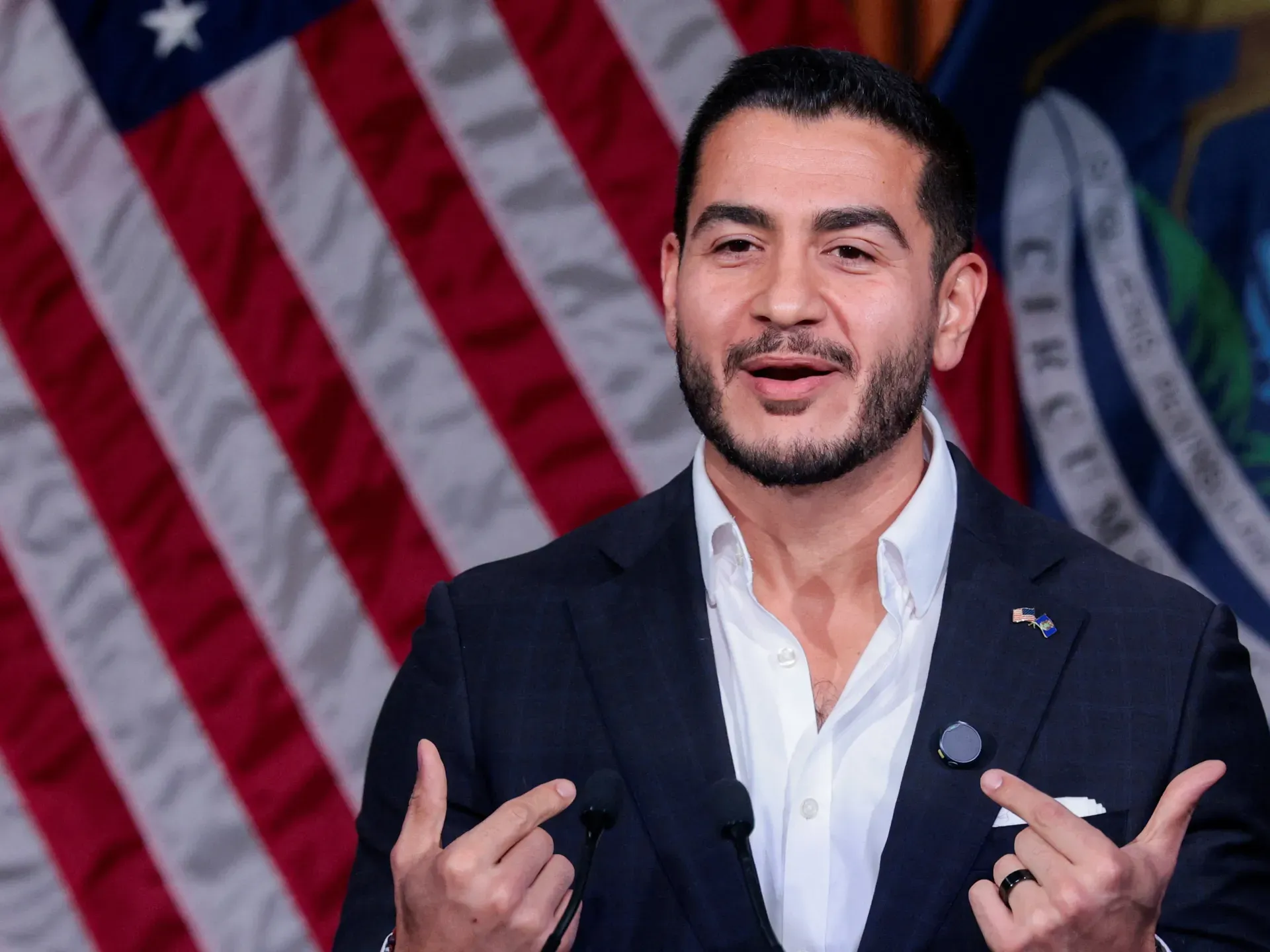
Abdul El-Sayed: How the first Muslim US Senator won Michigan in 2026
Abdul El-Sayed has secured a historic victory in the 2026 US midterm elections, becoming the first Muslim elected to the United States Senate. The 42-year-old Democrat defeated Republican Mike Rogers in Michigan with over 52 percent of the vote, according to election projections with 95 percent of ballots tallied. His win marks a significant shift in Michigan's political landscape, a key swing state. This article examines El-Sayed's background, the controversial campaign rhetoric used against him, and his core policy focuses regarding healthcare and foreign policy.
November 8, 2026
6 min read
Source: ASHENVOW
How did Abdul El-Sayed secure his historic Senate victory?
Abdul El-Sayed won the Michigan Senate race by capturing more than 52 percent of the vote, according to projections made as 95 percent of the votes were tallied on November 4, 2026. His victory over Republican Mike Rogers, a candidate handpicked by Donald Trump, represents a major breakthrough for progressives within the Democratic Party. The win is particularly notable because Michigan is a critical swing state that President Trump had won comfortably during the previous election cycle.
During his victory speech in Detroit, El-Sayed addressed the intense personal attacks he faced throughout the campaign. He specifically noted the irony that Vice President JD Vance, who had labeled him a "psychopath," would be constitutionally required to swear him into office in January. El-Sayed also challenged Donald Trump to use his formal title, "Senator," rather than the derogatory labels used during the campaign. His victory is being viewed by analysts as a potential turning point for the political representation of Muslim and Arab Americans in the United States.
The significance of the Michigan swing state
The victory in Michigan carries weight beyond the individual achievement of El-Sayed. Because Michigan serves as a bellwether for national political shifts, his ability to flip a state previously held by the Republican administration suggests a growing appetite for progressive platforms in the Midwest. This shift challenges the traditional dominance of centrist politics in battleground states.
What challenges did El-Sayed face during the campaign?
The campaign against Abdul El-Sayed was defined by highly charged rhetoric from the highest levels of the Republican leadership. President Donald Trump and Vice President JD Vance utilized various labels to target the Democrat, including calling him a "jihadist" and a "psychopath." Trump specifically mocked El-Sayed's name, suggesting that as president, he could refer to the Michigan physician by any name he chose.
These attacks were not limited to personal insults but extended to El-Sayed's religious identity and his stances on international affairs. His opposition to US military involvement in the Middle East and his criticism of Washington's support for Israel were frequently used by opponents to frame him as extremist. Despite this, El-Sayed maintained a focus on domestic issues, framing his platform as a defense of working families against both corporate influence and unnecessary foreign conflicts.
What is Abdul El-Sayed's professional and academic background?
Abdul El-Sayed is a trained physician and public health expert with a distinguished academic record. Born and raised in the Detroit metropolitan area to parents of Egyptian descent, he was the valedictorian of his 2007 graduating class at the University of Michigan. His academic journey continued at the University of Oxford as a Rhodes Scholar and concluded with a medical degree from Columbia University in New York.
Before entering the political arena, El-Sayed built an extensive career in epidemiology and public health administration. He served as the executive director of Detroit’s Health Department and later led the Wayne County Department of Health, Human and Veteran Services. This professional expertise in healthcare management has become a cornerstone of his political identity, allowing him to speak with authority on issues of medical access and public wellness.
From public health to political leadership
El-Sayed's transition to politics began in 2018 when he ran for Governor of Michigan. Although he lost the Democratic primary to Gretchen Whitmer, the campaign established him as a prominent progressive voice. His subsequent successful Senate run in 2026 demonstrates a growing electoral strength and an ability to build a coalition around progressive economic and social policies.
What are the core pillars of El-Sayed's political platform?
El-Sayed's platform is built on three primary pillars: universal healthcare, economic relief for working families, and a restructured foreign policy. He is a staunch advocate for "Medicare for All," arguing that healthcare should be a fundamental right independent of employment status or income. He has consistently linked the rising costs of living—specifically groceries and fuel—to corporate influence and unnecessary military spending.
On the international stage, El-Sayed has taken a sharply critical stance toward US interventionism. He has:
- Opposed US-Israeli military operations and called for an end to American military assistance for Israel.
- Criticized the US-led involvement in the Middle East, which he linked to domestic inflation and high gasoline prices.
- Called for a redirection of taxpayer funds from military aid toward domestic priorities like education, healthcare, and childcare.
His stance on Gaza has been particularly prominent, with El-Sayed accusing the Israeli government of genocide and arguing that US support for these actions is a misuse of American resources. He frames his foreign policy not as an act of hate, but as a commitment to the rights of self-determination and dignity for all people.
How does his election impact the Democratic Party?
The election of Abdul El-Sayed is viewed as a significant victory for the progressive wing of the Democratic Party. His ability to win the Democratic primary in August 2026 against Congresswoman Haley Stevens—a candidate backed by the American Israel Public Affairs Committee (AIPAC)—signaled a shift in the party's internal power dynamics. While Stevens eventually endorsed the Republican candidate, Rogers, shortly before the election, El-Sayed's momentum remained unbroken.
Political analyst Rami Khouri, a Senior Fellow at the Arab Center Washington DC, suggests that El-Sayed's success, alongside other recent victories like that of New York Mayor Zohran Mamdani, demonstrates the increasing political influence of Muslim and Arab American communities. This trend could potentially drive down anti-Arab and anti-Islamic sentiments by integrating these voices into the highest levels of American governance.
Frequently asked questions
Who is Abdul El-Sayed?
Abdul El-Sayed is a 42-year-old Democrat and physician from Michigan who has become the first Muslim elected to the United States Senate. An Egyptian-American and former public health official, he won the 2026 midterm election in Michigan, running on a progressive platform focused on healthcare and economic equality.
What were the main issues in the 2026 Michigan Senate race?
The race centered on healthcare access, the cost of living, and US foreign policy. El-Sayed campaigned on Medicare for All and reducing military spending to lower domestic costs, while his opponent, Mike Rogers, was supported by Republican leadership and faced challenges regarding the progressive shift in the state.
How did Donald Trump respond to El-Sayed's campaign?
Donald Trump and Vice President JD Vance used aggressive rhetoric against El-Sayed, including calling him a "jihadist" and a "psychopath." Trump also mocked El-Sayed's name, which became a central point of contention during the campaign and was later addressed by El-Sayed in his victory speech.
What is El-Sayed's stance on US foreign policy?
El-Sayed advocates for a foreign policy that prioritizes domestic needs over military intervention. He is a vocal critic of US military assistance to Israel and has argued that US involvement in Middle Eastern conflicts contributes to domestic economic issues like inflation and high fuel prices.
What is the significance of his win for Muslim Americans?
His victory is seen as a historic milestone that demonstrates the growing political agency of Muslim and Arab Americans. Analysts suggest his presence in the Senate could help mitigate anti-Islamic sentiment and provide a platform for perspectives often marginalized in traditional American political discourse.
Key takeaways
- Abdul El-Sayed became the first Muslim elected to the US Senate in 2026.
- He defeated Republican Mike Rogers in Michigan with over 52 percent of the vote.
- El-Sayed's platform prioritizes Medicare for All and reduced military spending.
- His victory marks a significant win for the progressive wing of the Democratic Party.
Conclusion
The election of Abdul El-Sayed represents more than just a personal political achievement; it is a transformative moment in American legislative history. By overcoming intense personal attacks and religious prejudice, El-Sayed has proven the viability of a progressive, immigrant-led platform in a critical swing state. As he prepares to take his seat in the Senate, his focus on linking domestic economic struggles to foreign military spending will likely challenge traditional bipartisan norms. His presence in Washington signals a diversifying electorate and a shifting paradigm in how the United States approaches both its domestic social contract and its role on the global stage.



