
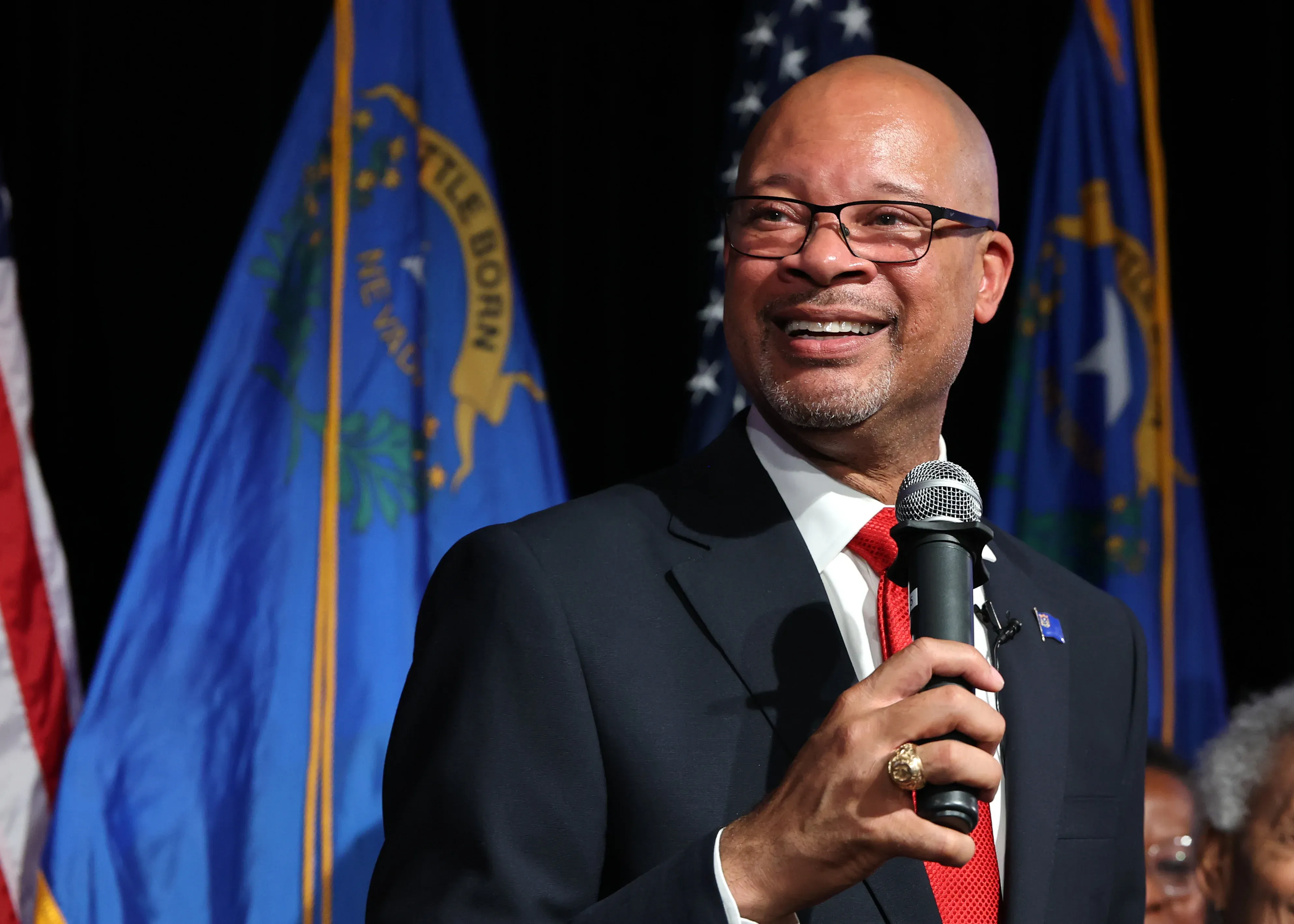
Aaron Ford Nevada governor: Results and impact of 2026 race
Democratic candidate Aaron Ford Nevada governor victory marks a significant shift in the state's political landscape following the 2026 midterm elections. Aaron Ford unseated the Republican incumbent, Governor Joe Lombardo, in a race considered one of the most competitive in the United States, according to an Associated Press race call on November 4, 2026. This transition of power follows a campaign centered on economic stability, healthcare funding, and legislative priorities. The article explores the historical significance of Ford's win, the economic challenges facing Nevada, and the contrasting policy platforms of the two candidates.
November 8, 2026
5 min read
Source: ASHENVOW
Who is Aaron Ford and why is his victory historic?
Aaron Ford is the incoming Governor of Nevada, having successfully unseated the Republican incumbent Joe Lombardo in the 2026 midterm elections. His victory is historically significant as he will become the first Black governor of any state located west of the Mississippi River.
Ford's political career in Nevada is characterized by several "firsts" and a steady ascent through the state's legislative and executive branches. Before his gubernatorial win, he served as Nevada's first Black Senate majority leader and subsequently as the state's Attorney General. His entry into the state legislature dates back to 2012, following a professional background that included private legal practice and teaching mathematics.
As Attorney General, Ford built a reputation through high-profile legal challenges against the previous Trump administration. According to election reports, his tenure included joining lawsuits aimed at upholding birthright citizenship, preventing federal election interference, and working to restore funding for the state's education system. This legal experience provided the foundation for his campaign, which focused on protecting state-level interests against federal shifts.
What were the primary economic drivers in the Nevada election?
Economic instability and rising costs served as the central battleground for the 2026 gubernatorial contest. Aaron Ford's campaign heavily criticized the incumbent administration's handling of the state's finances, specifically linking economic difficulties to the policies of Governor Lombardo and former President Trump.
Several key economic indicators defined the voter sentiment during the campaign:
- Fuel Costs: Nevada experienced some of the highest gasoline prices in the country, with costs exceeding $5 per gallon.
- Tourism Trends: As a vital revenue source for the state, tourism saw a decline attributed by the Ford campaign to federal tariffs and strict immigration crackdowns.
- Federal Funding Risks: The state faces a potential loss of approximately $1.2 billion in federal funds due to proposed changes to Medicaid, food assistance programs, and cuts to the Affordable Care Act.
These fiscal pressures created a climate of uncertainty that Ford leveraged to argue for a change in leadership, positioning himself as a shield against federal economic volatility.
How did the candidates differ on legislative and social policy?
The election presented voters with two distinct visions for Nevada's governance, particularly regarding housing, healthcare, and corporate regulation. While both candidates had engaged in providing tax breaks for data centers, they diverged sharply on how to manage corporate influence and state-negotiated costs.
Legislative priorities and vetoes
A major point of contention involved the legislative record of Governor Lombardo, who was noted for a record-breaking number of vetoes during his term. Ford campaigned on a platform of reversing these decisions to implement policies that had previously been blocked.
One of Ford's primary pledges is to limit the ability of large corporations to purchase residential properties, a move intended to stabilize the housing market for individuals. Additionally, Ford intends to grant the state the authority to negotiate prescription drug prices through Medicaid, a policy designed to lower healthcare costs for residents.
The Republican platform under Joe Lombardo
Governor Joe Lombardo, a former sheriff endorsed by Donald Trump, campaigned on a platform of continuity and proven state-level achievements. Having been elected in 2022, Lombardo sought to demonstrate the efficacy of his first-term policies.
Lombardo's campaign highlighted his efforts to increase compensation for state employees and teachers. Furthermore, he pointed to his administration's allocation of $133 million specifically designated for the development of housing aimed at middle-income Nevadans. His approach emphasized incremental growth and state-funded stability rather than the systemic legislative shifts proposed by the Democratic challenger.
What is the political background of the candidates?
The 2026 race featured two candidates with vastly different professional origins, reflecting the diverse political identities within Nevada. The contrast between a legal and legislative background and a law enforcement background played a role in how voters perceived their readiness to lead.
Aaron Ford's trajectory is rooted in the legal and academic sectors. His transition from a math teacher to a private attorney, and eventually to the state's top legal officer, allowed him to build a profile centered on constitutional law and legislative procedure. This background was instrumental in his ability to frame the election as a defense of state rights and social safety nets.
In contrast, Joe Lombardo brought a law enforcement perspective to the executive office. Before serving as Governor, Lombardo served as a sheriff, a role that shaped his governance style and his alignment with the Republican platform. His endorsement by Donald Trump solidified his standing with the conservative base, positioning him as a defender of traditional law and order and federal alignment.
FAQ: Aaron Ford Nevada governor election
Who won the 2026 Nevada gubernatorial election?
Democratic candidate and current Attorney General Aaron Ford won the election, defeating the Republican incumbent, Governor Joe Lombardo. The Associated Press officially called the race on November 4, 2026, marking a significant political shift in the state.
What is the historical significance of Aaron Ford's win?
Aaron Ford's victory is historic because he will become the first Black governor of a state located west of the Mississippi River. This achievement follows his previous milestones as Nevada's first Black Senate majority leader and Attorney General.
What economic issues influenced the election results?
The election was heavily influenced by high gas prices exceeding $5 per gallon, declining tourism revenue, and the risk of losing $1.2 billion in federal funding for Medicaid and food assistance due to federal policy changes.
What were Joe Lombardo's main campaign promises?
Joe Lombardo campaigned on continuing his first-term work, which included increasing pay for teachers and state employees, and utilizing $133 million set aside for middle-income housing development projects.
How did the candidates view corporate tax breaks?
Both Aaron Ford and Joe Lombardo had been involved in facilitating tax breaks for data centers. However, they disagreed on the level of oversight and toughness required to regulate these corporations moving forward.
Key takeaways
- Aaron Ford unseated Republican incumbent Joe Lombardo in a highly competitive 2026 gubernatorial race.
- Ford becomes the first Black governor of a state west of the Mississippi River.
- Nevada faces a potential $1.2 billion loss in federal funding for healthcare and food assistance.
- Gas prices in Nevada reached significant highs, exceeding $5 per gallon during the campaign.
- Ford pledged to limit corporate home buying and allow Medicaid to negotiate drug prices.
The transition of power in Nevada
The shift from the Lombardo administration to the Ford administration represents more than just a change in party affiliation; it signifies a pivot in how Nevada interacts with federal policy. While Lombardo focused on state-funded incentives and law enforcement-aligned governance, Ford is poised to implement a more interventionist legislative agenda aimed at curbing corporate influence and protecting social welfare programs. As Nevada navigates high energy costs and the volatility of its tourism-dependent economy, the new governor's ability to secure federal funding and manage the cost of living will be the ultimate measure of his administration's success.



