
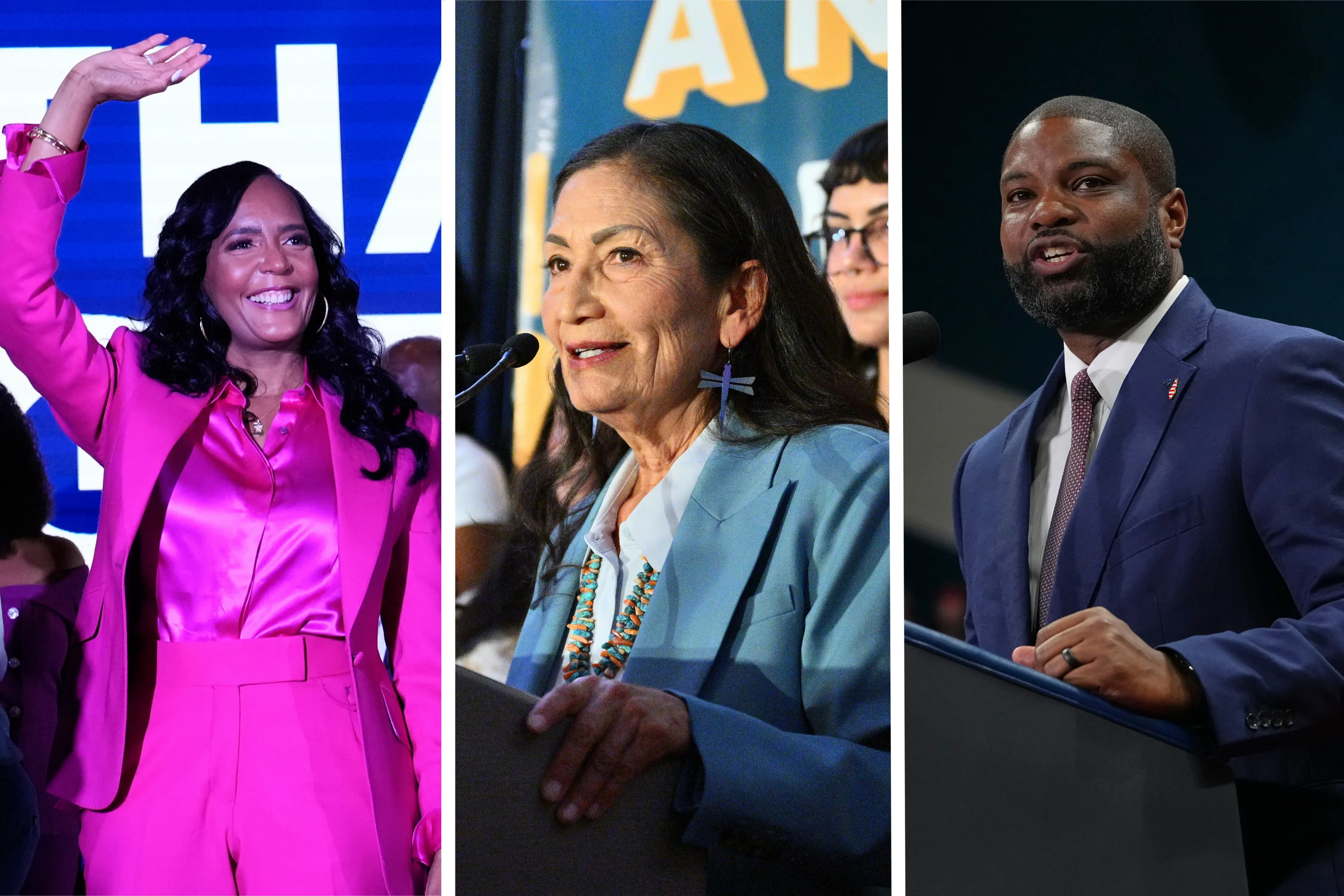
2026 governor election candidates: 10 historic winners identified
The 2026 governor election candidates achieved unprecedented results, with voters in ten states selecting leaders who break long-standing demographic barriers. These historic wins include Keisha Lance Bottoms becoming the first Black woman governor in U.S. history and Deb Haaland serving as the first Native American woman to hold the office. From shifts in Texas to new representation in Florida and Nevada, the election results signal a profound transformation in state-level leadership. This article examines the specific candidates who made history, their backgrounds, and the demographic shifts driving these landmark electoral outcomes.
November 8, 2026
7 min read
Source: ASHENVOW
Who are the 2026 governor election candidates making history?
Ten specific candidates secured victories in the 2026 gubernatorial races that represent significant milestones in American political history. These individuals did not just win their respective seats; they dismantled long-standing glass ceilings regarding race, gender, and ethnicity at the state executive level.
The diversity of these winners spans across different political parties and geographic regions. For instance, while Democrats saw significant gains in states like Georgia and New Mexico, Republicans also secured historic victories, such as Byron Donalds in Florida. This mix of partisan outcomes underscores that the historic nature of the 2026 election is rooted in the identity of the winners rather than a singular political wave.
Key historic milestones achieved
The election results are categorized by several distinct 'firsts':
- Gender and Race: The election of the first Black woman governor and the first Native American woman governor.
- Ethnic Representation: The selection of the first Latino governors in California and Texas.
- Regional Firsts: The election of the first Black governor in several states, including the first west of the Mississippi River.
- Gender in Leadership: Multiple states elected their first female governors, breaking century-old precedents.
How did Keisha Lance Bottoms and Deb Haaland redefine representation?
Keisha Lance Bottoms and Deb Haaland emerged as two of the most prominent figures in the 2026 election cycle, both breaking major racial and gender barriers. Their victories represent a significant shift in the demographic composition of state leadership.
Keisha Lance Bottoms, the 56-year-old Democrat, defeated Republican billionaire Rick Jackson to become the Governor-elect of Georgia. Her victory is historic as she becomes the first Black woman to be elected governor of any U.S. state. Bottoms brings extensive administrative experience to the role, having previously served as the Mayor of Atlanta from 2018 to 2022 and as an adviser to former President Joe Biden. Her win also ends a more than two-decade drought for Democrats in Georgia's gubernatorial office.
In New Mexico, Deb Haaland secured a victory that mirrors the historic nature of Bottoms' win. As a Democrat of Pueblo Indian descent, Haaland will serve as the first Native American woman governor. Her political career has been defined by breaking barriers; she previously served in Congress as one of the first Native American women elected to that body and later became the first Native American cabinet secretary under the Biden administration. By defeating Republican Gregg Hull, Haaland continues a trajectory of pioneering leadership.
What impact did the election of Latino governors have in California and Texas?
The 2026 election saw a major shift in Latino political representation, particularly in the high-stakes races of California and Texas. These victories reflect broader demographic changes occurring within these two critical states.
In California, Democrat Xavier Becerra is set to become the first elected Latino governor. Becerra, who succeeds Governor Gavin Newsom, has a deep background in law and federal service, having served as California's attorney general, a member of Congress, and the U.S. Secretary of Health and Human Services. He secured his victory by defeating Republican political outsider Steve Hilton.
Texas experienced an even more dramatic political shift with the election of Democrat Gina Hinojosa. Hinojosa, a Texas state representative, defeated the incumbent Republican Governor Greg Abbott, a prominent figure and ally of President Trump. Hinojosa's win is historic on two fronts: she is the first Latina governor of Texas and the first Democrat to hold the office in more than 30 years. Analysts attribute her success to the significant surge in the state's Latino population, which has fundamentally altered the state's electoral landscape.
Which candidates secured historic Black representation in Florida, Nevada, and Wisconsin?
The 2026 election cycle also produced historic results for Black political leadership in the South, the West, and the Midwest, with three different states electing their first Black governors.
In Florida, Republican Byron Donalds achieved a landmark victory by becoming the state's first Black governor. Supported by President Trump and a substantial campaign fund, Donalds defeated Democrat David Jolly. His campaign focused heavily on economic affordability and a commitment to the conservative policies established by outgoing Republican Governor Ron DeSantis. Donalds has been a fixture in politics since 2021, having served in Congress and the state legislature.
Nevada saw a similar historic shift when Democrat Aaron Ford, the state's attorney general, unseated Republican Governor Joe Lombardo. Ford's victory is particularly notable because he becomes the first Black governor of a state located west of the Mississippi River. His background includes serving as Nevada's first Black Senate majority leader and attorney general, as well as a career in law and education.
In Wisconsin, Democrat David Crowley secured a win that was marked by a resilient campaign. Crowley, a Milwaukee County executive, defeated Republican Congressman Tom Tiffany. Despite being significantly outspent by Tiffany, Crowley managed to win by positioning himself as a "deal maker" capable of bipartisan cooperation. His path to victory was unconventional; he had briefly suspended his primary campaign but reentered it following the withdrawal of the candidate he had originally supported, eventually gaining the backing of outgoing Governor Tony Evers.
How did women break the glass ceiling in Tennessee, Minnesota, and Ohio?
Beyond the racial and ethnic milestones, the 2026 election was a watershed moment for female political leadership, with women winning gubernatorial races in three different states for the first time.
In Tennessee, Republican Senator Marsha Blackburn won her race to become the state's first female governor. Blackburn defeated Democrat Jerri Green and several independent candidates. Her campaign was centered on conservative priorities, including immigration control, foreign policy regarding China, and reductions in government spending. Although she won, the margin was noted as being narrower than many political observers had anticipated.
Minnesota also reached a milestone with the election of Democrat Senator Amy Klobuchar. Klobuchar will become the first woman to serve as Minnesota's governor after defeating Republican Lisa Demuth, the Speaker of the Minnesota House of Representatives. Demuth's defeat was significant as she would have also been a historic first for her state.
Perhaps one of the most unexpected results occurred in Ohio, where Democrat Amy Acton is poised to become both the first woman and the first Jewish governor in the state's history. Acton, who gained prominence as the state's chief public health officer during the COVID-19 pandemic, defeated Republican Vivek Ramaswamy. Her victory marks the first time a Democrat has held the Ohio governorship in two decades and came despite a highly contentious campaign period characterized by intense political attacks.
FAQ: 2026 Governor Election History
Who was the first Black woman elected governor in the U.S.?
Keisha Lance Bottoms of Georgia is the first Black woman to be elected governor of any U.S. state. The Democrat, a former Mayor of Atlanta, defeated Republican Rick Jackson to secure this historic position in the 2026 election.
Did any Republicans make history in the 2026 elections?
Yes, several Republicans achieved historic milestones. Byron Donalds became Florida's first Black governor, and Marsha Blackburn became the first woman to win a gubernatorial race in Tennessee, marking significant shifts for the Republican Party.
What was the significance of Gina Hinojosa's win in Texas?
Gina Hinojosa's victory is historic because she is the first Latina governor of Texas. Additionally, she is the first Democrat to win the Texas governorship in more than 30 years, following her defeat of incumbent Greg Abbott.
Who is the first Native American woman governor?
Deb Haaland of New Mexico is the first Native American woman to be elected governor. A Democrat of Pueblo Indian descent, she previously served as a member of Congress and as the U.S. Secretary of the Interior.
How many states elected their first Black governors in 2026?
Three states elected their first Black governors during this cycle: Florida (Byron Donalds), Nevada (Aaron Ford), and Wisconsin (David Crowley). These wins represent a major expansion of Black political leadership in the U.S.
Key takeaways
- Keisha Lance Bottoms became the first Black woman governor in U.S. history in Georgia.
- Deb Haaland is the first Native American woman to serve as a state governor in New Mexico.
- Gina Hinojosa became Texas' first Latina governor and its first Democratic governor in 30 years.
- Byron Donalds, Aaron Ford, and David Crowley were elected as the first Black governors in their respective states.
- Amy Acton made history as Ohio's first female and first Jewish governor.
The changing face of American state leadership
The 2026 gubernatorial elections represent a fundamental shift in the demographic landscape of American political power. By electing leaders who break long-standing racial, ethnic, and gender barriers, voters in ten states have signaled a desire for a more representative executive branch. While the partisan breakdown of these wins varied, the common thread is a move toward diversity that reflects the evolving makeup of the American electorate. These historic figures are not merely symbols of progress but are leaders who enter office with unique mandates to shape the future of their respective states.



