
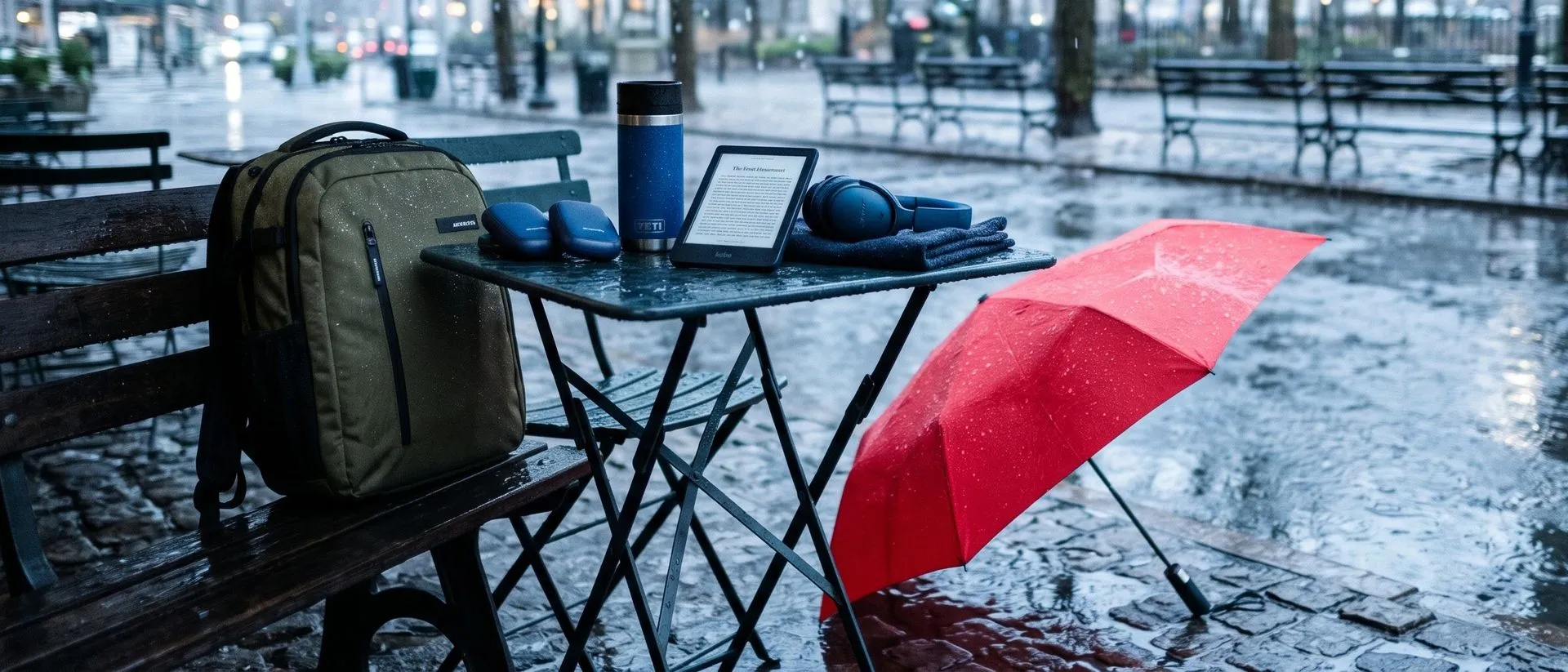
Master Your Journey with the Ultimate Winter Commuter Kit
Navigating the dark, wet, and cold months requires more than just willpower; it requires the right equipment to make the journey bearable. When temperatures drop below freezing, the risk of hypothermia increases, making thermal layers a necessity rather than a luxury. From high-quality umbrellas that withstand heavy gusts to waterproof rucksacks that protect your electronics, every piece of gear serves a specific purpose. This guide helps you select reliable tools to ensure your daily transit remains efficient, dry, and comfortable regardless of the seasonal elements.
November 13, 2026
4 min read
Source: ASHENVOW
Prioritizing weather protection for gear and clothing
The foundation of a winter commuter kit lies in defending electronics and personal items from moisture. For those who walk as part of their transit, a weather-resistant rucksack or a dedicated rain cover is necessary to prevent rain from damaging sensitive equipment like laptops. Similarly, a high-quality collapsible umbrella is a critical tool; it must be sturdy enough to resist inverting or breaking when wind speeds increase.
Essential Weather Gear
When choosing umbrellas and bags, durability is the primary metric. A standard umbrella often fails in gusty conditions, making compact, wind-resistant models like the ShedRain Vortex or the Blunt Metro more effective for daily use. For storage, rucksacks such as the Troubadour Apex 4.0 or the Samsonite Roader offer specific protections, with the latter including a dedicated rain cover to ensure contents remain dry during unexpected downpours.
Thermal management and comfort tools
Managing body temperature is essential for maintaining morale during long, cold commutes. Rechargeable hand warmers serve a dual purpose in many modern kits, acting as both a heat source and a portable power bank for mobile devices. For hand protection, specialized gloves that allow for smartphone interaction, such as the Sealskinz Acle nano-fleece gloves or lululemon Warm Revelation options, provide warmth without sacrificing digital connectivity.
Maintaining warmth also involves temperature-controlled beverages. A leakproof travel mug is a staple for commuters who rely on caffeine to manage morning transit. High-performance options include the Contigo West Loop Autoseal and the Yeti Rambler. The Yeti model specifically utilizes a screw-down commuter cap, which has been tested to remain leakproof even when stored upside-down in a bag, addressing the common issue of spills during movement.
Audio and digital entertainment solutions
Digital devices provide a necessary distraction during train journeys and help manage the sensory environment of public transit. E-readers, such as the Amazon Kindle Paperwhite or the Kobo Clara BW, are preferred over smartphones for reading because they reduce the tendency to engage in mindless scrolling. The Kobo Clara BW, for instance, features a new E Ink Carta 1300 screen and a waterproof design, though it lacks cloud file transfer support.
Audio equipment serves two distinct purposes: entertainment and noise management. For walking segments, in-ear headphones are often more practical, especially when wearing hats or hoods. For seated transit, over-ear noise-cancelling headphones provide superior isolation from background environmental noise. The choice between these depends on the specific segment of the commute and the level of thermal protection required.
| Device Category | Recommended Models | Primary Benefit |
|---|---|---|
| Audio (Over-ear) | Bose QuietComfort Ultra | Class-leading noise cancellation |
| Audio (In-ear) | Technics EAH-AZ100E-K | True wireless with ANC |
| E-readers | Kindle Paperwhite / Kobo Clara BW | Distraction-free reading |
| Hand Warmers | LifeSystems / Bearwind | Heat and power bank capability |
Comparative analysis of audio hardware
Selecting the right audio gear requires balancing sound quality, battery life, and noise isolation. For commuters prioritizing silence, the Bose QuietComfort Ultra offers high-tier noise-stopping power and a comfortable folding design, though its 24-hour battery life is noted as a potential weakness. Some users may also find the sound profile less neutral than desired. Conversely, for those seeking a more compact form factor, true wireless earbuds like the Technics EAH-AZ100E-K provide Active Noise Cancelling (ANC) in a smaller profile.
Bose QuietComfort Ultra: Pros and Cons
- Pros: Fantastic, detailed sound with rich bass; class-leading noise-stopping power; comfortable and premium folding design; great smart features.
- Cons: 24-hour battery life is weak; some will prefer a more neutral sound; no USB-C audio input; no LE Audio support (though it is promised).
Evaluating e-reader functionality
E-readers offer a specialized reading experience that differs significantly from tablets or phones. The Kobo Clara BW is highlighted for its portability and waterproof build, making it suitable for the damp conditions of a winter commute. However, users should note specific technical trade-offs, such as the 6-inch screen size which may be small for some readers, and the absence of cloud file transfer support. These devices are designed to prioritize focused reading over multi-functional utility.
Kobo Clara BW: Pros and Cons
- Pros: New E Ink Carta 1300 screen; compact, lightweight, and waterproof; affordable and repairable.
- Cons: No cloud file transfer support; dated, plastic design; 6-inch screen can be small for some.
Summary of essential gear categories
A functional winter kit can be categorized into four distinct functional groups: inclement weather gear, thermal comfort items, hydration/nutrition tools, and digital entertainment. By addressing each category, a commuter can mitigate the physical discomforts of cold, wet, and dark environments. The effectiveness of the kit depends on the quality of the seals in drinkware, the wind resistance of umbrellas, and the battery longevity of electronic accessories.



