
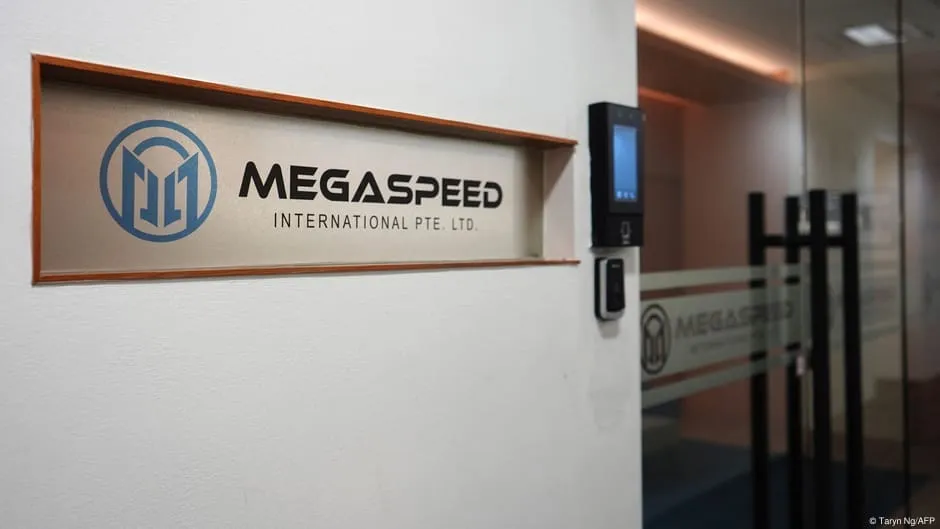
Megaspeed Nvidia chips: Investigation into China smuggling
Megaspeed Nvidia chips are at the center of a high-stakes investigation by US and Singapore authorities regarding the potential smuggling of high-end hardware into China. The Singapore-based company, which describes itself as an "Nvidia cloud partner," is accused of bypassing US export controls to provide advanced computing power to Chinese tech firms. While Megaspeed denies all wrongdoing, claiming full compliance with regulations, the probe involves complex links between the company's leadership and Nvidia's executive circles. Authorities are currently scrutinizing these international supply chain connections to determine if hardware was diverted to restricted entities.
November 19, 2026
4 min read
Source: ASHENVOW
Megaspeed Nvidia chips are at the center of a high-stakes investigation by US and Singapore authorities regarding the potential smuggling of high-end hardware into China. The Singapore-based company, which describes itself as an "Nvidia cloud partner," is accused of bypassing US export controls to provide advanced computing power to Chinese tech firms. While Megaspeed denies all wrongdoing, claiming full compliance with regulations, the probe involves complex links between the company's leadership and Nvidia's executive circles. Authorities are currently scrutinizing these international supply chain connections to determine if hardware was diverted to restricted entities.
The scope of the Megaspeed investigation and US involvement
The United States Department of Justice has taken over an investigation into Megaspeed to determine if the company has breached federal export controls by diverting high-performance Nvidia chips to China. This legal transition from the Commerce Department occurred after an Nvidia executive contacted US authorities directly regarding the matter, according to the New York Times. The probe focuses on whether Megaspeed's operations serve as a conduit for advanced AI hardware to reach Chinese entities, despite strict US restrictions designed to maintain a competitive edge in the global AI race.
Simultaneously, Singaporean police have launched an investigation into whether Megaspeed violated local laws, though the specific nature of these alleged violations has not been disclosed. Megaspeed has maintained a firm stance against the allegations. In a statement released on December 23, 2025, which remains featured on the company's website as of November 2026, the firm stated: "There has been no evidence of any violations concerning the illicit transfer of chips or any illegal activities, and this demonstrates that we are a compliant and legitimate company."
Regulatory context of chip exports
The US government maintains strict controls on high-performance chips to prevent Chinese companies from owning data centers powered by advanced Nvidia hardware. While the US permits certain arrangements—such as renting compute power from non-Chinese data centers to firms like Alibaba—the line between legitimate service and illegal diversion remains a primary focus for investigators.
The rise of Megaspeed as a "neocloud" provider
Megaspeed has experienced a massive financial expansion, with assets growing from $33 million in 2023 to $3 billion in 2024. Operating as a "neocloud" company, Megaspeed purchases Nvidia chips and computing power to rent out to clients across multiple sites in Southeast Asia. The company advertises access to Nvidia's advanced GB200 NVL72 computing systems, positioning itself as a provider of specialized GPU services for AI applications.
The company's growth and market position are summarized below:
| Metric/Detail | Information |
|---|---|
| Original Name | 7Road International (until March 2023) |
| Parent Company | Swiftdata (Singapore-registered, est. October 2023) |
| Asset Growth | $33 million (2023) to $3 billion (2024) |
| Primary Client | Alibaba (via subsidiaries, lending funds in June 2024) |
| Core Service | Nvidia cloud partnership and GPU rental |
In December 2025, Bloomberg reported that Megaspeed had become the largest buyer of Nvidia chips in Southeast Asia. Despite the scrutiny, Nvidia conducted its own internal inquiry and concluded in December 2025 that there was no evidence of chip diversion. Nvidia told Bloomberg that its representatives had visited Megaspeed facilities and found no evidence of wrongdoing, asserting that the company is fully owned and operated outside of China with no Chinese shareholders.
The role of Alice H. and executive connections
Alice H., an executive and former managing director of Megaspeed, has become a central figure in the controversy due to her reported relationship with Nvidia CEO Jensen Huang. The Financial Times reported on November 10, 2026, that Alice H. allegedly leveraged her proximity to Huang to pitch AI chip deals to investors in China. This connection has drawn intense scrutiny toward Megaspeed's corporate governance and its ability to maintain neutral operations.
According to the Financial Times, in early 2025, Alice H. sought Chinese investment for a Southeast Asian data center project by citing Megaspeed's close relationship with Alibaba and its reliable access to Nvidia hardware. This intersection of high-level corporate relationships and geopolitical tension has complicated the investigation, as authorities examine whether personal connections facilitated the circumvention of trade barriers.
The broader landscape of AI chip smuggling in China
Megaspeed is not an isolated case in the ongoing struggle to secure high-end semiconductors for the Chinese market. Since the Biden Administration began restricting advanced chip sales in 2022, an underground network of vendors has emerged to facilitate the flow of hardware into China. This pattern of illicit trade has led to several high-profile enforcement actions by US authorities.
Recent enforcement and regulatory shifts
The battle for AI dominance has resulted in various legal and political maneuvers. For example, in December 2025, US authorities shut down Hao Global, a US-based shell company that pleaded guilty to smuggling Nvidia chips to China. Furthermore, in June 2026, Taiwanese agencies raided Super Micro Computer as part of a similar investigation. While the Trump administration has eased some restrictions—such as approving certain Chinese companies to handle advanced Nvidia H200 chips in December 2025—strict licensing controls remain in place to prevent a massive influx of technology.
The current environment is characterized by a tension between US security interests and the global demand for AI computing power. While some companies attempt to navigate the legal gray areas of "neocloud" services, the US government continues to tighten its grip on the most advanced semiconductor technologies to ensure they do not bolster China's technological capabilities.



