
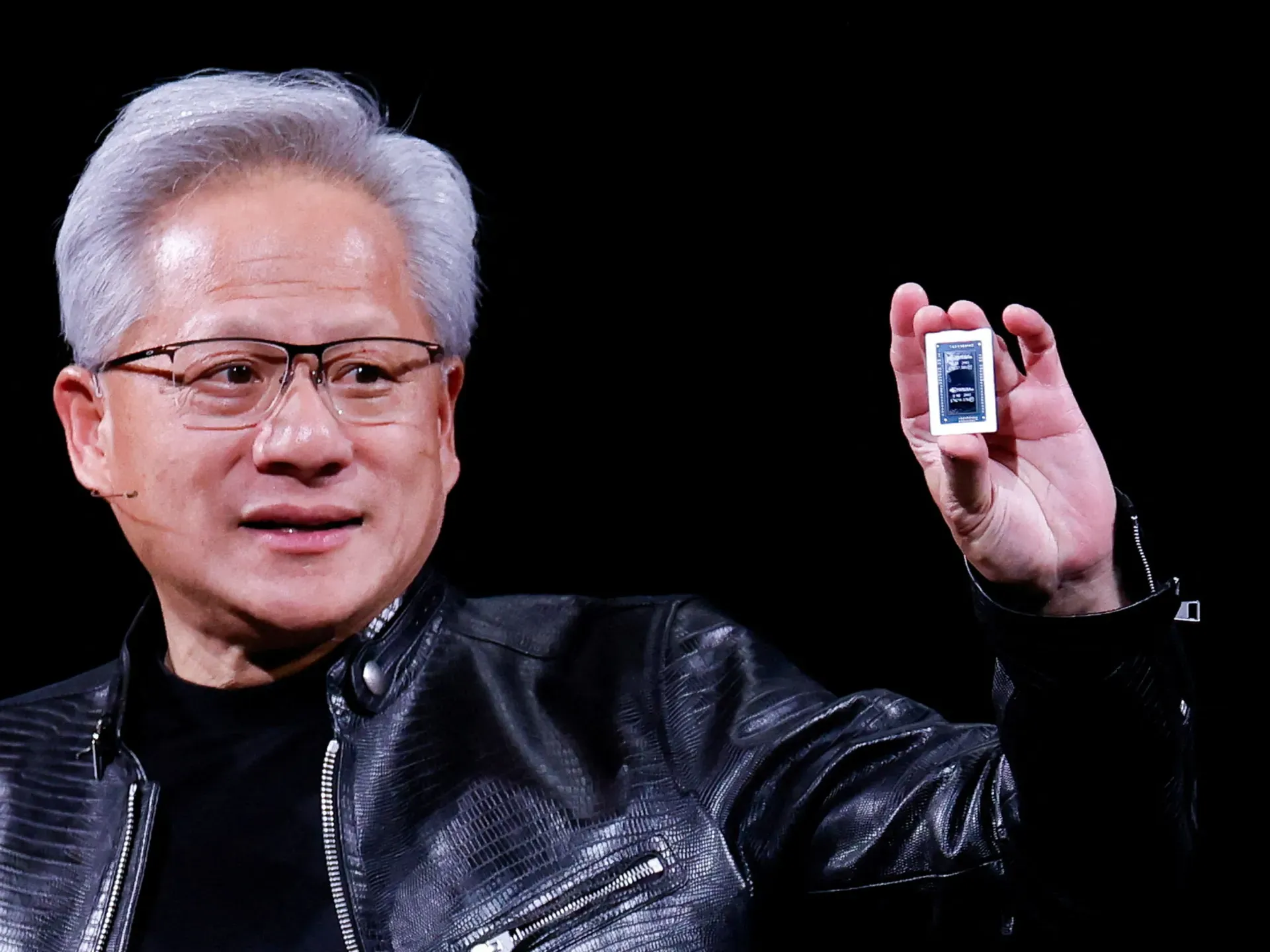
Jensen Huang resignation: Nvidia CEO steps down amid spy scandal
Jensen Huang resignation as Nvidia CEO follows allegations of affairs with an alleged Chinese intelligence asset and a company executive. The announcement caused Nvidia's market value to drop below $4 trillion for the first time since July 2025. The company has appointed Colette Kress as interim CEO and named Harvey C Jones as the first board chair. The scandal involves Alice Huang, a former executive at Megaspeed, which has been investigated for potentially aiding Chinese access to Nvidia's $4.8bn chip stock.
November 19, 2026
4 min read
Source: ASHENVOW
Leadership transition at Nvidia following executive departure
Nvidia has initiated an immediate leadership overhaul following the departure of its longtime cofounder and CEO, Jensen Huang. The company appointed Chief Financial Officer and Executive Vice President Colette Kress to serve as interim CEO on Thursday. To provide structural oversight, the board also named Harvey C Jones, a veteran venture investor with three decades of experience, as the company's first-ever board chair.
The sudden change comes as the company faces significant legal and regulatory scrutiny. Beyond the leadership vacuum, Nvidia is contending with a shareholder class-action lawsuit and multiple government-level investigations. The company's stock has experienced a sharp decline, with Reuters reporting that it is currently trading at its lowest multiple of expected earnings in 14 years.
Immediate management changes
The transition to Colette Kress as interim CEO is intended to stabilize operations while the board manages the fallout from the espionage allegations. The appointment of Harvey C Jones as board chair marks a shift toward more formal governance for the Silicon Valley giant, which has historically operated under Huang's centralized leadership. This restructuring is occurring as Nvidia prepares to report its quarterly earnings this coming Tuesday.
National security implications of the espionage allegations
The resignation is inextricably linked to an investigation into Jensen Huang's relationship with Alice Huang, an alleged Chinese intelligence asset. Alice Huang was previously an executive at Megaspeed, a Singapore-based firm that serves as Nvidia's primary business partner in Southeast Asia. Megaspeed, which was founded in 2023, has been the subject of investigations regarding whether it facilitated the transfer of Nvidia's $4.8bn stock of high-performance chips to Chinese entities.
This connection has triggered high-level scrutiny from several United States authorities, including the FBI and the United States Congress. The primary concern for federal investigators is the potential breach of existing US restrictions on chip sales to China. These restrictions are designed to prevent the Chinese military, intelligence agencies, or state-aligned companies from acquiring advanced artificial intelligence technology.
| Entity | Role/Relation to Scandal | Context |
|---|---|---|
| Alice Huang | Alleged Chinese intelligence asset | Former executive at Megaspeed |
| Megaspeed | Nvidia's Southeast Asian partner | Investigated for chip diversion to China |
| Nvidia | AI chip manufacturer | Facing espionage and shareholder lawsuits |
The intersection of corporate affairs and national security has placed Nvidia at the center of a geopolitical tension regarding the control of AI hardware. The investigation aims to determine if the relationship with Alice Huang provided a vector for sensitive technology to bypass federal export controls.
Congressional and political fallout in the United States
Jensen Huang has agreed to testify before the House of Representatives’ Foreign Affairs Committee, according to Chairman Brian Mast. The investigation is expected to probe the extent of the intelligence breach and the potential influence of the relationship on US export policy. Simultaneously, both Senate and House Democrats have launched a probe into the Trump administration's proposed plans to approve the sale of AI chips to Chinese companies.
The political dimension of the scandal is heightened by Huang's personal ties to the administration. As a close ally of US President Donald Trump, Huang had previously advocated for the easing of US restrictions on chip exports to China. Regarding the allegations, President Trump stated earlier this week that Huang informed him he had "absolutely no idea" that he was involved in a relationship with an intelligence operative.
The scope of legislative inquiries
The congressional investigations are expected to focus on two primary tracks: the specific security breach involving Megaspeed and the broader policy decisions regarding AI hardware exports. Lawmakers are examining whether the executive's personal conduct compromised national security interests or influenced the regulatory environment for high-end semiconductors. The testimony of Huang will be a focal point for committees looking to assess the vulnerability of the US technology supply chain to foreign intelligence operations.
Impact on Nvidia's market position and corporate structure
The departure of Jensen Huang, who cofounded the company in 1993 and maintains a 3.6 percent stake, represents a significant disruption to the AI industry. Aleksandar Tomic, associate dean for strategy, innovation, and technology at Boston College, noted that the resignation will have an "outsized effect" compared to similar events at other large corporations. This is due to the relatively flat organizational structure that characterized Nvidia under Huang's tenure.
Despite the volatility, analysts suggest the company remains fundamentally strong. Tomic described the resignation as a "speed bump," stating that Nvidia is a strong company with a strong product and that the event is a sudden occurrence rather than a result of long-term corporate struggle. He added that while the succession process may take time, the company is positioned to handle the transition from a position of strength.
Market volatility and investor sentiment
Investor confidence has been shaken by the dual nature of the scandal: the espionage allegations and reports of internal misconduct. According to reports from The New York Times and Reuters, Huang was also involved in an extramarital relationship with an Nvidia vice president, and a second intimate relationship with another company employee. These reports have contributed to the stock's tumble and the decline in market valuation below the $4 trillion threshold. The upcoming quarterly earnings report will be closely watched by the market to gauge the company's financial resilience amidst these leadership and legal challenges.



