
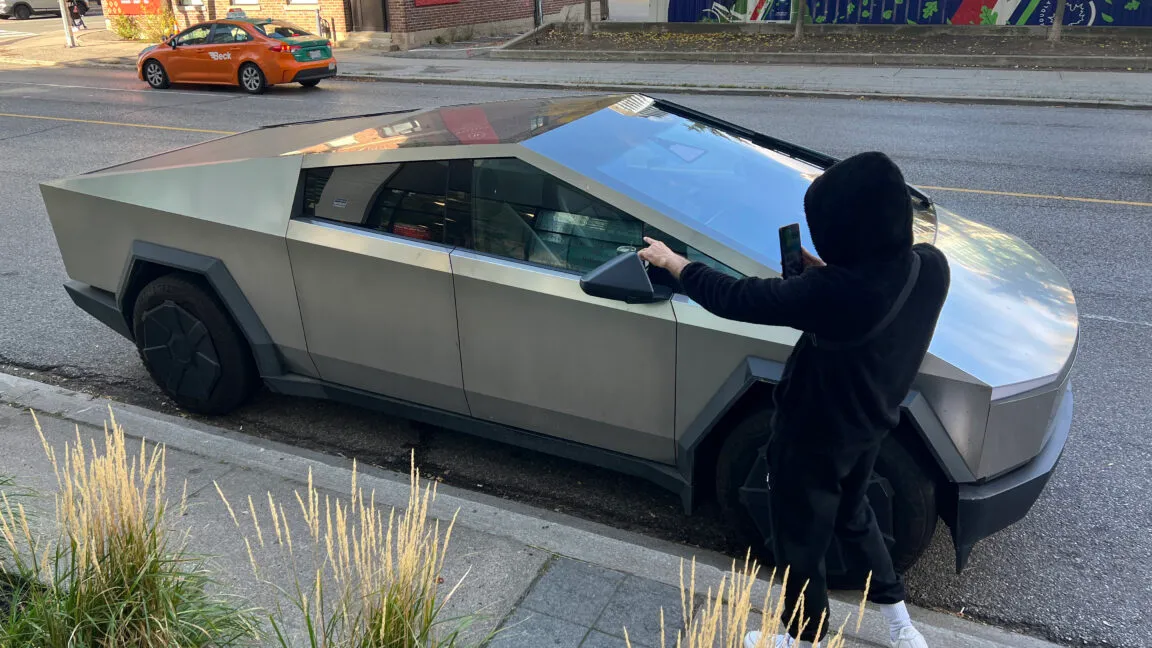
Tesla Cybertruck production end: Musk shifts focus to Cybercab
Tesla will end Cybertruck production in the middle of 2027, marking the conclusion of Elon Musk's attempt to capture the American pickup truck market. The Tesla Cybertruck production end follows years of manufacturing struggles and disappointing sales figures that failed to meet the company's initial high expectations. According to Ars Technica, Musk intends to repurpose the vacated factory capacity for new projects, most likely the Cybercab. This strategic pivot follows a period where the vehicle's divisive design and production complexities hindered its commercial viability.
November 12, 2026
4 min read
Source: ASHENVOW
The transition from Cybertruck to Cybercab production
Tesla CEO Elon Musk announced via social media that the company will cease manufacturing the Cybertruck by mid-2027. This decision effectively terminates Tesla's long-standing effort to unseat established competitors in the lucrative American pickup truck segment. The move signals a significant shift in Tesla's manufacturing priorities, as the company seeks to reallocate the massive factory space currently dedicated to the angular electric pickup toward other vehicle lines.
The primary beneficiary of this production shift is expected to be the Cybercab. By ending the Cybertruck line, Tesla can utilize its existing industrial infrastructure to scale up the production of its autonomous vehicle vision. This transition comes after the Cybertruck's tenure as a flagship product failed to deliver the market dominance Musk originally envisioned during the vehicle's unveiling in late 2019.
Factory reallocation and future vehicle lines
The decision to end Cybertruck production is not merely a product discontinuation but a structural realignment of Tesla's production capabilities. The "cavernous" factory space occupied by the Cybertruck assembly lines will be liberated for new uses. While the Cybercab is the most probable successor for this capacity, the move allows Tesla to pivot away from a vehicle that struggled to find a stable footing in the mass market.
Manufacturing challenges and the monocoque promise
The development of the Cybertruck was characterized by significant deviations from Musk's original technical promises and notable difficulties in achieving mass-production stability. At the time of the vehicle's reveal, Musk claimed the truck would utilize a stainless steel monocoque construction, asserting that "the body and bed don't do anything useful" on a standard pickup. However, the final production models diverged from this concept.
While a monocoque structure is common in high-performance racing through carbon fiber, applying it to a stainless steel pickup presented unique logistical and engineering hurdles. Instead of the promised specialized chassis, the Cybertruck eventually utilized a conventional unibody chassis, a standard approach for Tesla but a departure from the radical engineering initially marketed to the public. This shift highlights the gap between the vehicle's conceptual design and its eventual manufacturing reality.
| Feature/Goal | Original Claim | Production Reality |
|---|---|---|
| Chassis Type | Stainless steel monocoque | Conventional unibody |
| Target Price | Under $40,000 | Not achieved as promised |
| Production Precision | "Lego-like" 10-micron tolerances | Struggles with assembly consistency |
The failure to meet sales and precision targets
Tesla's ambitions for the Cybertruck included stratospheric sales predictions that envisioned the vehicle becoming as ubiquitous as the Model 3 and Model Y. Musk had even demanded "Lego-like precision" from assembly workers, aiming for tolerances as tight as 10 microns. However, these manufacturing standards proved difficult to maintain, and the vehicle's market performance fell far short of the projected 250,000 annual units.
The commercial trajectory of the truck was marred by several factors:
- Production Delays: Tesla struggled to bring the vehicle to scale, mirroring the difficulties faced during the early production ramps of the Model 3 and Model Y.
- Quality Concerns: In 2023, the vehicle was frequently associated with headlines regarding recalls and temporary stop-sale orders.
- Market Rejection: Despite attempts to bolster numbers, such as selling thousands of units to SpaceX, the vehicle failed to achieve mass-market penetration.
Musk eventually acknowledged the difficulty of the project, stating that the company "dug our grave" with the truck. This admission served as a public recognition that the high-volume sales targets were likely unattainable.
Political symbolism and market perception
Beyond its technical and commercial shortcomings, the Cybertruck became a polarizing symbol tied to the persona of Elon Musk. The vehicle's unconventional, angular design became a visual representation of Musk's broader influence and his role in reshaping federal governance. As the political landscape shifted, the vehicle's identity became increasingly linked to Musk's personal brand and political alignment.
The divisive nature of the truck's aesthetics and its association with Musk's political activities impacted its reception. For many consumers, the vehicle was not just a transportation tool but a visible reminder of a specific vision of governance and leadership. As the American public's reaction to Musk's political involvement evolved, the Cybertruck's presence on the road became more controversial, further complicating its path to mainstream acceptance.
The impact of CEO branding on product sales
The relationship between a CEO's public image and product success is often inextricable in high-profile tech companies. For Tesla, the Cybertruck became emblematic of Musk's personal philosophy, which proved to be a double-edged sword. While his brand drives intense loyalty among a core group of supporters, it also creates significant friction with broader consumer segments. The Cybertruck's failure to achieve ubiquity suggests that the polarizing nature of the vehicle's design and its association with Musk's political persona may have actively limited its total addressable market.



